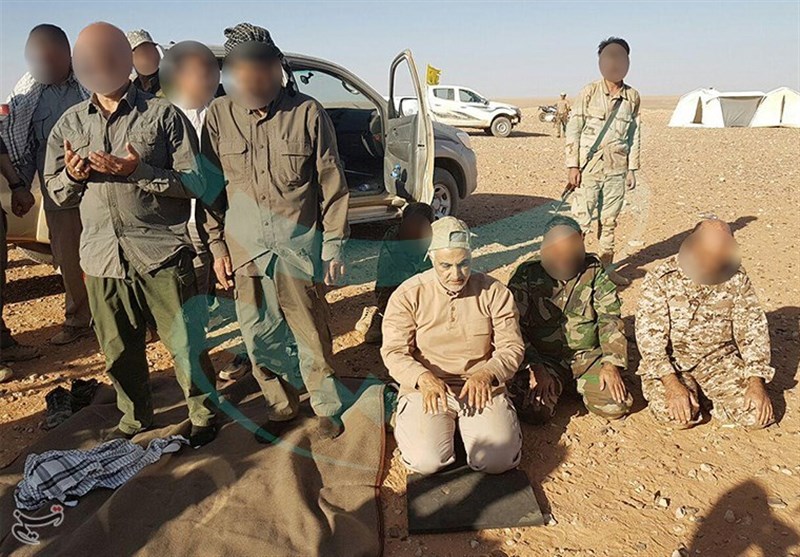
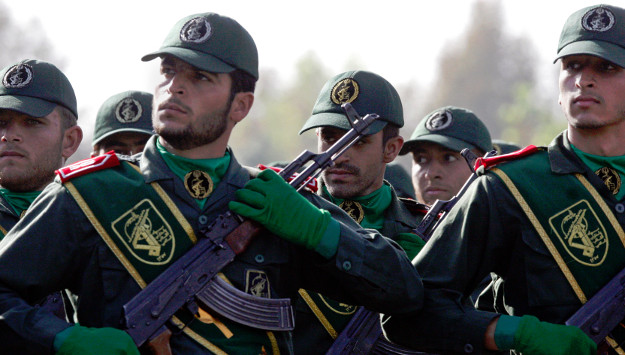
After decades of political setbacks, Iran’s former Revolutionary Guards commander has returned to the center of power. Is he an incidental beneficiary of war, or have observers underestimated him all along?
The Unavoidable Neighbor: Managing Iran Beyond the War
Gulf states and their partners are increasingly looking beyond their most immediate interests of containing the war with Iran. While recent talks between Saudi Arabia, Turkey, Pakistan, and Iran have kept de-escalation on the agenda, a broader regional security framework and non-aggression pact has also emerged, envisioning a longer-lasting solution to regional conflicts. The talks have yet to produce a settlement, but they reflect a growing recognition that Gulf security cannot depend entirely on Washington. Iran will still be there, and its neighbors will have to find ways of living with it.
Recent Elections and What They May Mean for the Middle East
Recent elections for the Israeli Knesset and American Congress may make less of a difference in the Middle East than some people think. Elections are significant indicators of national political trends, but do not always translate into changes in national security strategies. That is likely the case now in both nations.
Iranian Outlet Assesses Russia's Options If U.S. Leaves Nuclear Deal
An article in hardline Javan Online analyzes Russia’s potential responses if the Trump administration walks away from the Joint Comprehensive Plan of Action – the nuclear deal Iran signed with the United States, Russia, China, Germany, France and Britain in 2015. The analysis piece, entitled “Russia and J.C.P.O.A.
Iran’s Central Bank Chief Visits Turkey to Finalize Currency Swap Deal
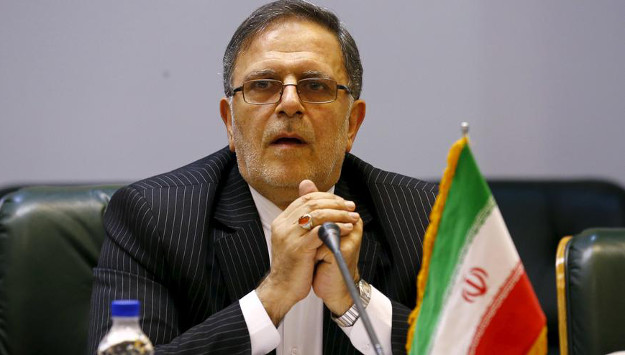
Valiollah Seif, the head of the Central Bank of Iran (C.B.I.), has traveled to Ankara to meet with his Turkish counterpart and finalize a plan to do trade exchanges based on currency swap, Tasnim News Agency reported. He expressed the hope that the move would help the two countries efforts to meet their goal of boosting the volume of annual bilateral trade to $30 billion.
Iran Warns Trump against Leaving J.C.P.O.A., Blacklisting I.R.G.C.
As the Trump administration is expected to decertify Iran’s compliance with the nuclear agreement this week, Iranian leaders are mulling their options on how to respond. While de-certification does not mean Washington is necessarily walking away from the accord and it will be up to Congress to decide whether to keep the deal or re-impose sanctions on Iran, Tehran is preparing for the worst-case scenario. Even if U.S. unilaterally abandons the deal, the Rouhani government appears willing to stay in the deal as long as European powers disregard U.S.
Top Iranian Military Official: It's Time to Teach America New Lessons
The deputy chief of staff of Iran’s armed forces has warned that his country will confront the Trump administration’s “aggressive policies” by “teaching America new lessons.” Hinting that Iran may take action against U.S. interests in the region, Brigadier General Massoud Jazzayeri emphasized that it is essential for Tehran to confront America’s “destabilizing behavior” in the region. “The era of America’s presence and domination in West Asia has come to an end,” he stressed, adding that the U.S.
Iran Rejects Reports on Possible Talks over Its Missile Program
Iran’s Foreign Ministry rejected media reports on Iran’s willingness to negotiate its missile program with the United States. Baharm Ghassemi, the ministry’s spokesman, said the Iranian government vehemently refutes claims made in a Reuters report that Tehran was ready to negotiate parts of its controversial missile activities.
An article in state-run Islamic Republic News Agency (I.R.N.A.) analyzes Tehran’s options if the United States unilaterally abandons the Joint Comprehensive Plan of Action – the nuclear agreement Iran signed with world powers in July 2015. It points out that the Trump administration appears to be refusing to certify Iran’s compliance with the J.C.P.O.A. despite objections from the other signatories of the deal – Germany, France, Britain, Russia and China.
Debate in Iran over Europe as Reliable Partner in Nuclear Standoff
As the Trump administration is threatening to walk away from the Iran nuclear agreement, an intense debate is taking place inside Iran about whether the Islamic Republic can count on Europe as a reliable partner against Washington’s “unilateralism.” During Friday prayers in Tehran today, Ayatollah Ahmad Khatami, a member of Iran’s Assembly of Experts, called on the Rouhani government “not to rely on European support because if Europe has to choose between Iran and America, it will choose America.” He accused Washington of
Zarif: Iran Will Always Be Iraqi Kurds’ Friend despite “Strategic Mistake”
Iranian Foreign Minister Mohammad Javad Zarif today attended the funeral procession of Jalal Talabani, Iraqi Kurdish leader and former President, in the Sulaymaniyah city of Iraqi Kurdistan.
On September 25 Iraq’s Kurdish region pressed ahead with a controversial independence referendum. It had a high voter turnout of 73%, 93% of whom voted in favor of independence. The referendum is technically non-binding but it has sparked a political crisis with threats of action against the Kurdish region from its neighbors, Turkey and Iran, as well as Iraq’s central government. The United States also opposed the vote. MEI experts Randa Slim, Gonul Tol, and Ahmad Majidyar join host Paul Salem to discuss the implications of the vote and what happens next.
Iranian Lawmakers Praise Assad for "Defeating" U.S. and Israel in Syria
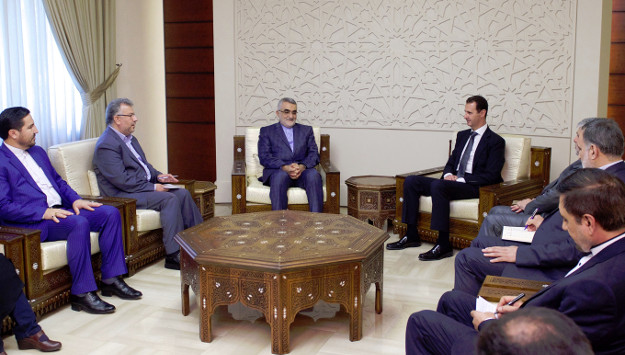
A senior Iranian parliamentary delegation visited Damascus and held talks with Syrian President Bashar al-Assad earlier today, the Iranian media reported. Alaeddin Boroujerdi, the chairman of the parliament’s national security and foreign policy committee, described Syria as a key pillar of the so-called “resistance front” against the United States and congratulated the Syrian president for the latest territorial gains by the Syrian Army and its foreign allies.
Top Iranian Nuclear Official: Tehran Won’t Renegotiate Nuclear Deal
Ali Akbar Salehi, the head of the Atomic Energy Organization of Iran, said today that Tehran will not renegotiate the Joint Comprehensive Plan of Action – the nuclear accord Iran signed with world powers in July 2015. “Some want to have J.C.P.O.A.’s technical dimensions renegotiated, but this agreement is not open for negotiation,” he said in an interview with an Iranian state-run news agency.
Fatemiyoun: We’ll Capture Al-Mayadin and Abu Kamal to Fulfill Soleimani’s Promise
Afghan Shiite militias fighting in Syria have made significant gains in military operations against the Islamic State in Deir Ezzor Province, the Iranian media reports.
Kurdish Vote Brings Iran, Turkey Closer as Erdogan Visits Tehran
When Turkish President Recep Tayyip Erdogan held “strategic talks” with his Iranian counterpart Hassan Rouhani and Supreme Leader Ali Khamenei in Tehran today, three topics topped the agenda: Iraq, Syria and trade. The two sides agreed to assist the Baghdad government in preventing Iraqi Kurdistan from declaring independence, continue to cooperate closely in Syria to reduce violence and fight terrorism, and triple the current volume of trade between the two countries in the near future.
Iran: Wargames near Iraqi Kurdistan Send Clear Message to Enemies
A senior Iranian military official said today that the country’s armed forces have staged wargames codenamed Eqtedar (Might) in the northwest close to Iraqi Kurdistan to send a clear message to the ene
Zarif in Qatar: Tehran Seeks “Long-Term Relations” with Doha
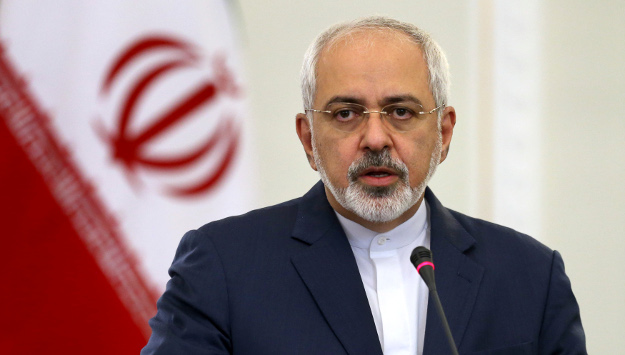
Iranian Foreign Minister Javad Zarif held talks with Emir of Qatar Sheikh Tamim bin Hamad Al Thani as well as with his Qatari counterpart Mohammed bin Abdulrahman Al Thani in Doha earlier today. According to Iranian media, the two sides discussed ways to boost bilateral relations, particularly in the economic sphere. In his meeting with his Qatari counterpart, Zarif said Iran is ready to establish “long-term relations” with Qatar and turn the Gulf nation into one of Iran’s economic partners.