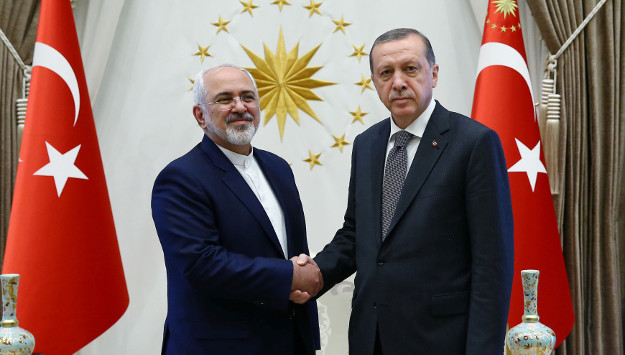
After decades of political setbacks, Iran’s former Revolutionary Guards commander has returned to the center of power. Is he an incidental beneficiary of war, or have observers underestimated him all along?
The Unavoidable Neighbor: Managing Iran Beyond the War
Gulf states and their partners are increasingly looking beyond their most immediate interests of containing the war with Iran. While recent talks between Saudi Arabia, Turkey, Pakistan, and Iran have kept de-escalation on the agenda, a broader regional security framework and non-aggression pact has also emerged, envisioning a longer-lasting solution to regional conflicts. The talks have yet to produce a settlement, but they reflect a growing recognition that Gulf security cannot depend entirely on Washington. Iran will still be there, and its neighbors will have to find ways of living with it.
Recent Elections and What They May Mean for the Middle East
Recent elections for the Israeli Knesset and American Congress may make less of a difference in the Middle East than some people think. Elections are significant indicators of national political trends, but do not always translate into changes in national security strategies. That is likely the case now in both nations.
Amir-Abdollahian: The Soft Face of Iran’s Hard Power
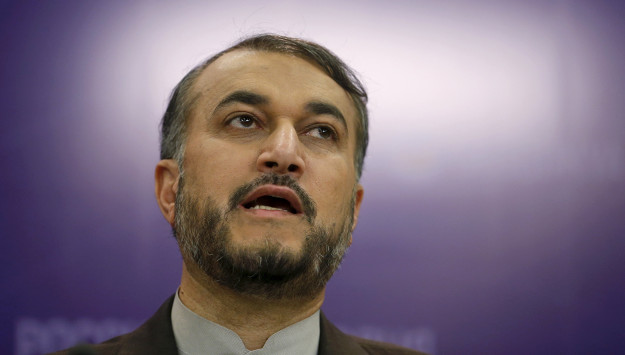
Hossein Amir-Abdollahian, a senior Iranian diplomat close to the Islamic Revolution Guards Corps (IRGC) came back into the Iranian headlines this week charging that the US and Israel were determined to change the borders of nations in the Middle East as part of an attempt to weaken the so-called “resistance,” the anti-US and Iran-led bloc of Lebanese Hezbollah, Hamas and Bashar al-Assad of Syria; and that Iran had a duty to block these nefarious attempts and redouble its support to its regional allies. While hardly a household name in the West, Amir-Abollahian has been the IRGC’s soft fac
Iraqi Prime Minister Haider al-Abadi has expressed outrage at the recent Turkish parliamentary extension of the mandate of Turkey’s military presence on Iraqi soil. For months, Turkish forces have maintained a contingent in northern Iraq, ostensibly at the invitation of local forces, with the announced mission of training them in preparation for the battle for Mosul. With multiple parties preparing for the offensive, Mosul, Iraq’s second largest city, is slated to be liberated from a 30-month-old Islamic State (ISIS) occupation.
In this week’s Monday Briefing, MEI experts Robert S. Ford, Paul Salem, and Marvin G. Weinbaum provide analysis on recent and upcoming events including Russia’s recent escalation of military force in Syria, deteriorating Saudi-Iranian relations, and an escalation in the Kashmir between India and Pakistan.
Monday Briefing: President Obama's Final UNGA Address
In this week’s Monday Briefing, MEI experts Paul Salem, Robert S. Ford, Charles Lister, Alex Vatanka, and David Mack provide analysis on recent and upcoming events including Obama’s upcoming final speech to the UN General Assembly, the Syrian collapsed ceasefire, the buildup to an eventual Mosul offensive, Rouhani’s trip to Latin America, and Libya’s oil exports.
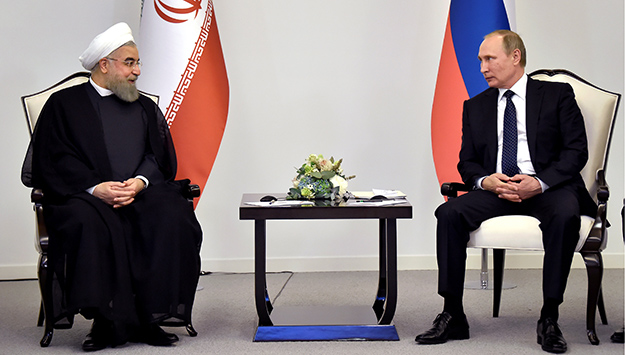
The relationship between Iran and Russia has been characterized more by competition than by cooperation in modern political history. Military incidents during the Soviet era created an atmosphere of distrust, but Russia has become an increasingly prominent economic and political partner of Iran as both countries have been targeted by Western sanctions regimes. More recently, upheaval in global energy markets and the deteriorating security situation in Syria have led to the forging of stronger commercial and political bonds between the two countries.
Informal Activism and New Subjectivity in Authoritarian Settings: Iran’s “New Activists”
In times of repression, informal networks are useful to keep activism alive as they offer a way to activists for organizing. This short piece examines the background of informal activism in Iran and its possible implications.
Weekly Briefing: Syria Talks at G20 Summit, Russian Moves on Israel-Palestine, and Iran Energy Policy
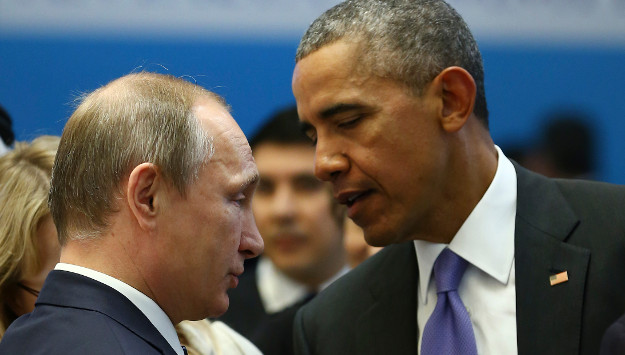
In this issues of MEI’s weekly briefing, contributors Daniel Serwer, Randa Slim, Eran Etzion, and Alex Vatanka provide analysis on recent and upcoming events including discussions between the United States, Russia and Turkey on Syria policy at the G20 Summit, the Syrian opposition’s transition plans, Russian moves on Israel-Palestine, and Iran’s energy policy.
Informal Networks and Political Transitions in the MENA and Southeast Asia
This collection of essays, inspired by Sean Yom’s piece “Arab Civil Society: Weaker but Deeper,” seeks to “peer into hidden spaces of resistance not captured by the formal sector” and is thus intended to complement the MAP series on
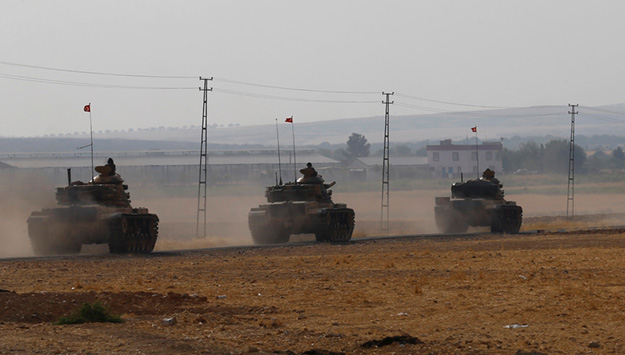
Turkey’s intervention in the Syrian conflict signals a new milestone in the five-year-old Syrian crisis, with its insertion as a new direct player certain to further complicate the dynamics of this already complicated conflict. Turkey’s Operation Euphrates Shield in northern Syria wasn’t a surprise with respect to the concept—the Turks have been advocating a safe zone for several years—but it was so in terms of timing, just six weeks after the failed coup attempt.
Monday Briefing: Turkish Incursion into Syria, OPEC Meeting
In this week’s Monday Briefing, MEI experts Gonul Tol, Daniel Serwer, and Jean-François Seznec provide analysis on recent and upcoming events including the Turkish intervention in Syria, and next month’s OPEC meeting in Algeria.
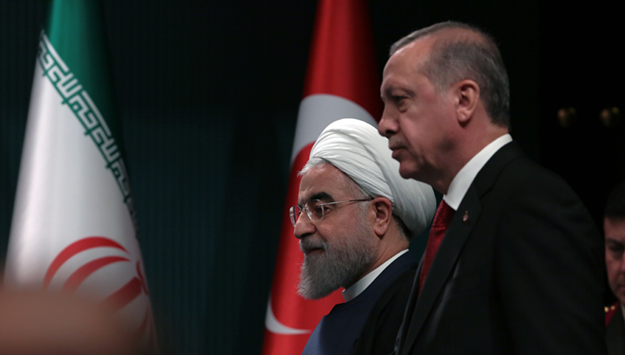
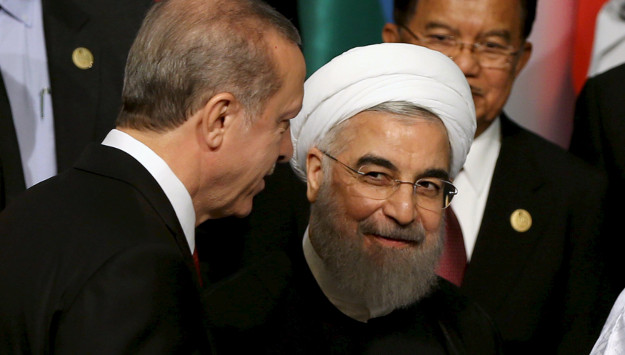
Turkish President Erdogan is about to make a high-profile visit to Tehran. The trip is not just about a potential warming of relations between Ankara and Tehran but some think it might become a turning point and herald a new regional alignment on how to end the Syrian civil war.
G.C.C., Iran Look to Sea Trade to Reduce Dependence on Oil
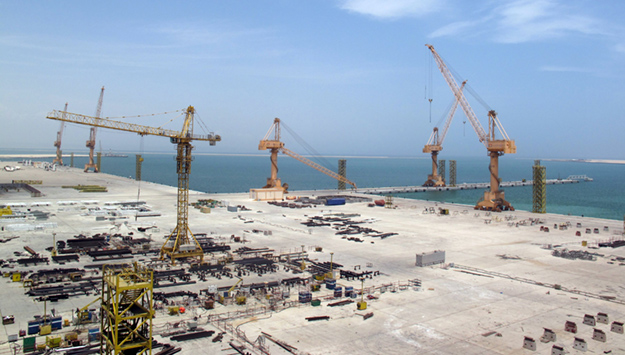
Continuing low oil prices have prompted Persian Gulf states to diversify their heavily petro-dependent economies. This issue is forcing the oil-rich states to invest and expand their potential as international trade hubs as a pathway away from the time bomb of single commodity exports. As many Gulf states have outlined in economic plans, as well as developed on the ground, maritime trade is an increasingly essential link connecting the Middle East to the global economy.
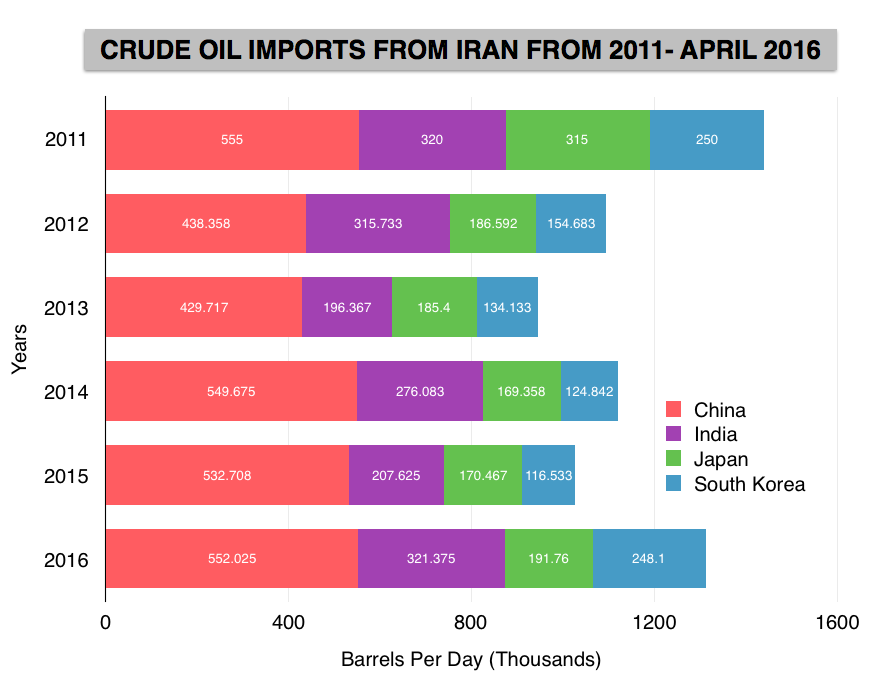
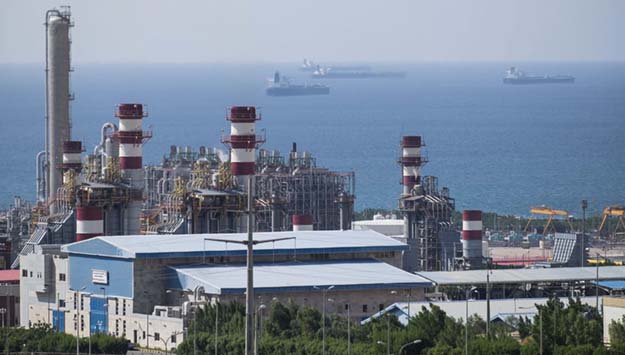
Iranian oil sales have nearly doubled since sanctions were lifted on its oil exports in January 2016. In fact, Iran is recovering market share faster than many experts had expected.
Several factors have contributed to this development, including that Iran has—
Monday Briefing: Turkey's Iran Outreach and Regional Diplomatic Strategy
In this week’s Monday Briefing, MEI experts Gonul Tol, Alex Vatanka, Charles Schmitz, and Robert S. Ford provide analysis on current issues including Turkey’s regional diplomacy as President Erdogan is set to visit Tehran, the Iranian perspective on Turkey’s role in the region, Secretary Kerry’s visit to Saudi Arabia amid renewed fighting in Yemen, and ongoing attempts to broker a cease-fire deal in Syria.