After decades of political setbacks, Iran’s former Revolutionary Guards commander has returned to the center of power. Is he an incidental beneficiary of war, or have observers underestimated him all along?
The Unavoidable Neighbor: Managing Iran Beyond the War
Gulf states and their partners are increasingly looking beyond their most immediate interests of containing the war with Iran. While recent talks between Saudi Arabia, Turkey, Pakistan, and Iran have kept de-escalation on the agenda, a broader regional security framework and non-aggression pact has also emerged, envisioning a longer-lasting solution to regional conflicts. The talks have yet to produce a settlement, but they reflect a growing recognition that Gulf security cannot depend entirely on Washington. Iran will still be there, and its neighbors will have to find ways of living with it.
Recent Elections and What They May Mean for the Middle East
Recent elections for the Israeli Knesset and American Congress may make less of a difference in the Middle East than some people think. Elections are significant indicators of national political trends, but do not always translate into changes in national security strategies. That is likely the case now in both nations.
In this week’s Monday Briefing, MEI experts Charles Lister, Gonul Tol, Paul Salem, Alex Vatanka, and Marvin G. Weinbaum provide analysis on recent and upcoming events including the Syria strikes, Turkey’s Assad paradox, the Arab League summit, EU’s view of the Iran nuclear deal, and clashes along the Afghanistan-Pakistan border.
Iran’s Foreign Ministry: “Resistance forces” to punish Israel for Syria strikes
conference in Tehran, Bahram Qassemi said “the aggression on Syrian soil was illegal” and emphasized that the Israeli attack will not go unanswered this time. “Israel will receive the required responses sooner or later,” he told at the briefing. “They cannot take (such) an action and be exempt from punishment,” he added. “The time for hit and run has passed for Israel, and the resistance forces in the region are capable of retaliating fittingly.” The spokesman also said Tehran is considering legal action against Israel, but did not elaborate.
Iran-backed Iraqi militia reportedly laid siege to US base in response to Syria strikes
Iranian-backed Iraqi paramilitary forces have laid siege to an American air base northwest of Baghdad to pressure the US military not to use Iraqi airspace for any attacks against the Bashar al-Assad regime in Syria, Iranian and Lebanese media outlets reported.
Iranian-backed Iraqi militia group to Trump: “We’re waiting for you in Syria”
The leader of an Iranian-backed Iraqi militia group has warned that his forces are ready to fight American troops in Syria, Arab media reported. Akram al-Kaabi, the secretary-general of Harakat al-Nujaba, made the comments in response to President Donald Trump’s announcement about imminent missile strikes to punish the regime of Bashar al-Assad for the latest chemical attack in Homs Governorate. Kaabi lashed out at Trump’s remarks on Syria and accused the US president of trying to undo the recent gains of the Assad regime and its allies.
Iran’s FM Zarif tours South America and Africa to boost ties
Iranian Foreign Minister Mohammad Javad Zarif arrived in Windhoek yesterday to meet with senior Namibian officials and ways to promote bilateral ties between the two countries, Iranian media reported. Soon after arrival, Zarif spoke at a joint economic meeting of Iran and Namibia, which was attended by Namibian Minister of Industrialization, Trade and SME Development Tjekero Tweya. According to Tasnim News Agency, the Iranian top diplomat is also scheduled to hold meetings with the African country’s top political leaders and parliamentary members.
Top Khamenei advisor visiting Syria says Iranian-led forces will expel US from region
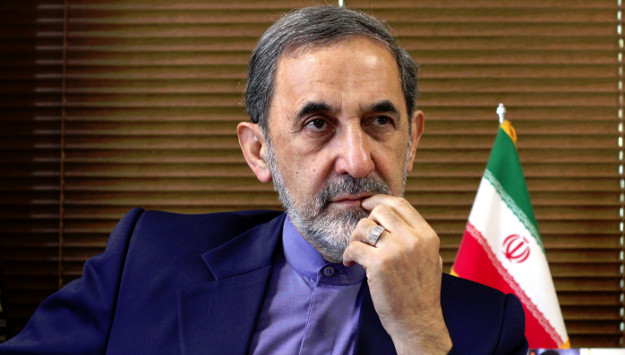
Ali Akbar Velayati, a top advisor to Supreme Leader Ali Khamenei on foreign affairs, said today that American forces lack the resolve to stay in Syria for the long haul, the Iranian media reported. He described Syria as a critical pillar of the “axis of resistance” which he said begins in Tehran and stretches to Baghdad, Damascus, Beirut and Palestine. “This axis of resistance is against invaders affiliated with Israel and America,” he added.
Iran to empower "axis of resistance" and retaliate against Israel and US for Syria strikes, warns cleric
A representative of Supreme Leader Ali Khamenei warned today that Iran will respond to the latest Israeli air raids in Syria and stressed that the country will further empower its proxies to confront the United States and its allies across the world.
Riyadh, 05:40 a.m: It’s the first day of Ramadan, the holy month of fasting. It is a time of intense prayer and introspection for Saudis and more than 1.8 billion Muslims around the world.
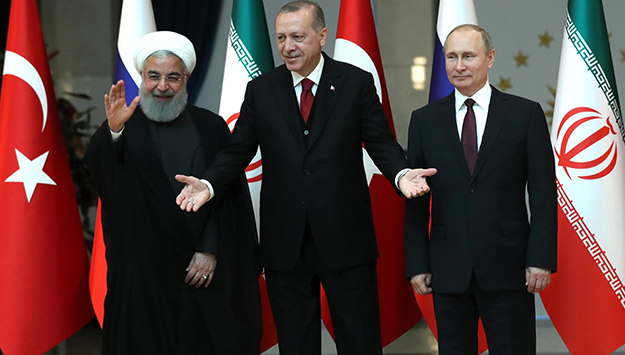
Just last week, Turkey’s President Recep Tayyip Erdogan hosted his Russian and Iranian counterparts in Ankara for talks to end the Syrian civil war. The summit of the three leaders was a strong display of unity against a backdrop of rising tensions between them and the United States. The underlying message was that the three countries were calling the shots in Syria, and that President Donald Trump’s announcement that the U.S. would be pulling out soon was right on the spot.
Top Khamenei adviser threatens retaliation against Israel for Syria strikes
A senior advisor to Iranian Supreme Leader Ali Khamenei has threatened retaliation against Israel and its allies for the latest air strikes on a Syrian air base that killed several Iranian nationals, the Iranian media reported.
Iranian-backed Houthi rebels in Yemen fire ballistic missiles at Riyadh
With international attention focused on the escalating tension in Syria, Iranian-backed Houthi rebels in Yemen today fired several ballistic missiles at military and civilian targets in Saudi Arabia,
IRGC outlets delete reports of Iranian casualties in suspected Israeli strikes in Syria
On Monday, the Iranian media reported that a number of the Islamic Republic’s military personnel were killed in a suspected Israeli air strike on a Syrian air base in Homs Governorate.