A Strategic Conundrum: Pakistan’s Transit Corridor to Iran as Lifeline or Liability
The US-Iran standoff over the Strait of Hormuz — disruptive to global trade and energy flows, and devastating for debt-burdened economies — has handed Pakistan an unexpected geoeconomic opportunity, one that may persist even if the framework agreement announced on June 14 results in a lasting peace and permanent reopening of the strait. But seizing it will have interlocking consequences for Islamabad’s ties with Tehran, Washington, and the Gulf states.
Iran: What’s Next for US Policy as the Region Seeks to Move On
As the US and Iran move to reopen the Strait of Hormuz, the war’s real lesson lies in how Gulf states rapidly adapted — building pipelines, ports, and rail to bypass the chokepoint. Washington should seize this momentum, pursuing a “long game” of regional connectivity that serves shared security and economic interests.
Featured Experts
Assessing the Latest Iran Deal and What It Means for US Interests
IRGC’s Soft-Power Influence Undermines Iraq’s Security
The Islamic Revolutionary Guards Corps (IRGC) has claimed that its engineers are tasked to repair the Mosul Dam, Iraq’s largest dam that generates hydroelectricity and provides water for agricultural irrigation in Nineveh Governorate.
Hailing the IRGC’s scientific capabilities and non-military expertise, General Salar Abnoush, the deputy head of IRGC’s construction conglomerate Khatam al-Anbiya Construction Base, said that the company was busy “repairing cracks in Mosul Dam to prevent the complete inundation of the Iraqi cities of Samarra, Mosul and Kadhimiya.”
Iran-led Militia Forces Planning to Seize Iraq’s Tal Afar
On December 20, a senior commander of an Iran-run Popular Mobilization Forces (PMF) unit in Iraq said the militia forces were stationed within three kilometers of Tal Afar city and were awaiting for an order from Baghdad to enter the city center.
Iran’s Quds Force Commander Spotted in War-Torn Aleppo
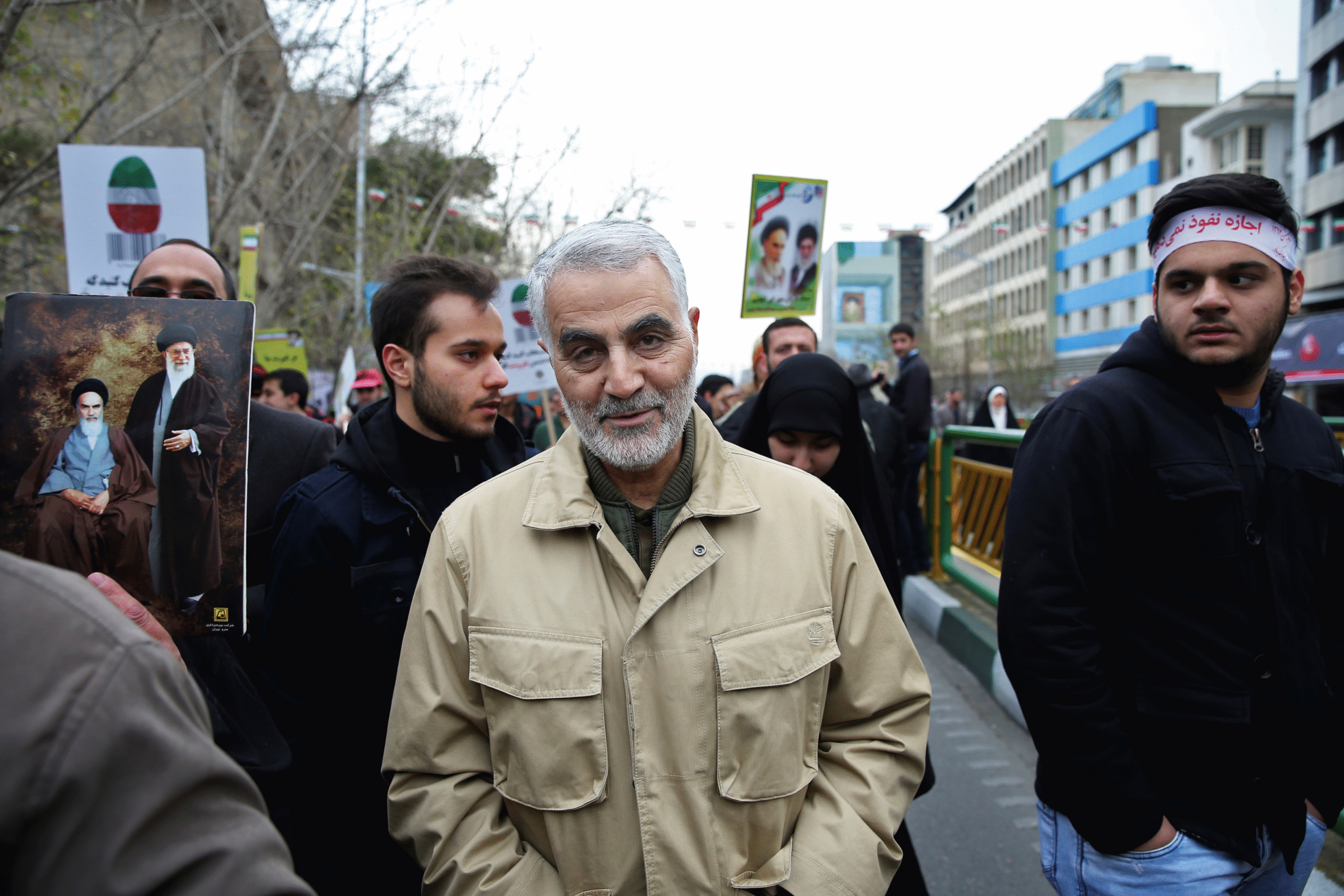
Iranian Quds Force Commander Qassem Suleimani was recently spotted touring the war-ravaged Syrian city of Aleppo.
Iranian Responsible for Saudi Embassy Attack Claims Iran Government Gave “Green Light”
Iranian extremist cleric Hassan Kurdmihan, the confessed mastermind of the January 2016 attack on the Saudi Embassy in Tehran, is heard in a leaked tape recording telling his followers that the attack was “carried out upon a green light from the government and the regime,” according to a December 18 report in al-Arabiya. Kurdmihan can also be heard in the leaked calls directing members of the Iranian Basij and the Islamic Revolution Guards Corps (IRGC) to burn and destroy the Embassy and seize documents inside. The leaked recordings have been attributed to the Iranian opposition Green Mov
Iran Rules out Cooperation with West, Continues Meddling in Region
Despite growing concerns in the United States and the Arab world about Iran’s destabilizing role in the region, Iranian leaders continue to defend the country’s subversive policies in the Yemeni conflict.
Regime Ayatollah Apologist Attacks Arab Neighbors
Ayatollah Naser Makarem Shirazi, who is not only a grand ayatollah but also a strong defender of all of Tehran’s policies, said on December 19 that “British statements of support for the Arab countries” are only aime
Top Iran General Says after Aleppo, It Will Be Mosul
General Rahim Safavi, a top military advisor to Supreme Leader Ayatollah Ali Khamenei, called the “freedom of Aleppo” a product of the alliance between Iran, Russia, Syria and Hezbollah.” Safavi said that today “the United States has found out very well that the Islamic Republic of Iran is the first power in the region and has more influence than the other countries in the area.” He continued that “the alliance between Iran, Russia, Syria and Hizballah led to the liberation of Aleppo, and we will also liberate Mosul soon.”
Iran Committed to Assad at Any Cost
Mohammad Reza Sheibani, Iran’s last ambassador to Damascus who has recently returned to Tehran, vowed that Iranian support for Syrian President Bashar al-Assad will remain until the very end.
Senior Iranian Cleric Calls for “Nullifying” America and Expanding Iran’s Influence across Region
On December 18, a senior Iranian cleric claimed that Iran’s influence was expanding across the Middle East and called on the country’s armed forces to “nullify” America’s role and power in the region.
Revolutionary Guards Defends Its Militarism
A top commander of the Islamic Revolution Guards Corps (IRGC) stated that Iran is not about to rethink its regional policies or its military strategy.
Rouhani Asks Putin to Continue Support for Assad
On December 19, Iran’s President Hassan Rouhani and his Russian counterpart Vladimir Putin discussed the Syrian conflict in a phone call. According to the Iranian media, the two leaders discussed ways to coordinate war efforts in Syria.
Training Women as Religious Professionals: Iran’s Shiite Seminaries
The state-run system of women’s religious seminaries in Iran is today probably the most successful in the entire Muslim world. No other country boasts so many women in its institutions of religious learning, and they enjoy popularity not only among Iranian women but Muslim women from all over the world. However, the scope of the religious education on offer for women is nonetheless limited. In this essay, Mirjam Künkler suggests why.
After Aleppo, IRGC Calls for Toppling Regimes in Bahrain and Yemen
In its first official reaction to the fall of Aleppo, the Islamic Revolution Guards Corps (IRGC) hailed the seizure of Syria’s second largest city as a “divine gift” to the Iranian regime and a prelude to bigger achievements by Iran and its regional proxies across the Middle East.
Iranians, Militia Captured in Yemen
The governor of Yemen’s Jawf governorate, in north central Yemen bordering Saudi Arabia, told a press conference, December 15, that the Yemeni army had captured “a large number of militias, including Iranian experts and others from Hizballah… ,” according to al-Arabiya. The governor said that the Iranians and Hizballah personnel were providing the Houthi militias with information and support.
Comment:
Iran Meddles Again among Pakistani Shiites
A top Iranian religious figure has called on the Shiite minority in Pakistan to “stay united” and remain active and influential in society. Mohammad Hassan Akhtari, who is the head of the Iranian-controlled Ahl-ul Bayt – a Shiite-centric religious propaganda arm of the Iranian state – said that Iran “has no problems with majority of the Sunnis” but that its “fundamental conflict is with Wahhabis.”
Comment:
Read the Middle East Journal
The oldest peer-reviewed publication dedicated to the study of the modern Middle East, MEI’s flagship journal covers politics, society, and culture in the region.