A Strategic Conundrum: Pakistan’s Transit Corridor to Iran as Lifeline or Liability
The US-Iran standoff over the Strait of Hormuz — disruptive to global trade and energy flows, and devastating for debt-burdened economies — has handed Pakistan an unexpected geoeconomic opportunity, one that may persist even if the framework agreement announced on June 14 results in a lasting peace and permanent reopening of the strait. But seizing it will have interlocking consequences for Islamabad’s ties with Tehran, Washington, and the Gulf states.
Iran: What’s Next for US Policy as the Region Seeks to Move On
As the US and Iran move to reopen the Strait of Hormuz, the war’s real lesson lies in how Gulf states rapidly adapted — building pipelines, ports, and rail to bypass the chokepoint. Washington should seize this momentum, pursuing a “long game” of regional connectivity that serves shared security and economic interests.
Featured Experts
Assessing the Latest Iran Deal and What It Means for US Interests
Iran Plans to Stage War Game, Dispatch Warships to Atlantic Ocean
New Findings about Iran’s Arms Aid to Houthis Alarm Gulf Nations
It is no longer a secret that Iran assists Shiite Houthi group to fight the Saudi-backed government of Abdrabbuh Mansur Hadi in Yemen. But a new report published on November 30 provides new evidence of an arms “pipeline” originating from Iran and extending to Yemen and Somalia.
Iran Welcomes OPEC Deal as Major Victory
After months of protracted discussions, OPEC members reached a consensus on November 30 to cut collective oil production next year by about 4.5 percent. The news about the first reduction in eight years pushed up oil prices by eight percent to above $50 a barrel. According to the deal, Iran will keep its production level at 3.8 million barrels per day (bpd) – almost the same amount as its pre-sanctions output.
IRGC Hails Shiite Militias’ Success but Sunnis Voice Concern
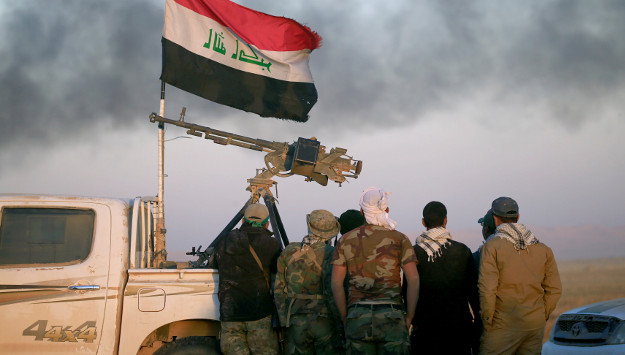
With Shiite militia forces scoring territorial gains in Iraq and Syria, the Islamic Revolution Guards Corps (IRGC) feels vindicated. In numerous interviews with Iranian media outlets, senior IRGC officials claim that their support for the Popular Mobilization Forces (PMF) in Iraq and Shiite militant groups in Syria has not only saved the two countries from “terrorists and takfiris” but has also warded off the threat of terrorism from spilling over into the Iranian territory.
Iran Continues to Arrest Dual-Nationals for Ransom
Richard Ratcliffe, the husband of a British-Iranian woman jailed in Iran’s notorious Evin Prison, says that Islamic Revolution Guard Corps (IRGC) officials are using his wife as a “bargaining chip” to secure a decades-old £500 [$620] million debt for a tank deal from the British government.
Erdoğan’s Syria Remark Angers Iran, Russia and Syria
Turkish President Recep Tayyip Erdoğan’s November 29 remark that Turkey intervened in Syria to topple President Bashar al-Assad has drawn a sharp rebuke from Tehran, Damascus and Moscow.
For Rouhani’s Reelection, It’s Still the Economy, Stupid
The Central Bank of Iran (CBI) has announced that the inflation rate for the past 12 months stood at 8.6 percent – down from 11.9 percent from the same period the year before. Previously, the Statistical Center of Iran had put this year’s figure at 7.5 percent.
Iran Deepening Military, Trade Ties with Russia
On November 28, Iranian President Hassan Rouhani and his Russian counterpart Vladimir Putin agreed in a telephone conversation to coordinate steps about global oil and gas prices as well as on the war in Syria.
Iran Overtakes OPEC Rivals as India’s Top Oil Supplier
In another sign of Tehran’s improving trade and economic ties with regional countries, Iran has overtaken OPEC-member rivals Saudi Arabia and Iraq as Indi
Iran’s Expansionist Naval Plans Threaten Gulf Stability
In a remark that is likely to heighten tension in the Gulf region, the Iranian chief of staff of the armed forces has called for setting up naval bases across on the coasts of Yemen and Syria in the future.
Infighting in Iran over Corruption Allegations within Judiciary
On the evening of November 26, security officials tried to arrest Mahmoud Sadeghi, a university lecturer and lawmaker from Tehran – disregarding his parliamentary immunity. But the authorities backed down after Sadeghi’s supporters, including a number of parliamentarians and students, gathered in front of his house to protest the move. The controversy soon turned into the “most heated” political issue in Tehran the following day.
Rouhani's Corruption Problem
The Iranian president, Hassan Rouhani, faces an uphill struggle as he prepares for his reelection bid scheduled for May 2017. It was not supposed to be this way. Iran’s 2015 nuclear deal with world powers, including the United States, was supposed to seal Rouhani’s second term.
After all, the moderate cleric had delivered on his key promise, the lifting of the painful nuclear-related international sanctions. But Rouhani’s hardline opponents inside the Islamic Republic are now increasingly identifying corruption as Rouhani’s Achilles Heel.
Iran Admits over 1,000 Combat Fatalities in Syrian Conflict
On November 22, a senior Iranian official admitted that more than 1,000 combatants dispatched by Iran to fight alongside President Bashar al-Assad’s forces have been killed in the Syrian war.
Iran on Path to Confrontation with US over Sanctions
On November 23, Supreme Leader Ali Khamenei said Iran would strike back if Washington renewed sanctions against the Islam
Read the Middle East Journal
The oldest peer-reviewed publication dedicated to the study of the modern Middle East, MEI’s flagship journal covers politics, society, and culture in the region.