MEI Senior Fellow Brian Katulis engages friends, colleagues, and policy experts in casual conversations on the most important happenings in the Middle East.
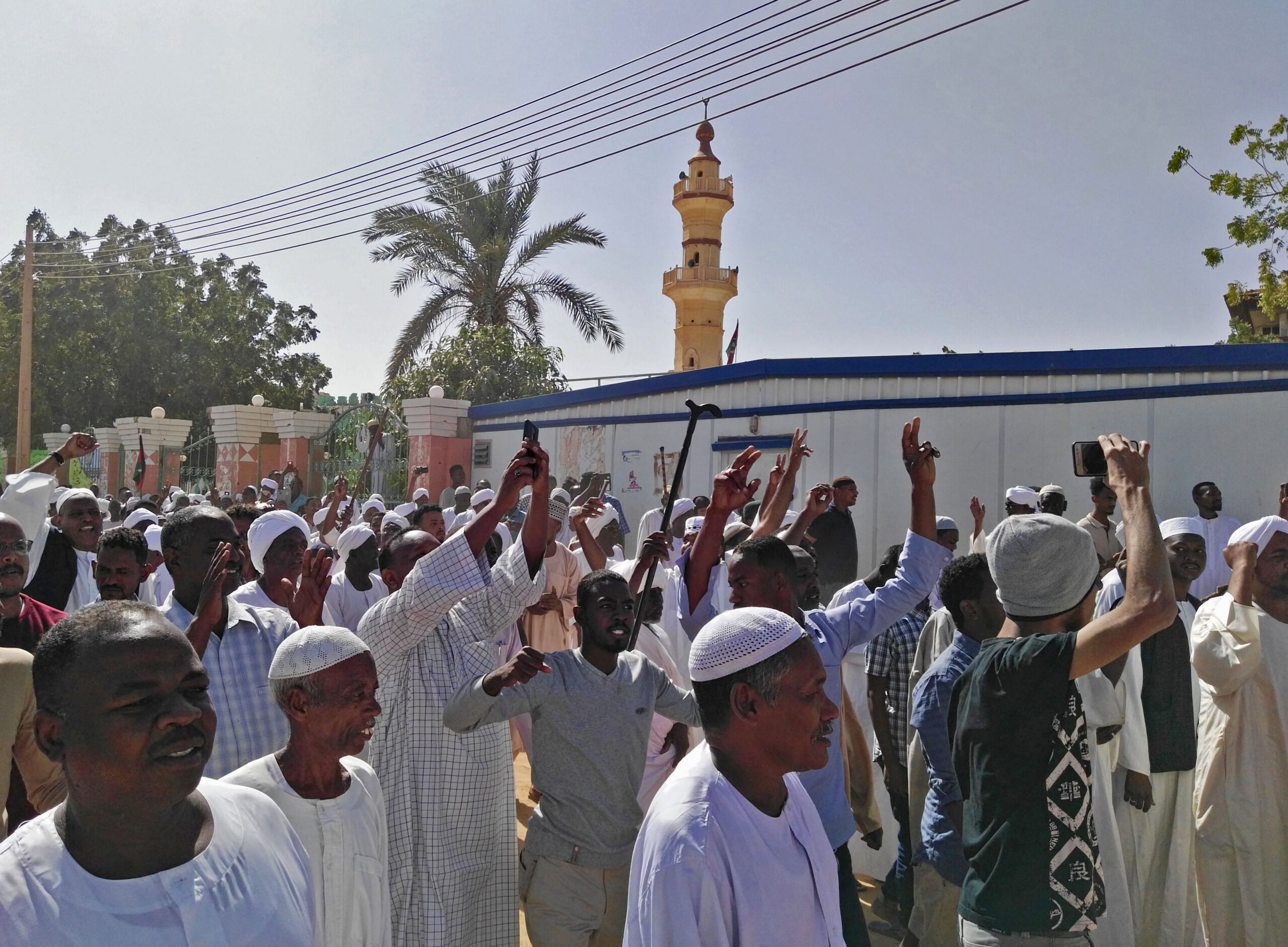
Annette Weber, senior fellow at the German Institute for International and Security Affairs, and Abdullahi Ibrahim, emeritus professor of African and Islamic history at the University of Missouri, join host Alistair Taylor to discuss the popular protests in Sudan, now in their third month, and how the government has responded to demands for the resignation of President Omar al-Bashir.
Saudi Arabia’s financial markets and economic development
Jean-François Seznec and Samer Mosis, authors of “The Financial Markets of the Arab Gulf: Power, Politics and Money,” join host Alistair Taylor for a deep dive on Saudi Arabia’s financial markets and the challenges facing its economic development.
William Lawrence, visiting professor of political science and international affairs at George Washington University’s Elliott School, and MEI’s Robert Ford join host Alistair Taylor to discuss mounting protests and political turmoil in Algeria in the lead up to next month’s presidential elections.
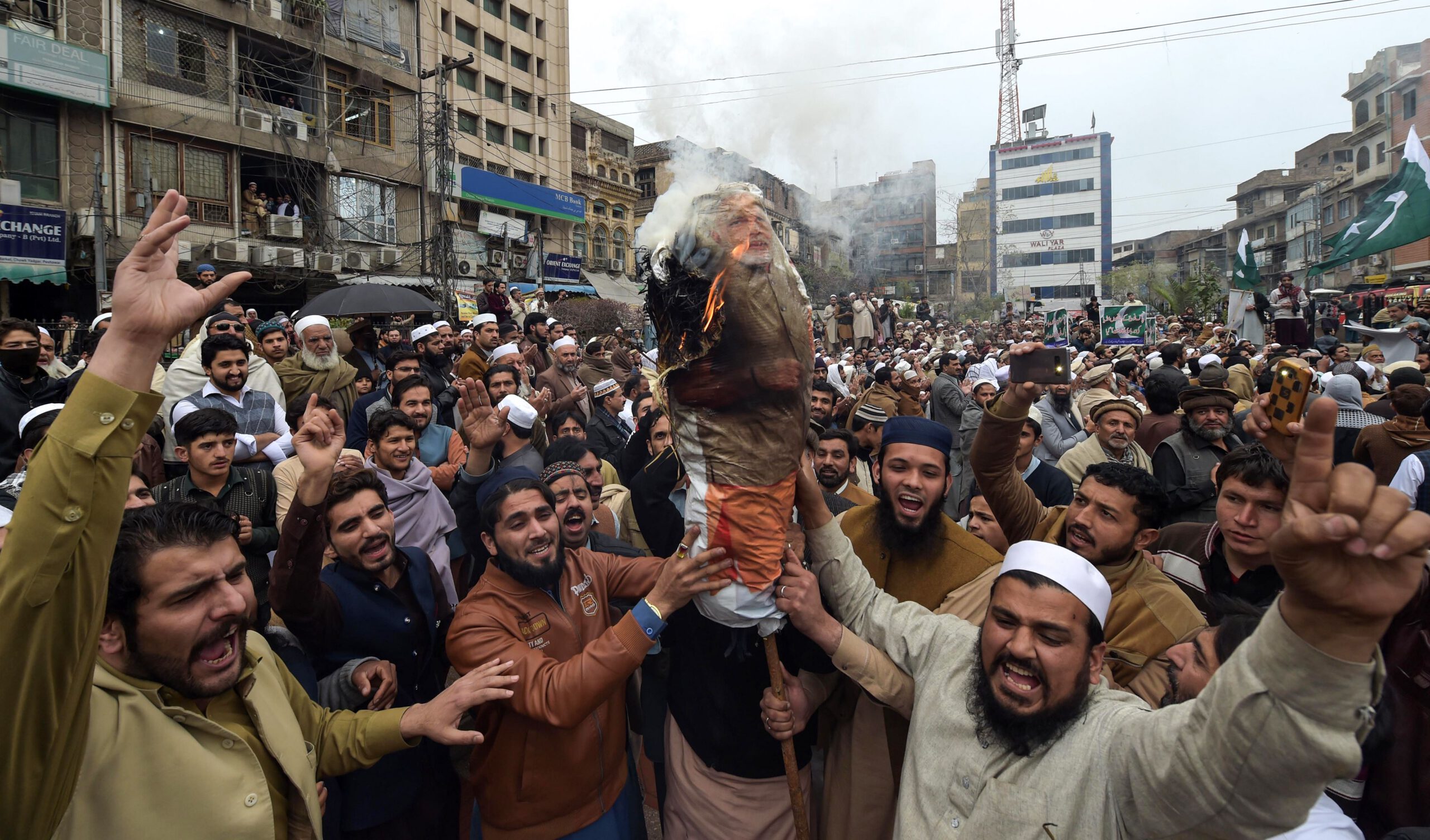
Madiha Afzal, visiting fellow at Brookings, and MEI’s Marvin Weinbaum join host Alistair Taylor to discuss Pakistan’s latest flare-up with India, the recent visit of Saudi Crown Prince Mohammed bin Salman, the US-Taliban talks, and the political and economic challenges facing the government of Imran Khan.
Kenneth Pollack, resident scholar at AEI, joins host Alistair Taylor to discuss his new book, Armies of Sand: The Past, Present, and Future of Arab Military Effectiveness.
John Limbert, former Deputy Secretary of State for Iran under the Obama administration, and MEI senior fellows Alex Vatanka and Ahmad Majidyar join host Alistair Taylor to discuss the 1979 revolution and its continuing impact on US-Iran relations and the region.
MEI’s Robert Ford and Charles Lister join host Alistair Taylor to discuss the announced US withdrawal from Syria, the rush to fill the power vacuum that has ensued in its wake, and what the policy means for Syrians and the fight against ISIS.
MEI’s Ahmad Majidyar and Marvin Weinbaum join host Alistair Taylor to discuss the US-Taliban negotiations in Doha and what a potential agreement could mean for Afghanistan and the wider region.
Zmkin Ali and Mac Skelton of the Institute of Regional and International Studies (IRIS) at the American University of Iraq Sulaimani, join host Alistair Taylor for a discussion on Iraq’s political climate, Baghdad’s relations with Erbil in the aftermath of the 2017 referendum, and other regional dynamics.
Sudan has faced a wave of protests in recent weeks amid an economic crisis and calls for a change in leadership. Nisrin Elamin, a doctoral candidate in anthropology at Stanford, and Rania Biraq, a Sudanese activist who has been participating in the protests, join host Alistair Taylor to discuss the situation, its parallels to the Arab Spring, and scenarios going forward.
Extra: Turkey’s domestic and foreign challenges in 2019
MEI’s Gonul Tol and Robert Pearson join host Alistair Taylor for a deeper dive into Turkey’s upcoming local elections in late March, the country’s economic slowdown, and its foreign policy challenges in Syria.
In our first episode of 2019, MEI experts Paul Salem, Charles Lister, Ahmad Majidyar, Randa Slim, Gonul Tol, Robert Pearson, and Gerald Feierstein discuss the significant policy developments and announcements of the past few weeks and outline the major issues to watch in the year ahead.
In our final episode of the year, host Alistair Taylor interviews several MEI scholars on the key events that transpired across the Middle East in 2018 including in the Gulf, Iran, Turkey, and Afghanistan. Guests include Paul Salem, Gerald Feierstein, Alex Vatanka, Gonul Tol, and Ahmad Majidyar.
Aisha Al-Sarihi, visiting scholar at AGSIW, Nadim Farajalla, director of the Climate Change and the Environment program at AUB’s Issam Fares Institute for Public Policy and International Affairs, and MEI’s Amal Kandeel join host Alistair Taylor to discuss how climate change is affecting the Middle East and what can be done to address the issue.
Giorgio Cafiero, CEO and founder of Gulf State Analytics, and F. Gregory Gause, head of the Department of International Affairs at Texas A&M University, join host Jerry Feierstein to discuss the state of GCC relations amid the Qatar dispute and other crises heading into the next GCC Summit.