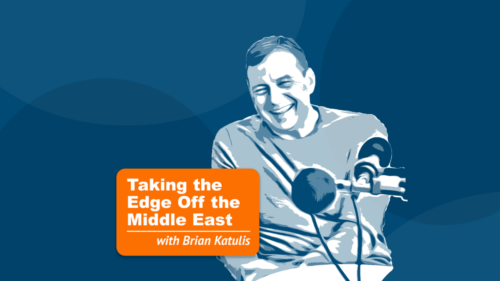
MEI Senior Fellow Brian Katulis engages friends, colleagues, and policy experts in casual conversations on the most important happenings in the Middle East.
A View From the Gulf: A Discussion of Gulf Politics and Security
The Middle East Institute is proud to host Gulf Research Center experts Abdulaziz Sager, Mustafa Alani, and Christian Koch for an examination of recent developments in the Gulf in the wake of the Arab Spring. The speakers will address the crises in Yemen and Bahrain, US-Gulf relations and the question of reform in the region.
Speakers: Dr. Abdulaziz Sager, Dr. Mustafa Alani, Dr. Christian Koch, Amb. David Mack
Rebuilding Libya: A Status Report on the Humanitarian Situation on the Ground
The Middle East Institute (MEI) and International Relief and Development will jointly host a discussion on the reconstruction of Libya following the fall of the Qaddhafi regime and the humanitarian dimensions of the rebuilding efforts. As the rebels root out the last of Qaddhafi royalists and regime strongholds, the question of Libya's future looms large.
Syria on the Verge: Implications for a Nation in Revolt
The Middle East Institute (MEI) and International Relief and Development will jointly host a discussion on the reconstruction of Libya following the fall of the Qaddhafi regime and the humanitarian dimensions of the rebuilding efforts. As the rebels root out the last of Qaddhafi royalists and regime strongholds, the question of Libya's future looms large.
The Middle East Institute is proud to host Ilan Peleg and Dov Waxman, authors of the book Israel's Palestinians:The Conflict Within (Cambridge, 2011), for a discussion about their findings. One in five citizens of Israel are Palestinian. Often overlooked by outside observers, the challenges facing the Palestinian minority in Israel are an inseparable part of the Israeli-Palestinian conflict. Resolving this conflict – a central concern of U.S. foreign policy and current international diplomacy – requires more than the establishment of a Palestinian state.
My Father Died for Pakistan, An Examination of Religious Extremism in Pakistan
The Middle East Institute is proud to host Shehrbano Taseer, daughter of Governor Salmaan Taseer, who was murdered this past January for speaking out against the misuse of Pakistan's blasphemy laws. The assassinations of Punjab Province Governor Salmaan Taseer and Federal Minister for Minorities Affairs Shahbaz Bhatti have raised concerns about the rise of religious extremism in Pakistan. Shehrbano Taseer will discuss her father's work and legacy and offer her thoughts on the state of religious minorities and the spread of extremism in Pakistan.
After the Arab Spring: Toward Political & Economic Inclusion in the Arab World
The Middle East Institute and the UNDP are proud to host a discussion with UNDP Administrator Helen Clark, Under Secretary for Economic, Energy and Agricultural Affairs Robert D. Hormats, and Middle East Institute Scholar Amb. Edward Walker about how best to address political, economic and human development needs in the Arab world today.
Palestinian Authority-Hamas Unity Agreement: An overdue step towards peace or another stone in the road?
Dr. Matti Steinberg, Israel's premier expert on Islamist politics and Hamas, has spent his career as a public intellectual and analyst of Israel's relations with the modern Arab and Islamic world. He has taught at the Hebrew University and the Herzliya Interdisciplinary Center. Dr. Steinberg has just completed a semester teaching a seminar to graduate students on Islamic Fundamentalism as a Gruss-Lipper lecturer and scholar at the Woodrow Wilson School at Princeton University.
Critical attention is increasingly directed toward Pakistan's Inter-Service Intelligence (ISI) for its alleged involvement in a series of recent high profile terrorist attacks inside Pakistan as well as earlier in India and Afghanistan. The panelists will examine the scope of the ISI's activities and its composition. They will discuss its place within the military establishment and whether it ever operates as a rogue organization. Panelists will also consider to what extent the ISI's relationship with US intelligence is cooperative or competitive.
Uprising in Syria: Implications for US and Regional Policy
The Middle East Institute is proud to host Syria experts Ammar Abdulhamid, Helena Cobban, and Steven Heydemann for a discussion about the ongoing protests in Syria and the international and regional reactions to the shifting Syrian landscape. As the uprising continues into its third month, how sustainable is the protest movement? Are the Syrian government's tactics in crushing dissent succeeding? What impact has the violence had on the Assad regime's relationship with its neighbors like Turkey and close allies like Iran, Hezbollah and Hamas?
The Middle East Institute is proud to host Ambassador Ali Suleiman Aujali, Paul Pillar, and Jeffrey White for a discussion about the current situation in Libya and ways to address the stalemate between Libya's rebels and the forces of Colonel Qaddhafi. As the conflict drags into its third month, Aujali, Pillar and White will examine the humanitarian situation on the ground, NATO's recent operational innovations, and the role of the US and Europe in aiding Libya's rebels.
Speakers: Amb. Ali Suleiman Aujali, Paul Pillar, Jeffrey White
The Upcoming Turkish Elections: Implications for Domestic and Foreign Policy
The Middle East Institute's Center for Turkish Studies is proud to host Mr. Taha Özhan, Director General of the Foundation for Political, Economic and Social Research (SETA Ankara), for a discussion on Turkey's upcoming elections on June 12.
Palestinian Peace Strategy in a Changing Middle East
The Middle East Institute and The Foundation for Middle East Peace are proud to host Ziad Abu Zayyad a veteran journalist and the co-founder and editor of the Palestine/Israel Journal. In his talk, Mr. Abu Zayyad will address whether a rapprochement between Fatah and Hamas is possible, and will also discuss the main challenges facing the US-Palestinian bilateral relationship.
The Middle East Institute is proud to host Amb. Edmund J. Hull (retired) for for a discussion about his recent book “High-Value Target: Countering Al Qaeda in Yemen”. Hull's book tells the inside story of how al Qaeda's Yemeni safe haven was disrupted during Hull's tenure. A top counter terrorism official in both the Clinton and Bush administrations, Hull provides a detailed account of a team effort to build a strategic basis for US-Yemeni counter terrorism and to execute a broad strategy aimed at improving not only the security of Yemen but also its economic development.
Raja Shehadeh is a Palestinian lawyer, author and founder of the pioneering, nonpartisan human rights organization Al-Haq. He has authored several books about international law, human rights, and the Middle East including Palestinian Walks: Forays into a Vanishing Landscape, for which he won the UK Orwell Prize.