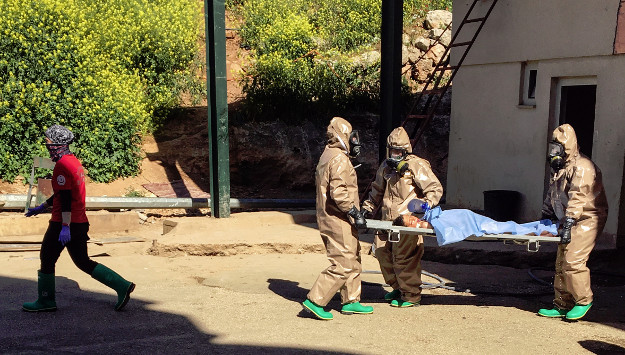
April 6, 2017 – Paul Salem explains three ways that the Syrian government’s use of chemical weapons against civilians is already impacting the Trump administration’s policy toward Syria.
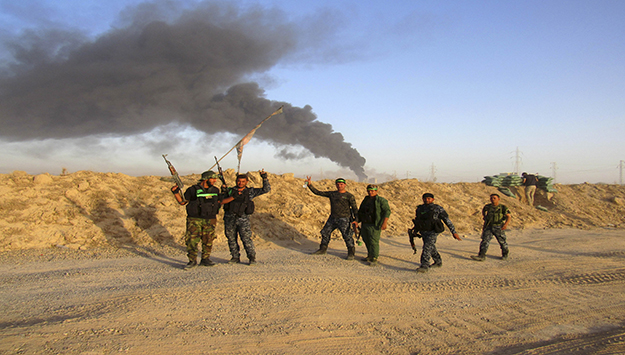
While Iraq’s efforts to dislodge the Islamic State (ISIS) from Mosul have proceeded better than expected, the Iraqi political class must now face the complicated and divisive matters that it has failed to address for years. While the battle to liberate all of Iraq from ISIS is not over, three issues remain sources of tension: decentralization, the presence of foreign troops in the north, and the status of disputed territories such as Kirkuk, between the Kurds and the central government.
I.R.G.C. Media Defends Assad as U.S. Mulls Military Responses to Syrian Chemical Attack
While more evidence is surfacing that suggests the Syrian army may have been behind the chemical attack that killed scores of civilians in Syria, Iranian media outlets affiliated with the Islamic Revolution Guards Corps (I.R.G.C.) continue to defend the regime of Bashar al-Assad. They argue that Damascus was not responsible for the killings. “Without doubt, the claims by Syrian opposition groups and some western and Arab countries that the Syrian army has used chemical weapons in Idlib can be categorically rejected.
Protecting India’s Interests in the Middle East: Militancy and Non-state Actors
This essay discusses the threat that ISIS has posed to India, which has significant stakes in the Gulf but remains an ambivalent presence in the region. The future trajectory of the world’s largest democracy’s relations with the Middle East remains a grey area, but one that in the future, could become a defining relationship for global security.
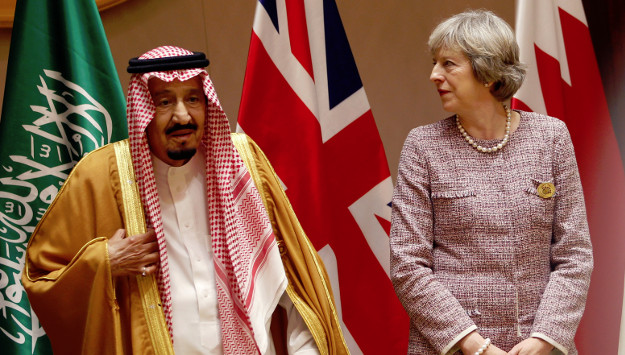
British Premier’s Remarks in Riyadh Prompt Angry Reaction from Tehran
The Iranian Foreign Ministry has reacted angrily to British Prime Minister Theresa May’s latest comments about Tehran’s destabilizing role in the Middle East, the ministry’s official website re
Afghan, Iranian Officials Spar over Tehran’s Support for Taliban
The Iranian and Afghan delegations to the 136th assembly of the Inter-Parliamentary Union have had acrimonious exchanges over Tehran’s support for the Taliban, the Iranian media reports.
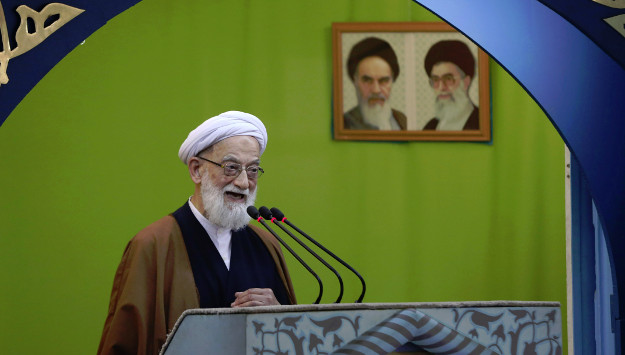
Authorities in Iran Detain Sunni Leader for Opposing I.R.G.C.’s Role in Syria
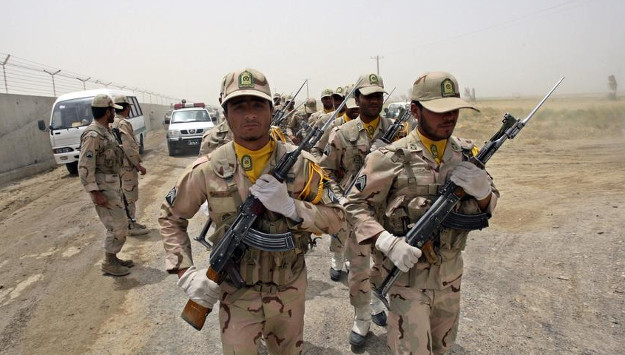
Scores of Sunni Balochs demonstrated in Iran’s southeastern Sistan and Baluchestan Province on Tuesday to protest the detention of a Sunni religious leader, the Iranian media reports.
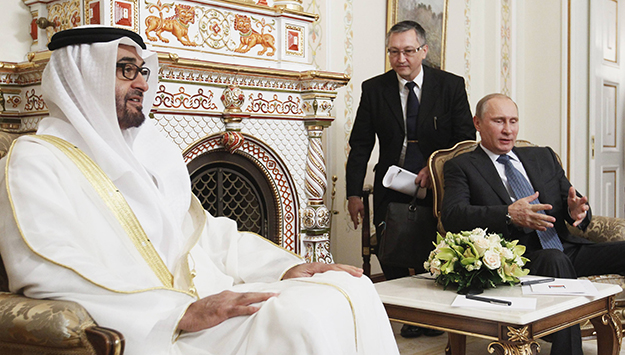
Russia and the United Arab Emirates (U.A.E.) are developing a unique bilateral relationship. The latest manifestation of growing ties occurred at the biennial International Defense Exhibition & Conference (IDEX) in February when Russia and the U.A.E. announced a deal to co-produce a fifth-generation jet fighter in the Emirates. Although Moscow and Abu Dhabi have been cooperating on a range of economic and security issues for years, this was an unprecedented move.
India has become Israel’s largest arms export market in the world over the last decade (replacing China); and Israel has become one of India’s largest arms supplier. Why did India develop a strong military partnership with a country it had ignored for 42 years? What can explain the development of defense ties in spite of limited political leadership involvement over the past decade? Finally, what are the prospects for defense relations as India grows to become one of the world’s largest defense importer? This essay answers these questions by providing an account of the evolution of Indo-Israeli defense cooperation over the past 25 years.
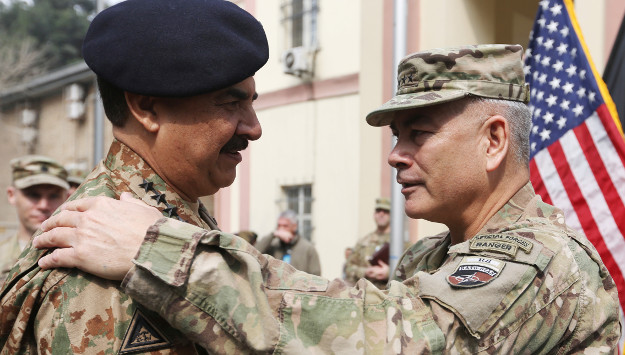
While the U.S. and Pakistani counterterrorism efforts have degraded al-Qaeda and the Pakistani Taliban in the Federally Administered Tribal Areas (FATA), sectarian violence across the country continues unabated and threatens to further destabilize Pakistan and the broader region.