Indonesia’s Nahdlatul Ulama: A Tolerant, Inclusive Message to the Arab Middle East
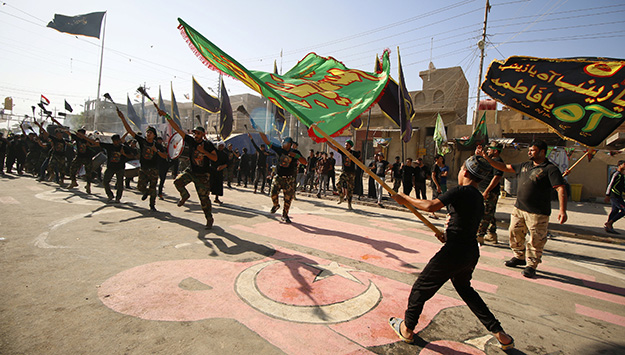
The current initiative by Nahdlatul Ulama (N.U.)—a traditionalist organization with an estimated membership of over 40 million—to promote globally the notion of Islam Nusantara (Islam of the Indonesian Archipelago) aims to spread, both locally and globally—and to the Arab Middle East in particular—a multifaceted message of a tolerance and moderation in an effort to counter religious extremism and terror. This essay examines the background, substance, and significance of this initiative.
Iraq and Syria: Regional and International Dimensions
October 14, 2016 – In this interview Randa Slim discusses the latest diplomatic and political developments in the Syrian crisis and the regional battle against ISIS, including challenges to be dealt with in the aftermath of an offensive to retake Mosul, with host Paul Salem.
New Report Details Iranian Human Rights Violations
Iran’s dismal human rights record is once again under international scrutiny. On the 7th anniversary of the regime crackdown on the opposition after 2009, the International Campaign for Human Rights in Iran ran an extensive overview of major human rights violations, including torture and executions, which the Iranian authorities are predictably refusing to acknowledge.
Amir-Abdollahian: The Soft Face of Iran’s Hard Power
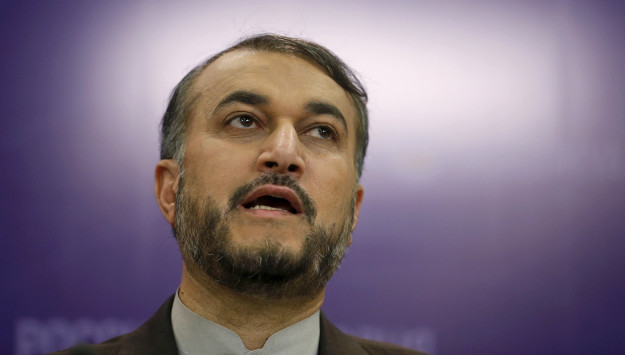
Hossein Amir-Abdollahian, a senior Iranian diplomat close to the Islamic Revolution Guards Corps (IRGC) came back into the Iranian headlines this week charging that the US and Israel were determined to change the borders of nations in the Middle East as part of an attempt to weaken the so-called “resistance,” the anti-US and Iran-led bloc of Lebanese Hezbollah, Hamas and Bashar al-Assad of Syria; and that Iran had a duty to block these nefarious attempts and redouble its support to its regional allies. While hardly a household name in the West, Amir-Abollahian has been the IRGC’s soft fac
Iraqi Prime Minister Haider al-Abadi has expressed outrage at the recent Turkish parliamentary extension of the mandate of Turkey’s military presence on Iraqi soil. For months, Turkish forces have maintained a contingent in northern Iraq, ostensibly at the invitation of local forces, with the announced mission of training them in preparation for the battle for Mosul. With multiple parties preparing for the offensive, Mosul, Iraq’s second largest city, is slated to be liberated from a 30-month-old Islamic State (ISIS) occupation.
This essay considers three issues triggered by the pushbacks of boats carrying Rohingya and Bangladeshi asylum seekers and migrants in the Andaman Sea and Bay of Bengal in May 2015. Firstly, whether the actions of Thailand, Malaysia and Indonesia amounted to refoulement. Second, whether these states are bound by the non-refoulement norm. Finally, whether there exists a customary norm of non-refoulement in Southeast Asia.
Yemeni Factions, Saudi Arabia Escalate Aimless War
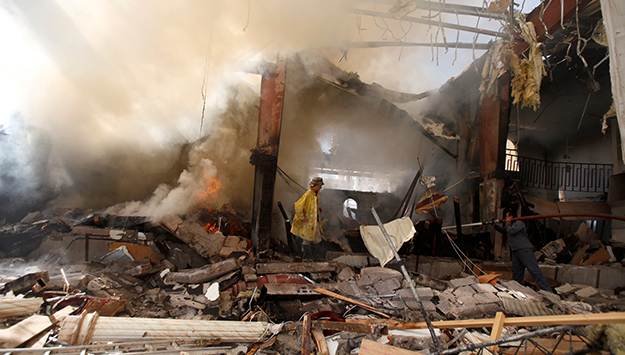
The parties to the intractable Yemen war appear further entrenched in their enmity than ever before, despite U.S. and British efforts to push Yemeni leaders toward new negotiations.
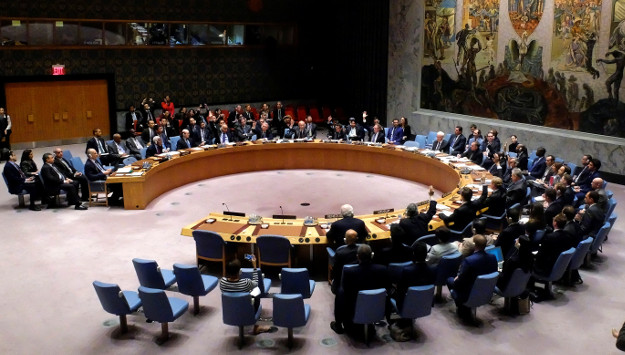
In this Weekly Briefing, MEI experts Robert S. Ford, Gonul Tol, and Ruba Husari provide analysis on issues including the UNSC’s inability to administer diplomatic solutions in Syria, the rebuilding of diplomatic ties between Russia and Turkey, and OPEC’s ongoing consideration of how to control member state oil production.
Big Data for Disaster Response in Data-Poor Settings: Lessons from the 2015 Hindu Kush Earthquake
Natural disasters are complex events. Responders require accurate, reliable, and timely data to ensure the decision-making process is efficient and that their efforts are effective. Big data emerges at a fast-paced rate in our digital age and may contribute to enhancing situational awareness. However, there are still large differences between regions in terms of uneven flows of information and levels of access to Information and Communication Technologies. This digital divide exacerbates the information and collaboration gaps between responders and affected communities even more. This essay tries to provide a realistic assessment of the role that big data could play in improving response in a high data poverty context by focusing on a case study of a sudden onset natural disaster.
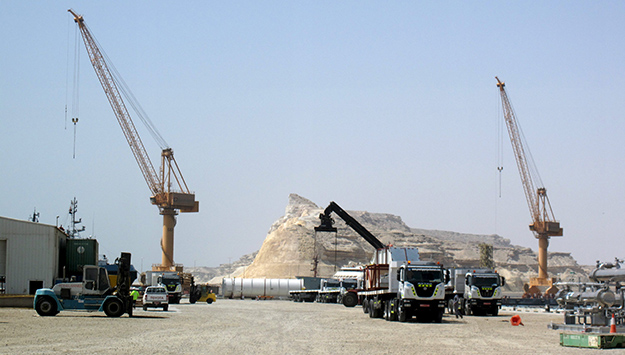
In the face of economic challenges and geopolitical shifts, Oman is investing in its strategic partnership with India to diversify Muscat’s web of international allies. This relationship—which dates back to the Indus Valley Civilization when the Arabian Sea’s monsoon winds began facilitating 5,000 years of maritime trade between the two countries—has matured substantially in recent years.[1]
Science and Technology for DRR: Asian Policy Dialogue Agenda
The science and technology sectors possess the knowledge and capabilities to reduce risk and build resilience in the Asia Pacific region. In fact, science and technology can play a key role in shaping the upcoming Asia Regional Plan as well as the political declaration at the Asia Ministerial Conference on Disaster Risk Reduction (AMCDRR), which will be held this November in Delhi. This essay proposes several agenda items for these dialogues.
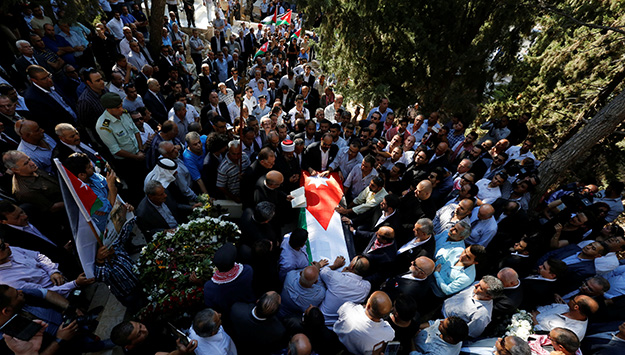
The tug of war between proponents of a civil, democratic, and secular state, on the one hand, and conservative forces, especially religious hardliners, on the other, has become the center of public debate in Jordan against a backdrop of incidents that have recently polarized the kingdom. Accusations that new school textbooks for elementary grade students have been altered where certain religious references, including Quranic verses, were removed have triggered public protests throughout the country.
In this week’s Monday Briefing, MEI experts Robert S. Ford, Paul Salem, and Marvin G. Weinbaum provide analysis on recent and upcoming events including Russia’s recent escalation of military force in Syria, deteriorating Saudi-Iranian relations, and an escalation in the Kashmir between India and Pakistan.
A different kind of horror descended upon Beirut with the opening of Maskoon Fantastic Fest, the Middle East’s first film festival for horror, fantasy, action, and science-fiction.
The brainchild of Abbout members, Lebanon’s most prominent production house, Maskoon was an attempt to expand the scope of genres undertaken by the local industry. The festival was held September 14-18.
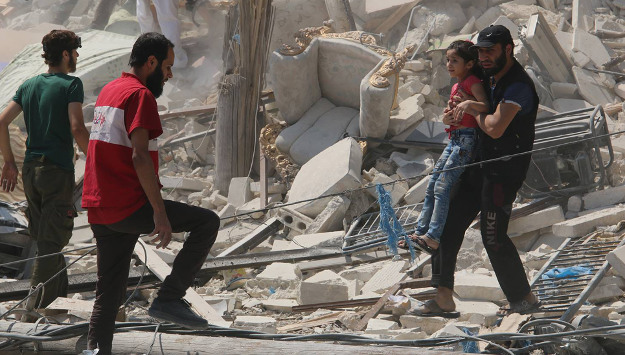
Five years of horrendous conflict in Syria has given birth to a menacing array of threatening and destabilizing repercussions. From the rapid proliferation of terrorist groups, to mass civilian displacement and an international refugee crisis, not to mention the disintegration of a major nation state at the heart of the Middle East, the consequences of the conflict’s apparent intractability are clear for all to see.