Defying Expectations: China’s Iran Trade and Investments
This essay examines China-Iran trade relations, as well as Chinese investments in Iran. Particularly, it asks whether the Chinese-Iranian stated ambition to increase the value of bilateral trade to $600 billion within a decade is attainable. Additionally, it identifies the factors responsible for the trade deficit in Iran’s favor, and shows that the pace of China’s foreign direct investment (F.D.I) in Iran is slowing in spite of absolute increases.
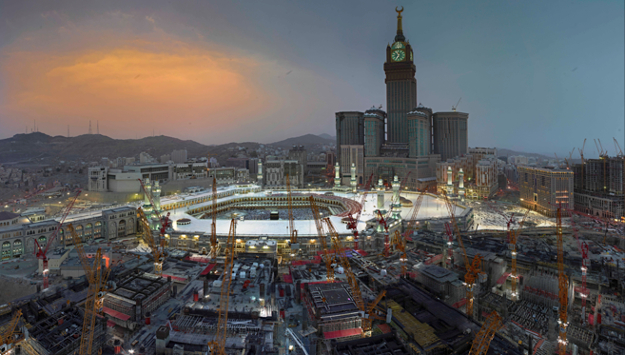
On a sub-level inside one of the Smithsonian’s art galleries in Washington, a man stood entranced by the Golden Hour, a six by eight foot photographic composition of Mecca.
The man noted the dozens of cranes and the Makkah Royal Clock Tower, a monstrous and controversial piece of architecture that dwarfs everything around it. Then, with his finger, the visitor carefully air circumnavigated around the Great Mosque.
“What’s this tiny black cube in the middle?” he asked, pointing to the Kaaba.
Some problems cannot be postponed indefinitely, and Libya is one of them. U.N. mediators, fronting for a hesitant and oft-divided international community, are running out of gimmicks for further talks among the feuding parties in Libya’s dysfunctional political process. Moving swiftly after his arrival in Tripoli last Wednesday, Prime Minister Fayez al-Sarraj reached out to the Libyan public, key central government institutions, and regional and municipal authorities.
European Identity and the Plight of Syrian Refugees
In the Declaration on European Identity, the nine Member States at that time expressed their determination to build a community of law and democracy which measures up to the needs of the individual and preserves the rich variety of national cultures.[12] Many things have changed since 1973, but I would argue, the building blocks for a political—as well constructive—notion of European identity remain the same … Yet, the actions of the member states during the last 12 months with respect to the so-called ‘refugee crisis’ reveal their betrayal of those commitments undertaken in 1973.
Monday Briefing: Erdogan's Failed Washington Trip, Iraq's Cabinet Reshuffle, and Other Key Issues in Week Ahead
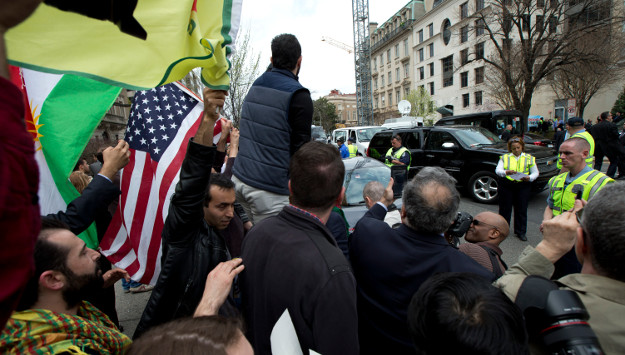
In this week’s Monday Briefing, MEI experts Gonul Tol, Robert S. Ford, Charles Lister, and Paul Salem provide analysis on recent events including Turkish President Erdogan’s visit to Washington, the reshuffling of Iraq’s cabinet, King Salman’s forthcoming visit to Egypt, and the latest attempts by Jabhat al-Nusra over the weekend to disrupt the Syrian political process.
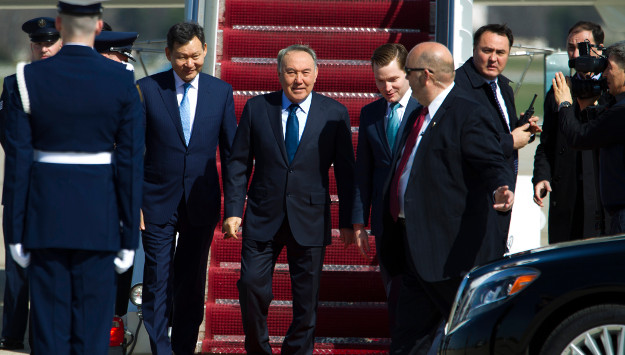
At the request of the Embassy of the Republic of Kazakhstan, the Middle East Institute (MEI) solicited a series of short academic papers on aspects of Kazakhstan’s domestic and regional policies for advancing prosperity, confidence-building, political stability, and nuclear nonproliferation. Experts from MEI and three other leading institutions presented their work in a round table discussion on March 29, 2016. They engaged in an active exchange of views with invited counterparts from the U.S. administration, think tanks, and from Central Asia, including Afghanistan.
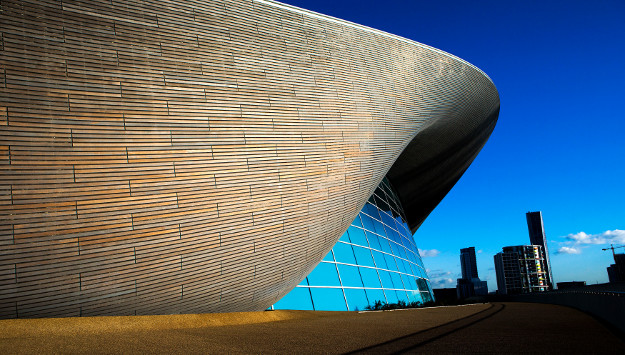
The Middle East Institute (MEI) is saddened by the passing of Zaha Hadid, the renowned Iraqi-born architect whose iconic structures ignited imaginations and experimented with new spatial concepts. Hadid was the first female and first Arab recipient of the Pritzker Architecture Prize, the field’s highest honor. In 2013 she received MEI’s Issam M. Fares Award for Excellence in recognition of her visionary contribution to architecture and urban design.
Where History and Humanitarianism Collide: The Bay of Bengal “Migrant” Crisis
This essay examines the 2015 Bay of Bengal migrant crisis in Asia from three broad perspectives: 1) the historically entrenched views towards the Rohingyas in Myanmar, which are now conflated with religion and which have exacerbated the refugee situation; 2) the lack of humanitarian response by governments for the plight of the displaced; and 3) the challenges of using regional mechanisms to tackle the issue.
A casual, short visit to Stockholm may not yield any eye-opening revelations. The mood is as tranquil as ever—the trendy restaurants and bars occupy every neighborhood in the center, and the grandeur of its dazzling, opulent architecture blinds the eye from noticing the Roma beggars scattered across the city.
When Pakistani Taliban gunmen stormed a school in December 2014, killing more than 130 schoolboys, it united many Pakistanis in support of a major offensive against the radical group that had been growing more menacing for years.
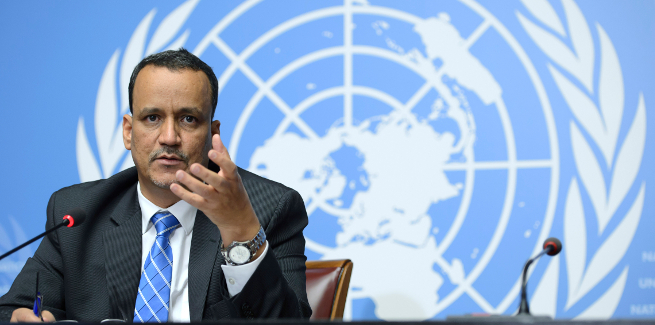
Just days before the first anniversary of the Saudi air campaign in Yemen on March 26, the U.N. special rapporteur to Yemen, Ould Cheikh, announced a cease-fire to begin April 10 followed by a third round of talks between the warring Yemeni factions on April 18. These talks have a better chance of success than previous attempts. The Houthi-Saleh alliance has long insisted that a complete and final cease-fire proceed any talks, and in previous attempts at negotiation, announced cease-fires never took hold and talks went nowhere.
Free Movement, Border Control and Asylum in Europe: Geopolitics of Italy in the European Migration Policy Framework
The creation of the Schengen area has modified the political geography of migration with important implications on for countries around the world. On one hand, the Schengen area established the first supranational border in the history of Europe; on the other hand, it obliged a small group of countries to guard the new border and to manage the refugee flows. In this context, Italy has a key role to play, but the policies that have been implemented in Italy and other E.U nations since the ’80s have revealed a lack of long-term vision. This is occurring in a context characterized by the absence of an E.U. migration policy and the selfish attitude shown by some non-Mediterranean European countries.
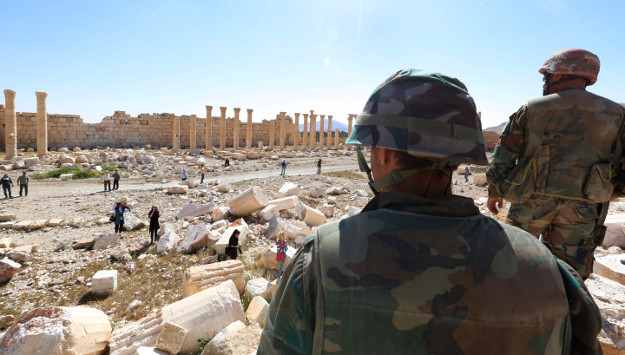
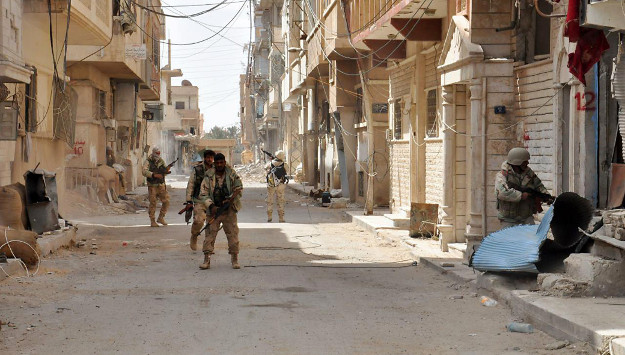
Monday Briefing: Palmyra, Mosul, and the ISIS Threat Abroad
In this week’s Monday Briefing, MEI experts Charles Lister, Paul Salem, and Daniel Serwer provide analysis on recent events including the capture of Palmyra by Syrian government forces, preparations for the campaign to retake Mosul, the risk of further terrorist attacks in Europe like last week’s in Brussels. Allen Keiswetter also responds to recent comments by Republican presidential candidate Donald Trump on U.S. policy toward Saudi Arabia.