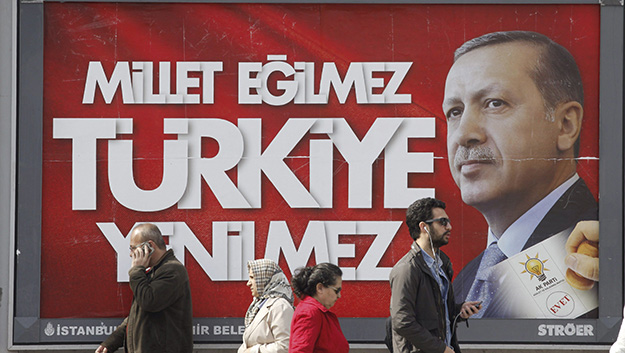
Turkish Prime Minister Recep Tayyip Erdogan secured his eighth big win in 14 years when his ruling AK Party won over 45 percent of the vote in local elections on March 30. After facing down corruption charges, mass protests, and accusations of authoritarianism, Erdogan may feel emboldened to run for president in Turkey’s first direct presidential election in August.
Allen Keiswetter is a scholar at the Middle East Institute and an analyst at the law firm of Dentons. This is an updated version of a paper originally published by Dentons-GPS.
The Iran Sanctions and South Korea’s Balancing Act
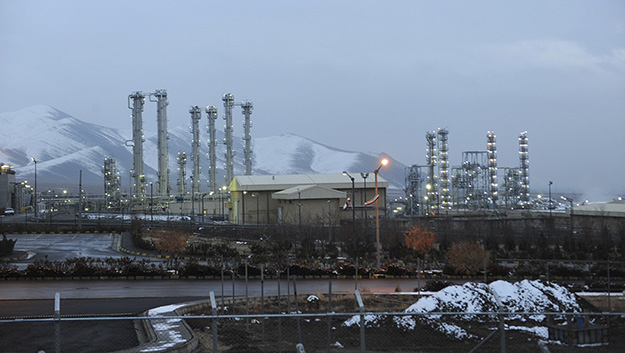
Following the recent progress on the Iranian nuclear issue and the subsequent easing of sanctions, South Korean businesses are reengaging the Iranian market. A South Korean trade delegation visited Iran on March 9, 2014 to expand bilateral trade ties in the mining, industrial, and food sectors. On March 17, South Korea’s Finance Ministry lifted a ban, allowing South Korean auto, construction, pharmaceutical, and telecommunications industries to resume trade with Iran, though sanctions remained in the shipbuilding, shipping, and harbor sectors.
Sabbahi, Spoiled Ballots, and the Egyptian Election
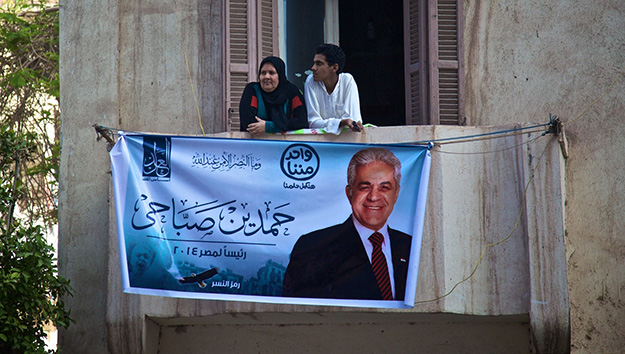
Egyptian presidential elections underdog Hamdeen Sabbahi achieved the impossible: he came in third in a two-horse race. The 60-year-old leftist politician and sole rival to the country’s ex-army chief Abdul-Fattah el-Sisi secured just under 757,000 votes in the preliminary count as opposed to Sisi’s more than 23 million votes—as well as to the votes of a last-minute unexpected entrant: the spoiled ballot.
Pakistan is only one of three countries—the others being Afghanistan and Nigeria—in which polio has never been eradicated. Polio in Pakistan has been a particular worry recently, with a disturbing spike in cases. According to the World Health Organization (WHO), 61 out of 77 cases of polio reported worldwide from January through mid-May 2014, or 79 percent, were in Pakistan.[1]
The Role of a Middle Power South Korea in Iran, Syria, and Egypt
This article examines how South Korean foreign policy deals with Iran, Syria, and Egypt, with the overarching argument that because South Korea is pushing to build its middle power presence, it should clearly articulate its position on key security issues in the Middle East. As a non-permanent member of the UN Security Council, South Korea should support international norms such as nonproliferation, humanitarian protection, and democracy. Unless the South Korean government consistently upholds these norms, it will encounter setbacks in finding international support in its dealings with North Korea.
Egyptians have headed to the polls to elect a president for the second time since the January 2011 revolution. Field Marshal Abdul-Fattah el-Sisi is expected to win by a wide margin over the only other contender, leftist politician Hamdeen Sabahi. The magnitude of that victory, however, will have an important impact on Sisi’s electoral mandate, and many questions remain about what he plans to do with it once in power.
Kuwait: At the Crossroads of Change or Political Stagnation
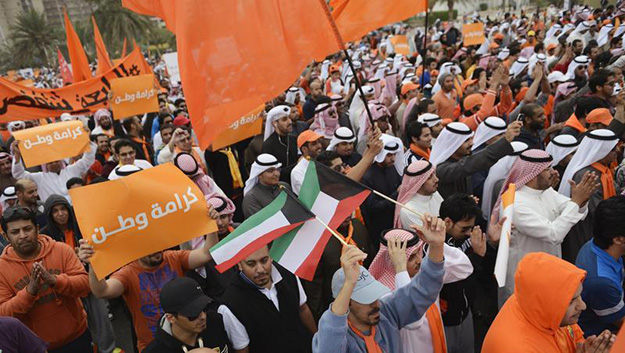
Though Kuwaitis have been striving for change, particularly since 2011, their country’s political structures remain more or less unaltered. Yet change is inevitable, writes Shafeeq Ghabra in this MEI Policy Paper. At issue is a semi-democratic system that has proven ineffective at dealing with problems such as government mismanagement, corruption, a lack of economic transparency, and inequality toward tribes and undocumented immigrants.
In 2001, there were only 34,000 Muslims living in Korea; today there are more than 150,000. Furthermore, there are over 45,000 ethnic Korean Muslims. In contrast to Europe, where over a thousand years of political, cultural, and religious interactions have shaped social attitudes toward Islam, Korea’s Muslim population remains relatively unnoticed, comprising only 0.3 percent of the total Korean population. However, Islam in Korea is in the midst of great change. With the continuing increase in international migration over the past decade from Muslim-majority countries, the Korean Muslim community is transforming into a significant social and religious force.
The Egyptian Military’s Economic Channels of Influence
Egypt’s new constitution grants the country’s generals greater autonomy and an increased formal political role. The draft authorizes military trials for civilians (Article 204) and ensures that the military’s budget be beyond civilian scrutiny. The most significant change is that the Supreme Council of the Armed Forces (SCAF) will have the final say in choosing or dismissing the defense minister for two presidential terms (Article 234).
Geography alone should make the Arab world Iran’s key foreign policy focus. Of Iran’s 13 immediate neighbors, seven are Arab countries.[1] But Tehran’s approach to the Arab world, with its 22 states extending from North Africa to the Arabian Peninsula, varies widely in intensity, and Iran’s objectives are equally varied depending on the country in question.