Saudi Professor Faces Charges After Fighting for Free Speech
This Opinion was first published on Al-Monitor.com on June 28, 2012
What are the limits of free speech and open dissent in the Kingdom of Saudi Arabia? They are often unclear and seemingly arbitrary, but there is no doubt that Dr. Mohammad al-Qahtani, a professor and activist, went well beyond them, and he knew it. He was hardly surprised when Saudi prosecutors, finally fed up with his vociferous denunciations of the regime, hit him with a long list of criminal charges. He had predicted it, and in the context of Saudi Arabia, he was asking for it.
Senator John McCain was uncharacteristically subdued in a key note address yesterday to the Middle East Institute/Institute of Turkish Studies conference on Turkey. He prodded President Obama to be more outspoken in denouncing the Assad regime and advocated a “safe zone” inside Syria along the Turkish border, but only in response to a question. He discounted the likelihood of NATO action, which the Europeans oppose, and suggested that the U.S. and Turkey should form the core of a coalition of the willing to support the Syrian opposition with arms and training.
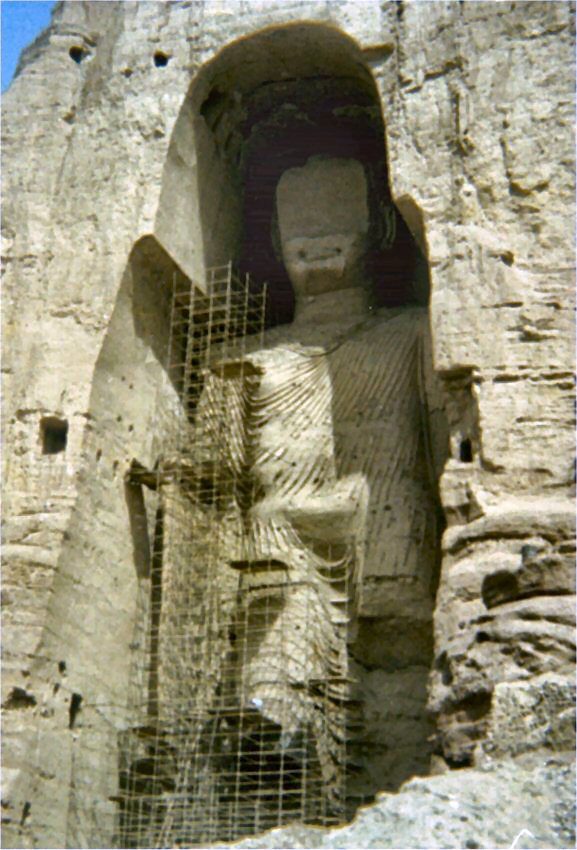
Bruce Richardson raises an important issue regarding the protection, trafficking, and exploitation of cultural patrimony. Aspects of this issue range across research, polemics, and litigation in attempts to document loss, return treasures, or on the other hand prevent restitution or repatriation. Richardson properly decries cultural looting, but we must distinguish among causes to reach agreement on protective steps.
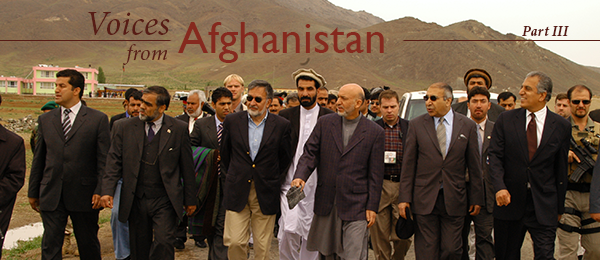
The Afghanistan Stabilisation Program (ASP): A National Program to Improve Security and Governance
Since the coup in April of 1978 by the People’s Democratic Party of Afghanistan (PDPA), the social, cultural, political, economic, governance, and security fabric of Afghanistan’s institutions have been destroyed by the subsequent Mujahedin and Taleban regimes. It is impossible to have enduring peace, stability, and development in a country without a strong institutional foundation. After 33 years of war and instability, for the most part, the linkages between central, provincial, district, and village governance structures in Afghanistan are either very weak or non-existent.
This Opinion first appeared on CNN.com’s “Global Public Square” blog on June 20, 2012
Ever since Saudi Arabia’s King Abdullah proposed forming a political federation among the six members of the Gulf Cooperation Council, the pros and cons have been fiercely debated across the Middle East.
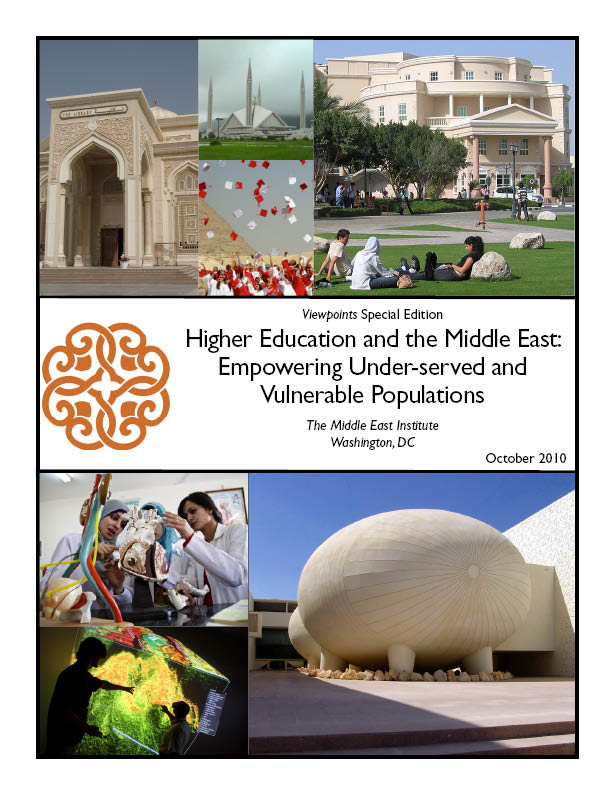
Introduction to Higher Education and the Middle East: Empowering Under-served and Vulnerable Populations
Originally posted October 2010
This second edition of the MEI Viewpoints series on Higher Education and the Middle East focuses on Empowering Under-served and Vulnerable Populations.
The Dearth of Qatari Men in Higher Education: Reasons and Implications
Originally posted October 2010
That education is a major force for socialization is indisputable. Education has the power to shape views of the world, to challenge long-held beliefs, and, therefore, to impact the social order. Its influences on the course of a society’s development are far-reaching, from the public realm of employment patterns and economic development to the private sphere of marriage and childbearing.
Saudi Arabia Moves Closer to A New Generation of Leaders
This Opinion first appeared in Al-Monitor on June 16, 2012
The death Saturday (June 16) of Saudi Crown Prince Nayef bin Abdul Aziz is likely to have little short-term impact on the economic or political life of the kingdom or on its international relations. But it does accelerate the inevitable transition to a new generation of rulers who may have very different ideas about how the al-Saud should rule their people, deal with their neighbors and manage the critical relationship with the United States.
Pakistan's Military Holds the Keys to a Thaw with the U.S.
This Opinion first appeared in the the National on June 15, 2012
Just when U.S.-Pakistan relations appear to have reached a new low, yet another event drives them lower still, further complicating chances of stabilising bilateral ties.
Over the last 18 months, the deterioration of relations has been punctuated by a series of incidents, most dramatically the May 2011 raid that killed Osama bin Laden and the U.S. air strike last November at Salala, in which 24 Pakistani solders died.
America's Catch-22: The Iran Question in Afghanistan
This Opinion first appeared in Frontline.com’s Tehran Bureau on June 13, 2012 and was co-authored by Christina Lin
As U.S. and other NATO troops prepare to leave Afghanistan in 2014, a geopolitical realignment will be under way in Southwest Asia. One possible scenario would outright undermine a principle U.S. policy objective in the region: the containment of Iran.
On March 11, 2011 Japan was struck by a massive earthquake and tsunami that devastated the northeastern part of the country. The quake and tsunami also damaged three reactors at the Fukushima Daiichi Nuclear Power Plant, triggering a nuclear crisis that led to the shutdown of nearly a third of the country’s energy production.
When Russian archaeologist Viktor Sarianidi excavated Tilya Tepe in 1978, 21,000 bejeweled, gold artifacts created during the Greco-Bactrian era known as The Golden Hoard of Bactria were reported as inventoried, photographed, and catalogued. But in consideration of the time (1978), and the fact that the Kremlin was considering military intervention in Afghanistan in support of the Communist regime, it seems prudent to challenge the veracity of Professor Sarianidi’s findings.
This Opinion first appeared in Foreign Policy on May 30, 2012
The massacre in al-Houla, where Syrian military forces and allied militiamen massacred more than 100 civilians in cold blood, leaves no doubt about the intentions of President Bashar al-Assad’s regime: survival at any cost and through any means. Assad does not have a Plan B.