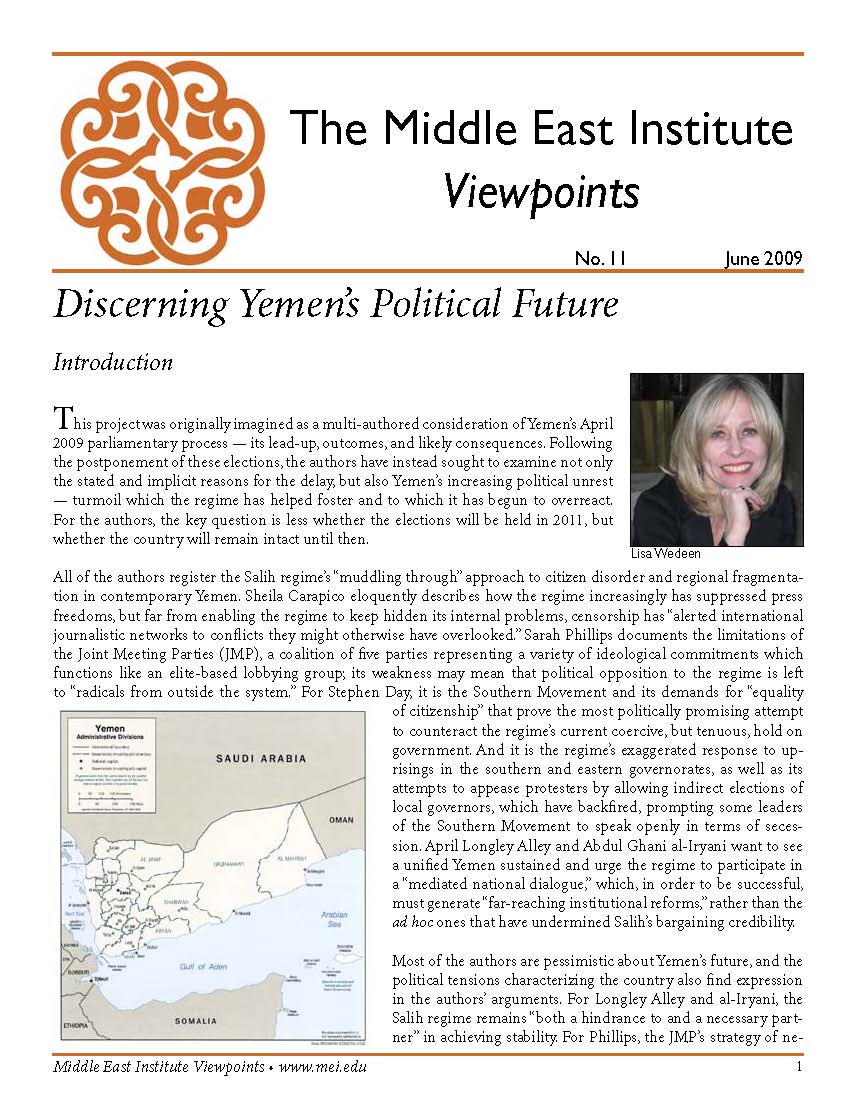
This project was originally imagined as a multi-authored consideration of Yemen’s April 2009 parliamentary process — its lead-up, outcomes, and likely consequences. Following the postponement of these elections, the authors have instead sought to examine not only the stated and implicit reasons for the delay, but also Yemen’s increasing political unrest — turmoil which the regime has helped foster and to which it has begun to overreact. For the authors, the key question is less whether the elections will be held in 2011, but whether the country will remain intact until then.
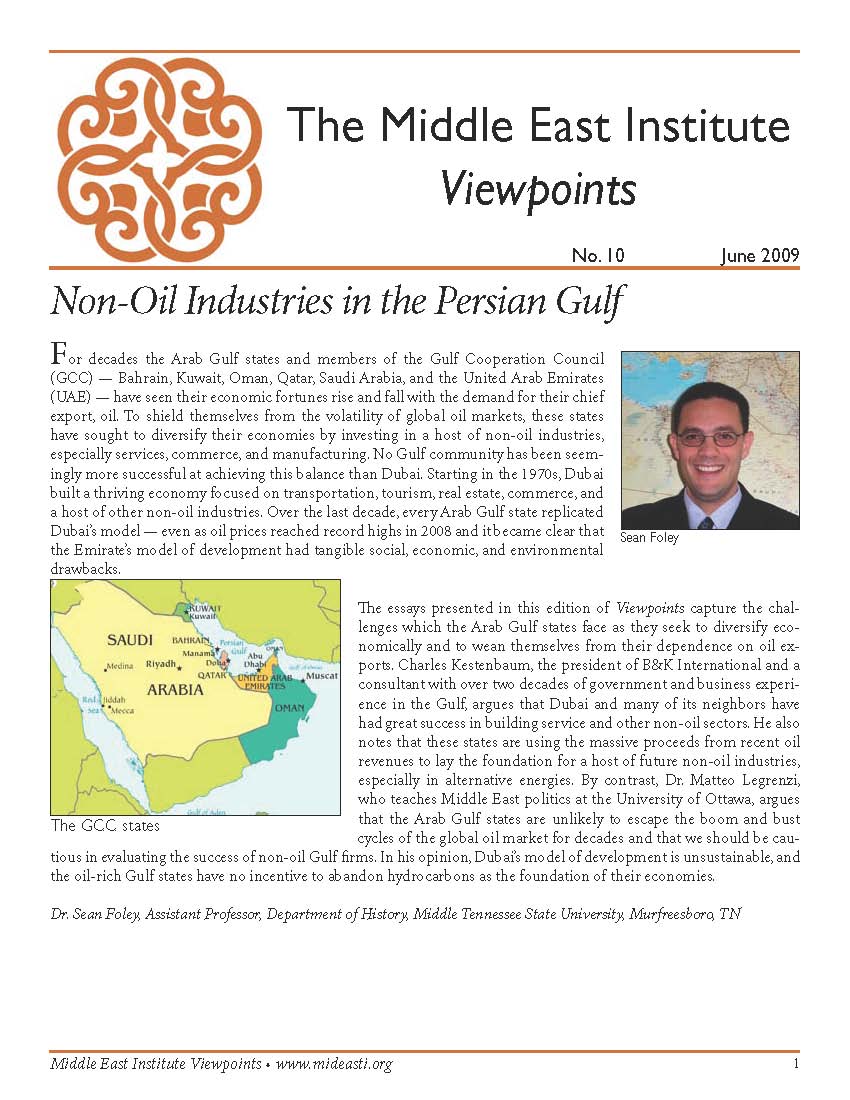
For decades the Arab Gulf states and members of the Gulf Cooperation Council (GCC) — Bahrain, Kuwait, Oman, Qatar, Saudi Arabia, and the United Arab Emirates (UAE) — have seen their economic fortunes rise and fall with the demand for their chief export, oil. To shield themselves from the volatility of global oil markets, these states have sought to diversify their economies by investing in a host of non-oil industries, especially services, commerce, and manufacturing.
The six oil-producing monarchies of the Persian Gulf — Bahrain, Kuwait, Oman, Qatar, Saudi Arabia, and the UAE — are among the most important but also the most enigmatic societies to study.
Iran’s political system has not yet developed stable party structures. Most parties are still loose coalitions of individuals and interest groups that combine their own interpretation of Ayatollah Ruhollah Khomeini’s legacy with their personal interests. As party affiliation remains relatively weak, members of one party often have run as candidates for another party or are on several electoral lists. Similarly, unregistered parties or electoral platforms also field candidates for both presidential and parliamentary elections on an ad hoc basis.