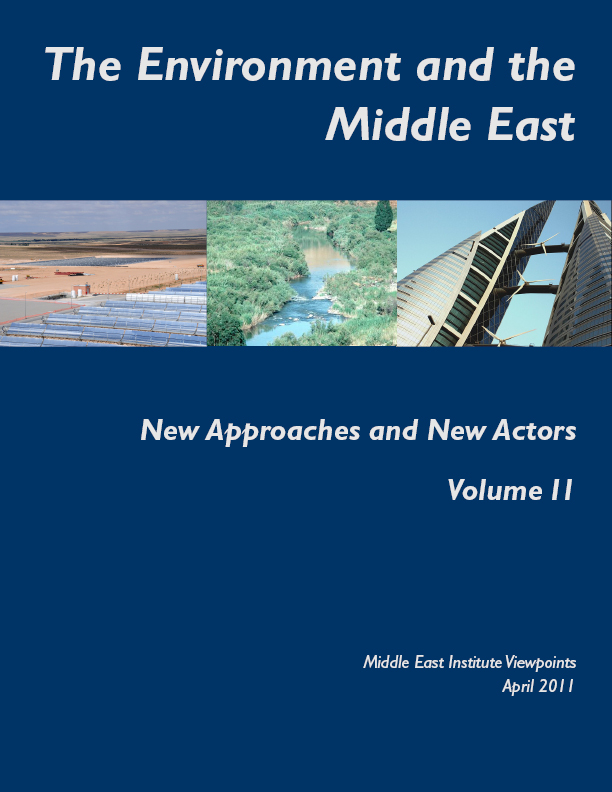
Introduction to The Environment and the Middle East: New Approaches and New Actors , Volume II
The tumultuous political changes taking place across the region dominate the news — deservedly so. Yet, there are other changes taking place throughout the Middle East which, though less prominent, also merit attention. Indeed, the region has no shortage of creative and committed “change agents” who in ways great and small have taken meaningful steps to address the myriad challenges to the sustainability of the region’s physical environment. Volume II in this series offers snapshots of a small selection of the many efforts aimed at cultivating responsible environmental stewardship.
Dr. George Gavrilis of the Hollings Center for International Dialogue will serve as the discussant. The talk will focus on Younis's recent publication in the Turkish Policy Quarterly on the role of Turkey in a changing MENA region and the potential influence it can have on the process of democratization in Egypt. Younis will also share some insights from Gallup's polling in other Arab Spring countries on the public's perceptions of the challenges facing their nations following the uprisings of 2011.
Israeli-Palestinian Peace: A Special Regime Option for the Old City of Jerusalem
Jerusalem will probably be the toughest issue in any future Israeli-Palestinian peace negotiations. The other three core issues – borders/settlements, security, and Palestinian refugees – will also be very difficult, but Jerusalem is at a different level. Jews, Muslims, and Christians worldwide have strong attachment to the city and its many holy sites. For Israelis and Palestinians, Jerusalem is the focal point of national, cultural, and religious identities and aspirations. Their conflicting claims are based on long history and narratives that do not accommodate the other.
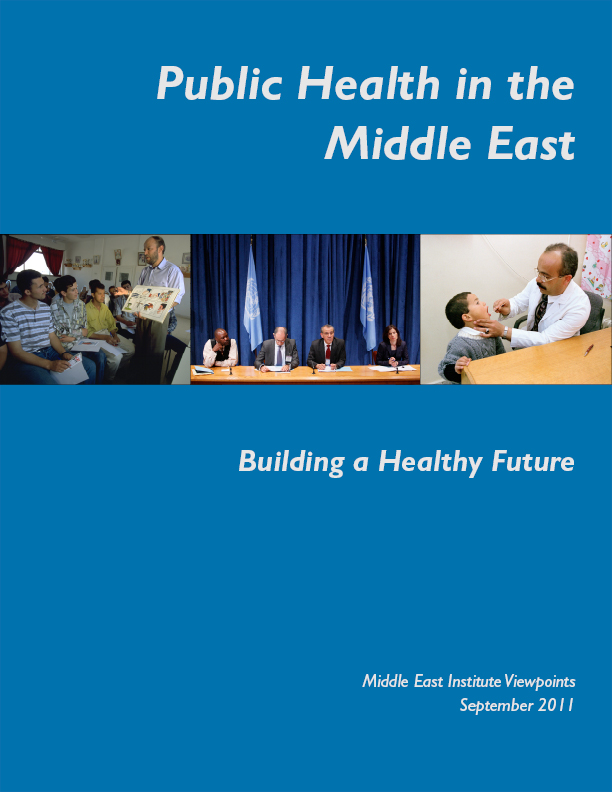
Introduction to Public Health in the Middle East: Building a Healthy Future
Originally posted September, 2011
The flow of ideas, people, and commerce across national boundaries has been occurring with breathtaking rapidity in the broader Middle East, as elsewhere. These increasingly dense exchanges have generated new threats and vulnerabilities that have tended to impact women, children, and the poorest members of society disproportionately. They also have given people more resources and opportunities with which to shape their lives and their futures.
Peace-Building through Health in the Israeli-Palestinian Conflict: The Six-Year Experience of Healing Across the Divides
Originally posted September 2011
Approximately six months ago, I asked an astute long-time American observer of the Israeli-Palestinian conflict whether we had come to the end of the road for a two-state solution. He replied that we had come to the end of that road in 1967. Putting it differently, Zhou Enlai, the premier of the People’s Republic of China under Mao Zedong, when asked what he thought of the French Revolution, reportedly replied that it was too early to tell.
Are Iran’s leaders rational actors? This question matters when justifying any decision by Israel to preempt Iran’s acquisition of nuclear weapons. An Iranian regime seen as driven to destroy the Jewish state has to be dealt with differently than one whose objectives are mediated by calculations of costs and benefits. Deterrents that would be normally expected to restrain a state would not work with an irrational Iran.
Reflections on Palestinian Unity, the Statehood Bid, and Prospects for Peace
In the wake of the February 6 announcement that Palestinian President Mahmoud Abbas will head an interim unity government there is renewed hope for political cooperation between rival parties Fatah and Hamas. The formation of the unity government however threatens U.S. aid to Palestine, as the United States has said that it refuses to send money to Hamas, which it considers a terrorist organization. The PLO's continued pursuit of statehood recognition in the UN Security Council has also isolated it from the United States even as it earned popular and international support.