After the Summit: Assessing Iraq's Relations with its Arab Neighbors
MEI Podcast, 12 July, 2012After the Summit: Assessing Iraq’s Relations with its Arab NeighborsJohn Desrocher, Gregory Gause, Ken Pollack, Amb. Samir Sumaida’ie, Phebe Marr
After the Summit: Assessing Iraq's Relations with its Arab Neighbors
MEI Podcast, 12 July, 2012After the Summit: Assessing Iraq’s Relations with its Arab NeighborsJohn Desrocher, Gregory Gause, Ken Pollack, Amb. Samir Sumaida’ie, Phebe Marr
After the Summit: Assessing Iraq's Relations with its Arab Neighbors
MEI Podcast, 12 July, 2012After the Summit: Assessing Iraq’s Relations with its Arab NeighborsJohn Desrocher, Gregory Gause, Ken Pollack, Amb. Samir Sumaida’ie, Phebe Marr
After the Summit: Assessing Iraq's Relations with its Arab Neighbors
MEI Podcast, 12 July, 2012After the Summit: Assessing Iraq’s Relations with its Arab NeighborsJohn Desrocher, Gregory Gause, Ken Pollack, Amb. Samir Sumaida’ie, Phebe Marr
After the Summit: Assessing Iraq's Relations with its Arab Neighbors
MEI Podcast, 12 July, 2012After the Summit: Assessing Iraq’s Relations with its Arab NeighborsJohn Desrocher, Gregory Gause, Ken Pollack, Amb. Samir Sumaida’ie, Phebe Marr
This Opinion first appeared in Foreign Policy on May 30, 2012
The massacre in al-Houla, where Syrian military forces and allied militiamen massacred more than 100 civilians in cold blood, leaves no doubt about the intentions of President Bashar al-Assad’s regime: survival at any cost and through any means. Assad does not have a Plan B.
Turkey’s popular and outspoken Prime Minister, Recep Tayyip Erdogan, was treated to a hero’s welcome last week when he met with Syrian refugees for the first time since Turkey opened its doors to the thousands of people fleeing Bashar Al-Assad’s crackdown. Erdogan’s pledge to defend the rights of the Syrian people and his call for Assad’s removal, however, fell short of expectations. Although Erdogan’s speech drew some applause, it was also interrupted by shouts of “We want arms for the Free Syrian Army and a buffer zone inside Syria!” The Turkish PM’s reiteration of his previous positi
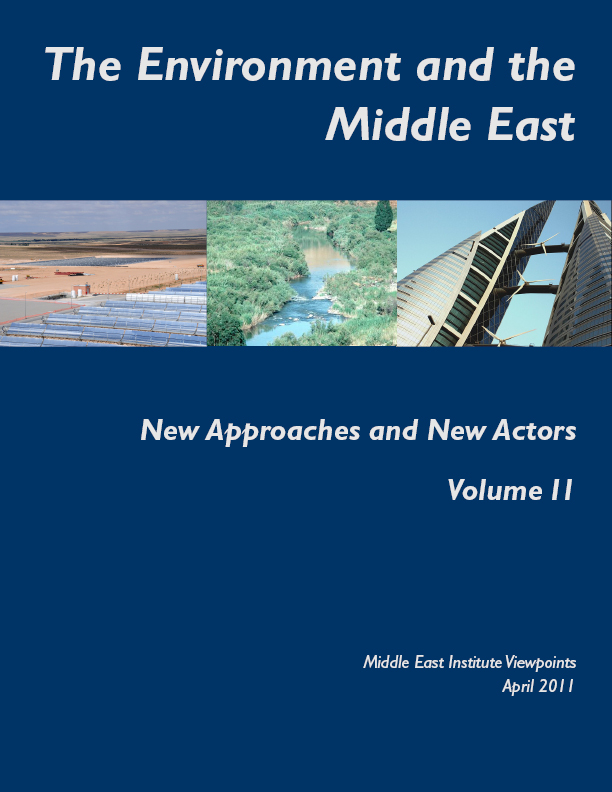
Introduction to The Environment and the Middle East: New Approaches and New Actors , Volume II
The tumultuous political changes taking place across the region dominate the news — deservedly so. Yet, there are other changes taking place throughout the Middle East which, though less prominent, also merit attention. Indeed, the region has no shortage of creative and committed “change agents” who in ways great and small have taken meaningful steps to address the myriad challenges to the sustainability of the region’s physical environment. Volume II in this series offers snapshots of a small selection of the many efforts aimed at cultivating responsible environmental stewardship.
This Opinion first appeared on CNN.com on April 20, 2012
The six-point peace plan for Syria proposed by Kofi Annan is doomed to fail for one simple reason: Neither President Bashar al-Assad nor the government opposition is interested in making it work.