Khamenei Calls for Navy Expansion despite Regional Concerns
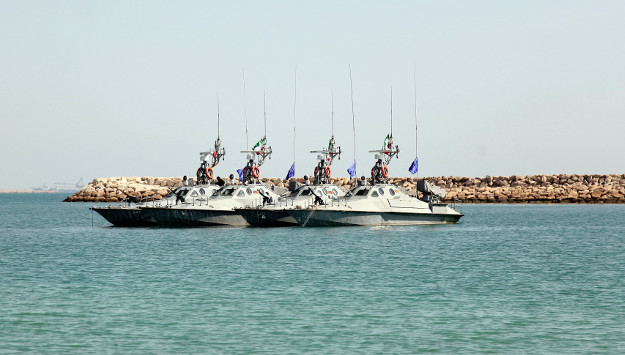
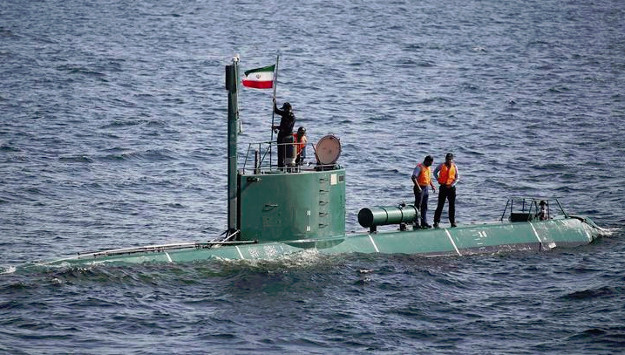
Iran’s Supreme Leader Ali Khamenei today called on the country’s military leaders to expand the country’s naval capabilities, the Iranian media reported. In a meeting with senior Navy commanders in Tehran, Khamenei said the Navy should boost its assets and capabilities both in terms of military gear and combat power. He praised the latest progress of the Navy but stressed that Navy officials should accelerate the development of its assets.
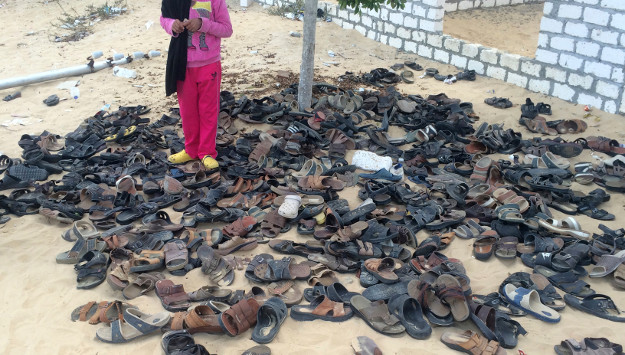
In this week’s Monday Briefing, MEI experts Charles Lister, Randa Slim, and Alex Vatanka provide analysis on recent and upcoming events including Egypt’s ongoing struggle with terrorism following the recent attack in Rawda mosque, the next round of intra-Syrian Geneva negotiations, and Iran’s anxiety over Russia’s plans in Syria.
I.R.G.C. Threatens to Place Europe within Missile Range If Threatened
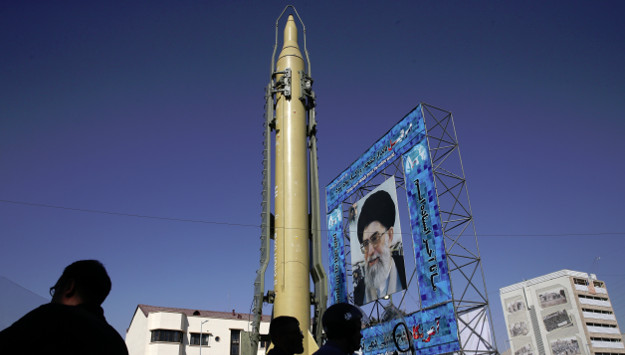
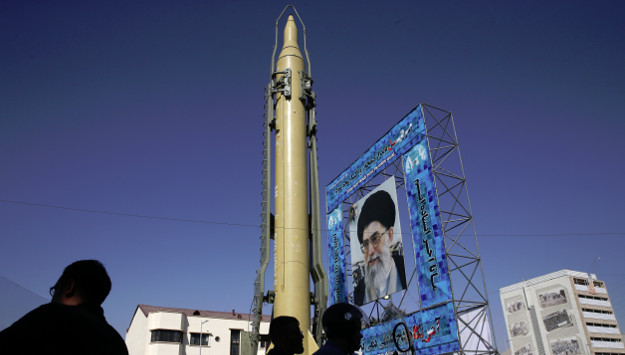
The deputy commander of the Islamic Revolution Guards Corps has warned Europe that if it acts against Tehran’s interests, the I.R.G.C. will increase the range of the country’s missiles beyond the current limit of 2,000 kilometers. “If we have kept the range of our missiles up to 2,000 kilometers and have not increased it, it is not because of technological limitations.
I.R.G.C. Admits Aiding Houthis against Saudi-Led Coalition in Yemen
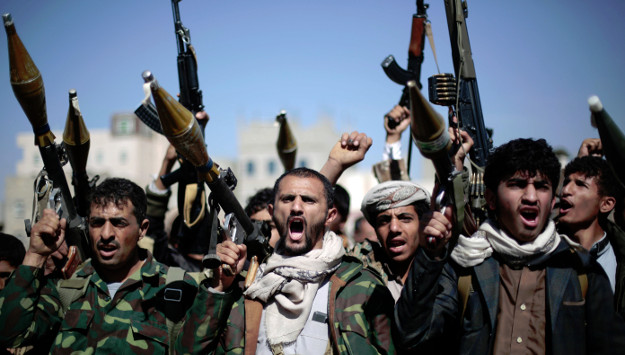
The head of the Islamic Revolution Guards Corps (I.R.G.C.) has admitted that Iran is providing assistance to the Houthi “resistance movement” fighting the Saudi-led coalition in Yemen. “Our assistance to the resistance front has been provided at the request of their people and governments, and Yemen is one of those examples. In Yemen, the power today lies in the hands of Ansarullah and Iran’s assistance is at the level of advisory and spiritual support, which Yemen needs more,” Major General Ali Jafari said at a press conference in Tehran on Thursday.
In Phone Call with Macron, Rouhani Defends Hezbollah, Rejects Any Change to Nuclear Deal
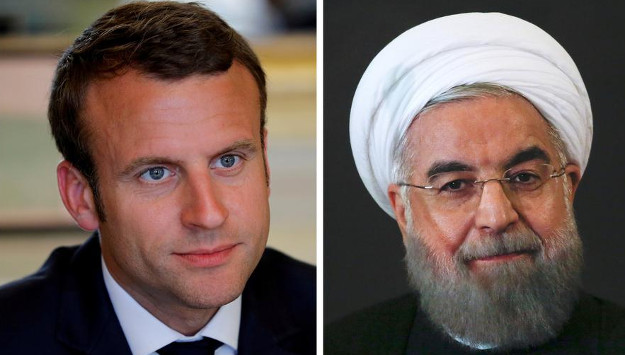
In a phone call on Tuesday, Iran’s President Hassan Rouhani urged his French counterpart Emmanuel Macron not to support Washington’s policies vis-à-vis Tehran, particularly regarding Iran’s missile program and regional policies and actions.
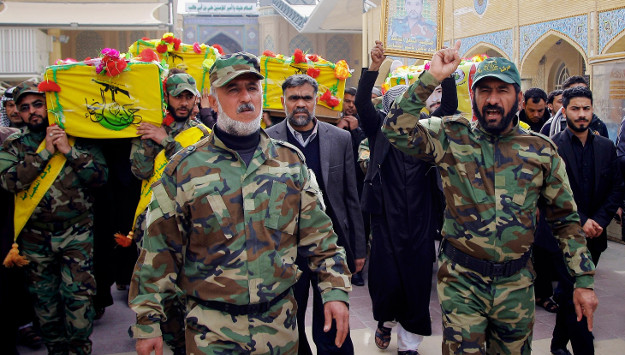
After ISIS, Fatemiyoun Vows to Fight with “Axis of Resistance” to Destroy Israel
With ISIS militarily defeated in Syria and Iraq, the Fatemiyoun Division, an all-Afghan Afghan Shiite militia group fighting in Syria, says its fighters will join the Lebanese Hezbollah and Iranian-sponsored Iraqi militia groups to fight Israel next.
Nobel Laureates Call on Iran to Free Death Row Sweden-Based Researcher
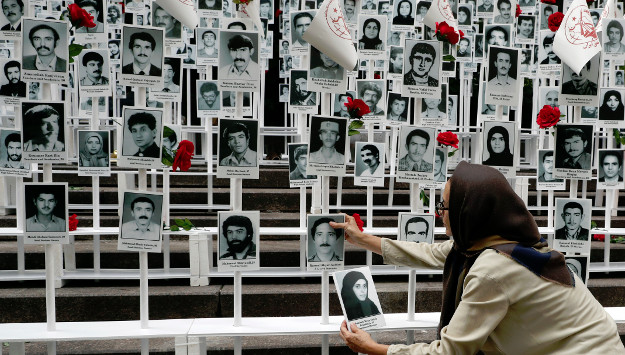
Seventy five Nobel laureates have called on the Iranian government to release Ahmadreza Jalali, a Sweden-based scholar jailed in Iran on allegations of spying for Israel, the BBC Persian reported.
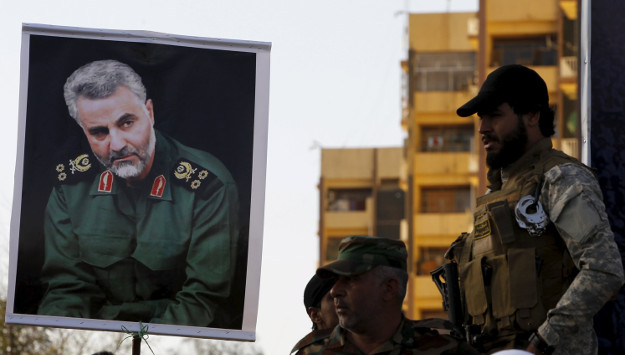
Zarif’s Aide Hails Soleimani for Creating Transnational Force to Counter U.S.
Hossein Sheikholeslam, a senior advisor to Iran’s Foreign Minister Javad Zarif, credited Iran’s elite Quds Force for “defeating” the Islamic State in Syria and Iraq and “foiling the American plots and calculations” in the region. In an interview with Tasnim News Agency, the former Iranian ambassador to Syria, commended Quds Force Commander Major General Qassem Soleimani for having created a multinational force of Shiite groups from South Asia to the Levant region in order to secure Iran’s objectives in the region.
This piece was co-authored by Bilal Saab and Kenneth M. Pollack, resident fellow at the American Enterprise Institute. Read the full op-ed on theWall Street Journal.
France and Egypt Try to Moderate Saudi-Iran Escalation | Monday Briefing
In this week’s Monday Briefing, MEI experts Paul Salem, Alex Vatanka, Randa Slim, Marvin G. Weinbaum, and Eran Etzion provide analysis on recent and upcoming events including the Arab League meeting in Cairo to moderate the Saudi-Iran escalation, Iran’s view of the Sochi Summit as a turning point, Putin’s effort to reach an agreement on Syria before presidential elections, Afghanistan’s response to the increase of US troops on their ground, and the political upheaval in Israel as Netanyahu’s corruption case continues.
In a meeting today in Tehran with the U.N. special representative for Afghanistan, Tadamichi Yamamo, Iran’s Foreign Minister Javad Zarif raised concern about the growing presence of ISIS fighters in Afghanistan, the Iranian media reported. Zarif emphasized that the Islamic Republic is ready to expand its cooperation with the U.N. and the Afghan government to counter the ISIS threat in Afghanistan and the broader region.
Iran Rules out Missile Talks in Defiance of International Pressure
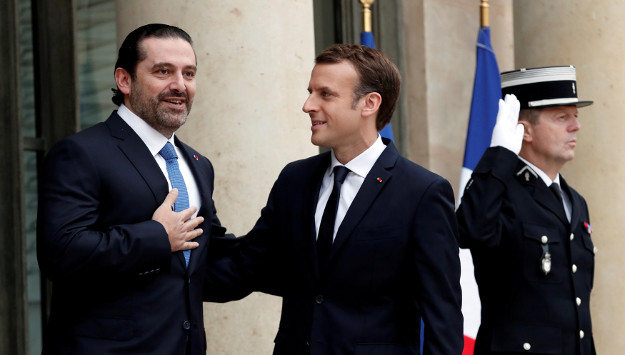
French President Emmanuel Macron’s remarks on Friday about Iran’s destabilizing role in the Middle East and controversial missile program provoked angry reactions in Tehran.