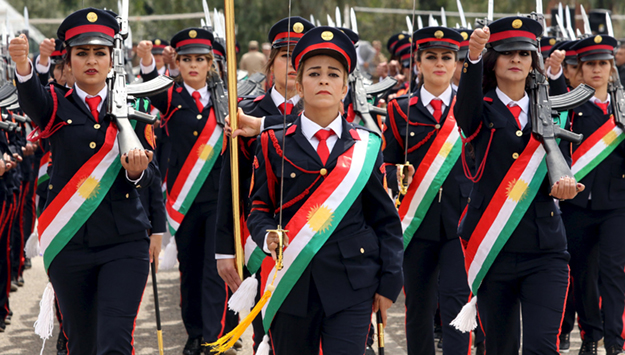
Representatives of the Kurdistan Regional Government (K.R.G.) are currently in the process of shaping the information environment ahead of a desired referendum on Kurdish independence. Aside from a lobbying campaign strongly focused on Washington—the K.R.G. has spent more on lobbying in the United States than Pakistan—leaders have been making provocative statements regarding territorial ambitions.[1] K.R.G.
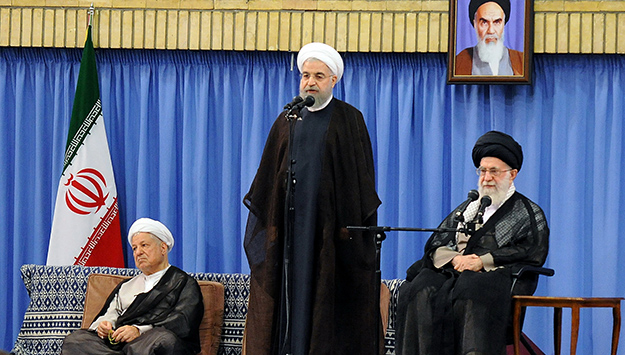
Monday Briefing: India FM to Visit Iraq and Syria; Iran-Turkey Relations After the Failed Coup; Afghanistan's Fractured Government
In this week’s Monday Briefing, MEI experts Zubair Iqbal, Alex Vatanka, and Marvin G. Weinbaum provide analysis on issues including India’s Middle East policy as its foreign minister is set to visit Iraq and Syria, the opening of relations between Iran and Turkey following the latter’s recent failed coup, and the latest signs of tension within Afghanistan’s shaky unity government.
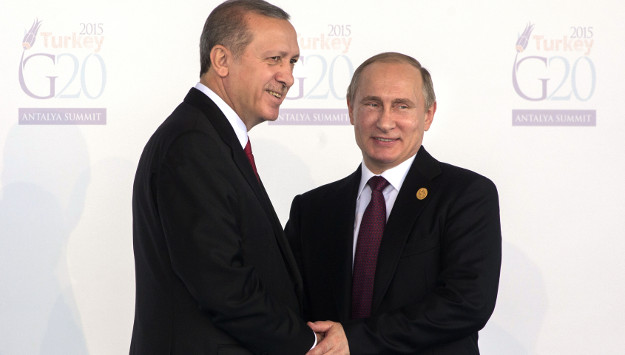
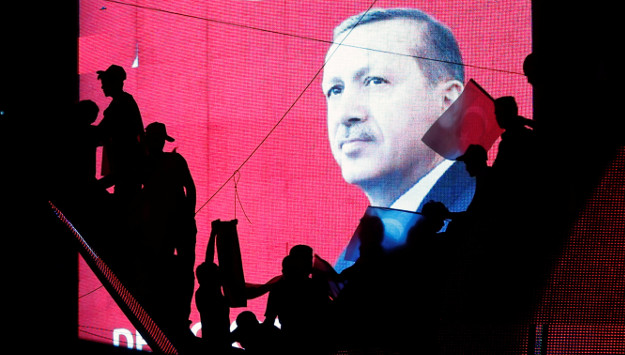
Monday Briefing: Erdogan Reaching Out to Russia; Update on Battle for Aleppo
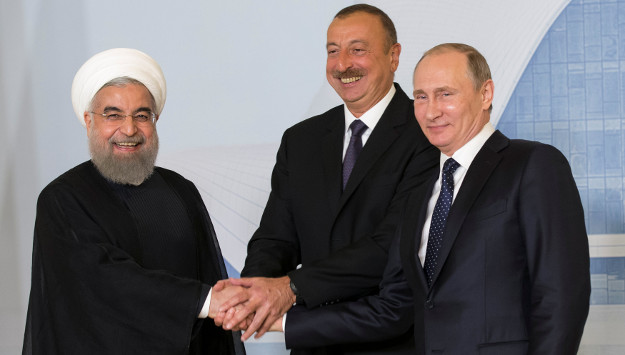
In this week’s Monday Briefing MEI experts provide analysis on recent and upcoming events including Turkish President Erdogan’s trip to Russia tomorrow, Iranian President Rouhani’s upcoming meeting with President Putin in Baku, the ongoing battle for Aleppo, strains in U.S.-Pakistan relations over the Haqqani Network, and what’s next for Tunisia’s political transition following the vote of no confidence in the current government.
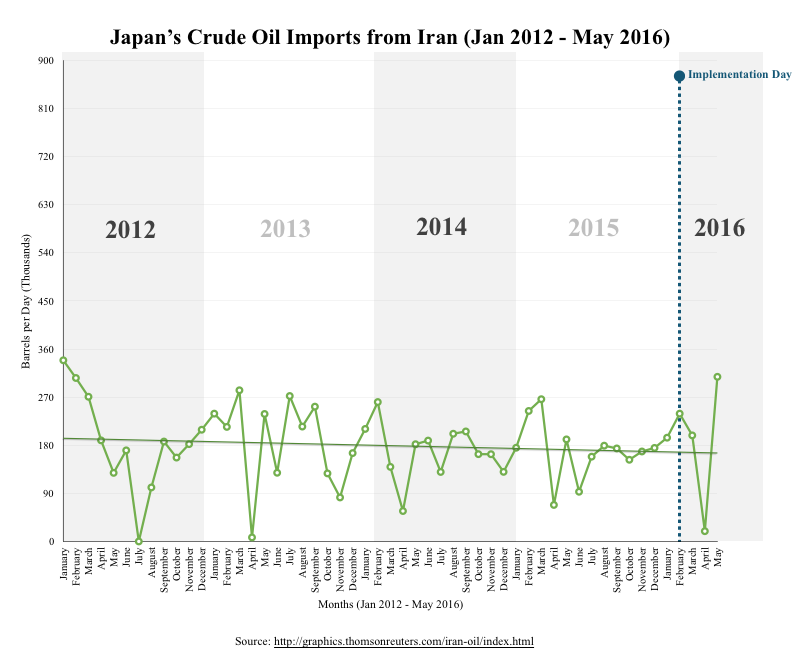
U.S.-European nuclear-related sanctions on Iran in 2011 resulted in a major reduction of Japanese crude oil imports from Iran, which were largely offset by increased purchases from other Middle Eastern producers. This pattern remained more or less intact through the end of 2015.[1]
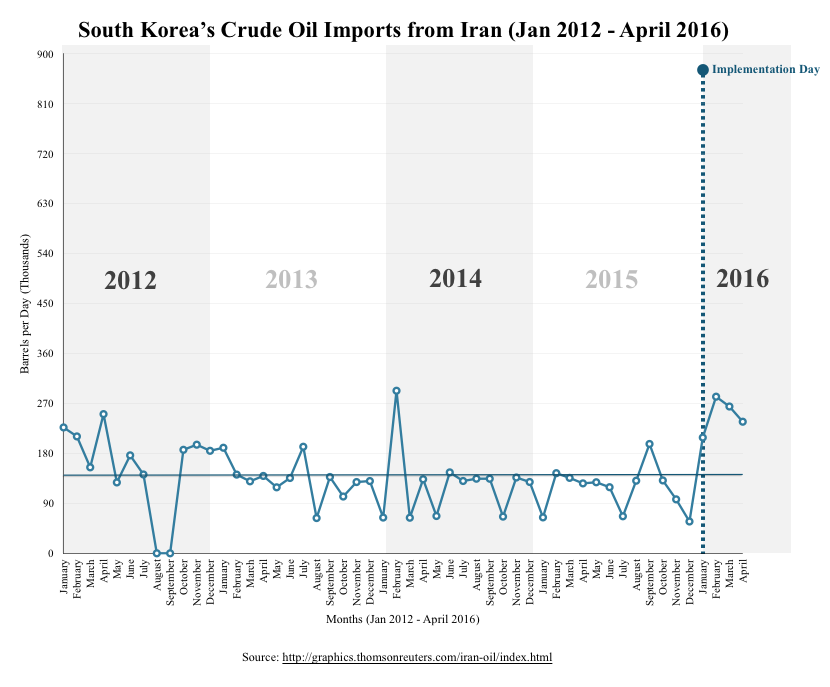
South Korea is the world’s fifth-largest crude oil importer and sixth-largest oil refining country. In June 2012, South Korea suspended all oil imports from Iran in response to a European Union insurance ban on tankers carrying Iranian crude oil.[1] South Korea subsequently obtained a waiver and resumed importing Iranian crude oil. However, the average annual volume of crude oil purchased by South Korea from Iran during the period 2012-2015 was 40% lower than in 2011.
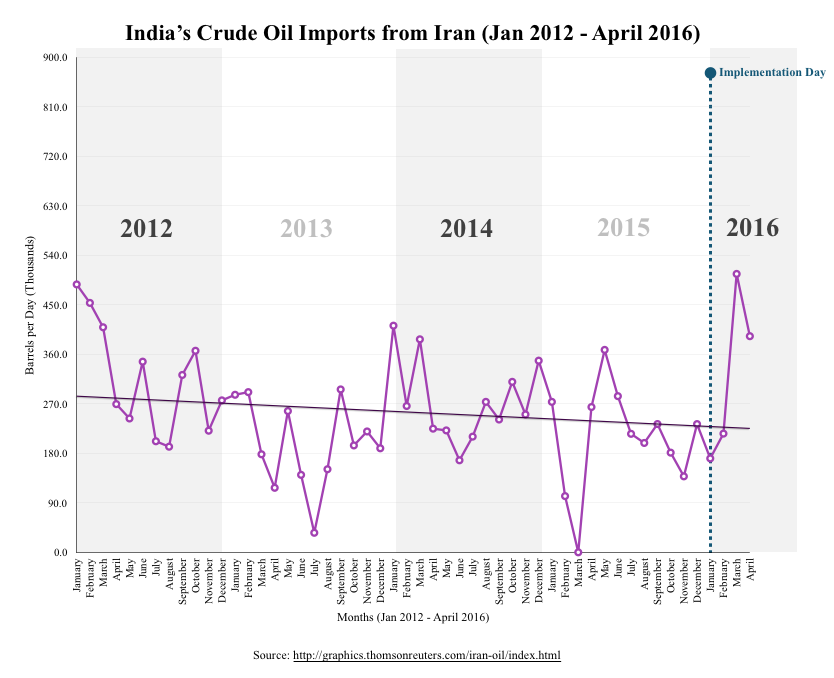
When U.S. and European nuclear-related sanctions against Iran took effect in 2011, India was compelled to reduce its crude oil imports from Iran and to diversify its sources of supply.[1] As a result, the country’s crude oil imports from Iran dropped by 1.33% and 37.81% in 2012 and 2013, respectively.
Monday Briefing: After Turkey's Failed Coup, How Far Will the Crackdown Go?
In this week’s Monday Briefing, MEI expert W. Robert Pearson provides analysis on the failed coup in Turkey and the impending crackdown on opposition. Marvin Weinbaum considers whether the unpopularity of Pakistan’s government could put it at risk of a military coup of its own. And Charles Lister looks at how ISIS is adapting in the face of territorial losses in Iraq and Syria.
Monday Briefing: Chilcot Report, French FM in Lebanon, Iran Economy
In this week’s Monday Briefing, MEI experts Daniel Serwer, Alex Vatanka, and Paul Salem provide analysis on recent and upcoming events including the recent Chilcot Report, European trade delegations visit to Iran, and France’s push to end the Lebanon stalemate.
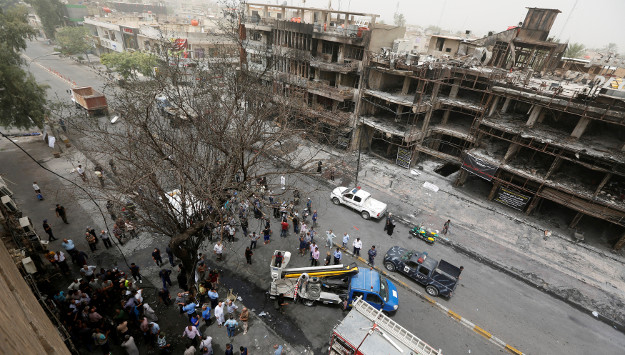
Weekly Briefing: Baghdad Bombing, NATO Summit, Israel’s Africa Outreach, and Saudi Embassy Trial in Iran
In this week’s briefing, MEI experts Hassan Mneimneh, Daniel Serwer, Paul Scham, and Alex Vatanka provide analysis on recent and upcoming events including the ISIS bombing in Baghdad, this week’s NATO summit in Warsaw, Israel’s outreach to Africa, and the trial in Iran over the ransacking of the Saudi embassy.
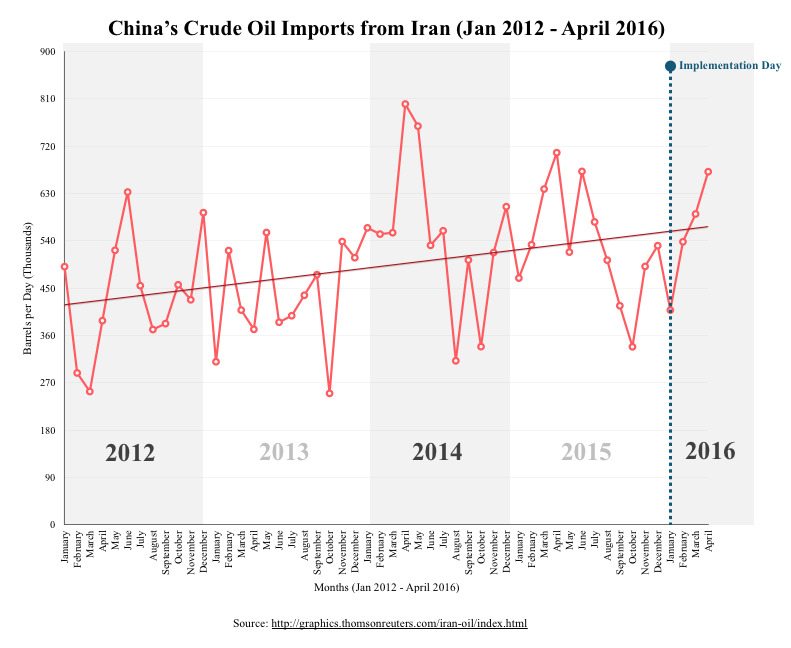
In 2011, China purchased 550,000 b/d, or 11% of its total crude oil imports, from Iran. However, the next year, China’s crude oil imports from Iran plummeted by 20% due to the imposition of nuclear-related sanctions on Iran by the U.S. and European countries. In 2012 and 2013 China’s purchases from Iran fell to just 8% of its total crude oil imports. Progress in the negotiations between Iran and the P-5+1 countries at the end of 2013 permitted China to restore crude imports from Iran to pre-sanction levels.
The Next Challenge: Governing Liberated Cities after ISIS
Lieutenant General Abdulwahab al-Saadi, the Iraqi commander of the Iraqi forces fighting to retake Fallujah, said June 23 that his units held 80 percent of the city. This contrasts with the estimate from the U.S. military spokesman in Iraq on June 22, who said that Iraqi forces held only a third of the city. Whatever the exact figure, after heavy fighting, often street-by-street, the Islamic State will lose the city.