The Middle East Institute is proud to host a discussion with Trita Parsi and Michael Singh on the prospects for a diplomatic solution to the Iran nuclear crisis in the wake of recently imposed UN and US sanctions.
Their discussion will draw upon a forthcoming Middle East Journal article entitled "The Case Against the Case Against Iran" written pseudonymously by a European diplomat, who argues for greater engagement by regional actors like Turkey, Saudi Arabia, Russia and China to mediate and mitigate Iran's nuclear ambitions.
In the wake of the recent Nuclear Security Summit in Washington DC, Turkish-Iranian relations once again came under scrutiny. As the US and the EU have intensified their efforts to impose sanctions on Iran through the UN Security Council, Turkey’s role in this issue has come into question. Notwithstanding Turkish temporary membership in the Security Council, the Turkish position will be critical for any effective implementation of sanctions.
Soil and groundwater salinity has emerged as the most significant agricultural problem facing the Sultanate of Oman. Scant rainfall, coupled with high temperature, is always conducive to the accumulation of salts in soils. These conditions are predominant in Oman. Secondary soil salinity has increased at a very rapid rate due to the persistent use of saline groundwater, which, over time, has become more concentrated due to increased pumping by farmers in the Batinah region – the country’s most important agricultural area.
Low-Cost Methods to Treat Greywater: A Case Study from Oman
Oman is an arid country where the pressure on freshwater reserves is as severe as that of any other arid or semi-arid country in the world. Increasing water availability by treating and reusing wastewater, particularly for irrigation, is a government policy in Oman. Identification of alternative sources of water and development of appropriate technology to harness them in order to reduce pressure on freshwater reserves and production capacity in Oman is a priority.
*This article was first published in November 2010 by Jane's Islamic Affairs Analyst.
The second half of 2010 witnessed a flurry of interaction between Iranian diplomats and their African counterparts. Not all the buzz has been beneficial to Tehran, as was most recently demonstrated by the Republic of the Gambia’s 22 November decision to break its ties with Iran, but the overall activity nonetheless reflects the increasing emphasis Tehran is putting on closer relations with countries on the continent.
The Middle East Institute is pleased to host Dr. Thomas O'Donnell,
lecturer in Graduate International Affairs at the New School in New
York, for a discussion on China's perception of the Iranian nuclear
issue. Drawing on his expertise in the global energy system, Dr.
O'Donnell will examine why Beijing, which was initially and very
vocally opposed to UN sanctions, ended up voting in favor of them. He
will outline the energy-security nexus underlying China's interests in
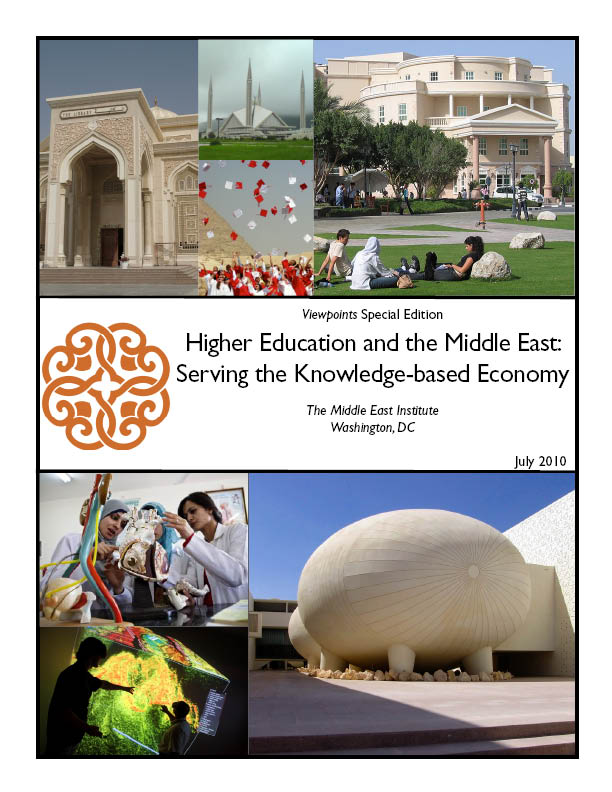
Higher Education and the Middle East: Serving the Knowledge-based Economy
This is the first of three volumes examining the internationalization of higher education and the Middle East. The 12 essays included in this volume explore some of the changes that are taking place and the challenges that lie ahead as Middle Eastern countries seek to build sustainable higher education systems and strengthen their economies. Within the dynamic global higher education landscape, is the Middle East a stagnant backwater or a center of creative initiative? What are, and should be the roles of foreign partners and providers?
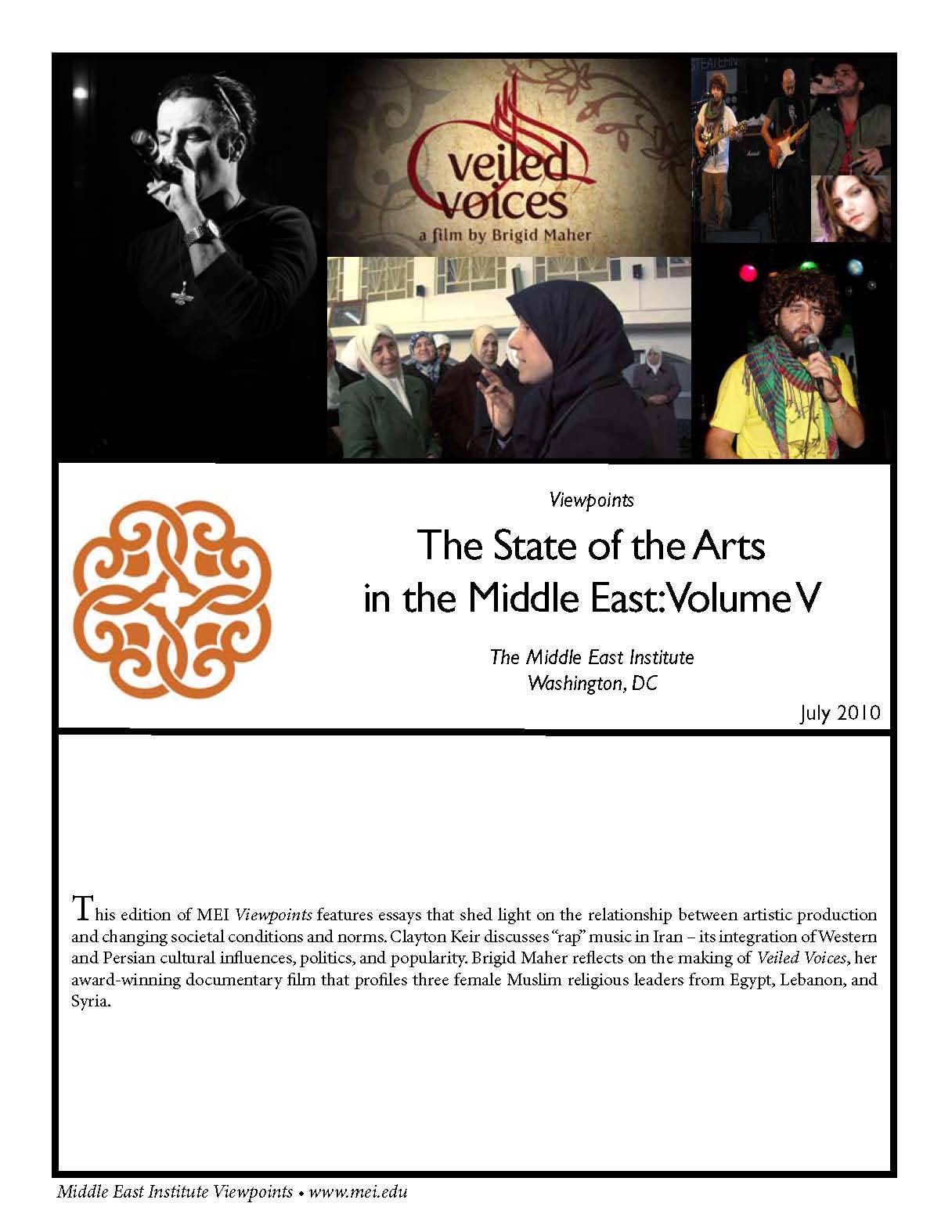
Introduction to The State of the Arts in the Middle East: Volume V
This edition of MEI Viewpoints features essays that shed light on the relationship between artistic production and changing societal conditions and norms. Clayton Keir discusses “rap” music in Iran – its integration of Western and Persian cultural influences, politics, and popularity. Brigid Maher reflects on the making of Veiled Voices, her award-winning documentary film that profiles three female Muslim religious leaders from Egypt, Lebanon, and Syria.
Brazil’s Embrace of the Iranian Government Will Only Embolden the Regime Internationally
This Commentary first appeared as an op-ed in the America's Quarterly Policy Journal, Spring 2010
Can Brazil play a significant role in containing Iran's nuclear ambitions? No.
Brazil’s self-perceptions and aspirations as an emerging global power are a key to understanding why the government of President Luiz Inácio Lula da Silva has chosen this particular moment in time to deepen ties with an Iranian regime that is facing crisis, both at home and abroad.