تمت ترجمة هذا النص بواسطة الذكاء الاصطناعي وقد يحتوي على أخطاء.
تخطي إلى المحتوى

Research & Commentary Results

تصفية حسب
465 Results
Turkey’s eastern Mediterranean quagmire
A picture taken at the port of Dilovasi, outside Istanbul, on June 20, 2019 shows the drilling ship 'Yavuz' scheduled to search for oil and gas off Cyprus, next to a warship.
  • التحليل
  • Turkey’s eastern Mediterranean quagmire

    The eastern Mediterranean has become an increasingly important focus for Turkey’s foreign and security policy, but the interlocking of new issues like energy politics and sovereignty rights with old problems like Cyprus has created significant challenges for Ankara.

    February 18, 2020

    Lebanon’s inconvenient truths: A brief rejoinder
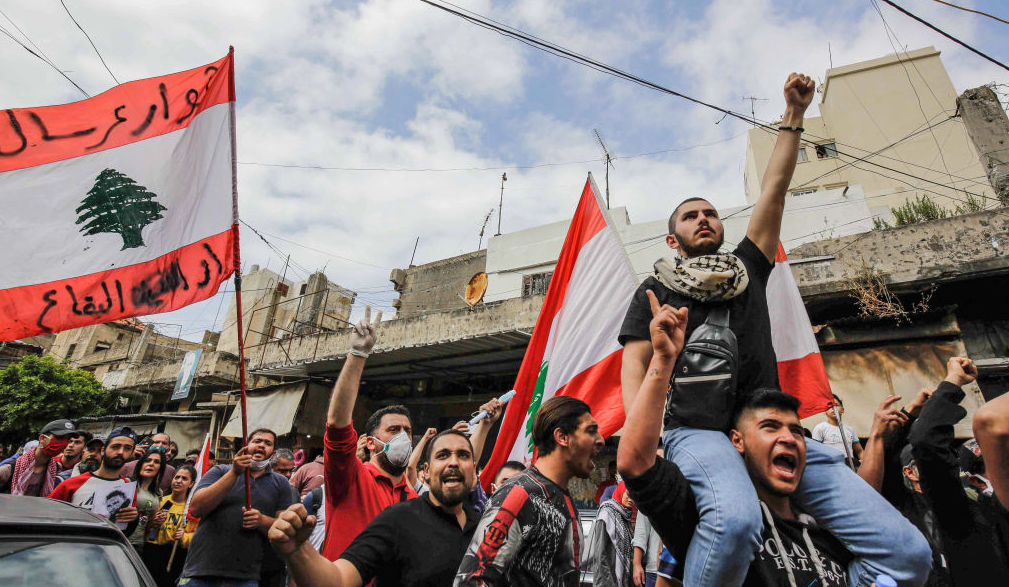
    Anti-government protesters demonstrate ahead of the expected naming of a new cabinet tomorrow by Prime Minister Designate Hassan Diab, on January 16, 2020 in Beirut, Lebanon.
  • تعليق
  • Lebanon’s inconvenient truths: A brief rejoinder

    In response to numerous comments from readers about his article “Lebanon’s inconvenient truths,” author Bilal Saab has published a brief rejoinder.

    February 3, 2020

    Lebanon’s inconvenient truths
    BEIRUT, LEBANON - JANUARY 16: An anti-government protester bangs a pan as they demonstrate ahead of the expected naming of a new cabinet tomorrow by Prime Minister Designate Hassan Diab, on January 16, 2020 in Beirut, Lebanon.
  • التحليل
  • Lebanon’s inconvenient truths

    By any objective standard, the Lebanese protest movement has failed. This is not necessarily an indictment against it. Rather, it’s a reality one cannot and should not ignore. The responsible thing to do now is to try to understand why it has fallen flat, despite more than 100 days of demonstrations in various regions of the country including the capital, Beirut. 

    First, a word of solace. In the annals of history, the Lebanese are in good company as most uprisings and revolutions failed to attain their goals. And even when they did, success either didn’t last long or was completely reversed due to counterrevolutions and other spoilers, both foreign and domestic.

    January 29, 2020

    Lebanon's New "Shadow Government"
    معهد الشرق الأوسط
  • Podcast
  • Lebanon's New "Shadow Government"

    Against the backdrop of a massive economic and financial crisis and a now three-month-old nationwide protest movement, Lebanon swore in a new government on Tuesday — a technocratic cabinet that is widely seen as a “shadow government” for Hezbollah and other entrenched political leaders. MEI’s Paul Salem, Randa Slim, and Bilal Saab join host Alistair Taylor to discuss what lies ahead.

    January 23, 2020

    Can the new Lebanese government survive?
    A handout picture provided by the Lebanese photo agency Dalati and Nohra shows Lebanon's Parliament Speaker Nabih Berri (C-L) and President Michel Aoun (C) and prime minister designate Hassan Diab (C-R) posing for a group photo with the newly formed government at the presidential palace in Baabda, east of the capital Beirut, on January 22, 2020.
  • التحليل
  • Can the new Lebanese government survive?

    No amount of analytical nuance or ingenuity can challenge the conclusion that the newly formed government in Lebanon is Hezbollah’s creation. The only question left to answer is: why did Hezbollah do it?

    January 22, 2020

    Lebanese oligarchs approve technocratic shadow government
    Lebanon's President Michel Aoun (L) meets with prime minister designate Hassan Diab at the presidential palace in Baabda, east of the capital Beirut, on January 21, 2020.
  • تعليق
  • Lebanese oligarchs approve technocratic shadow government

    The new government is politically aligned with the pro-Hezbollah and pro-Syrian axis in Lebanon, and is very unlikely to drum up international and regional support.

    January 21, 2020

    The sky is sliding: Why and how the Lebanese avoided catastrophe and aggravated challenges over time
    A Lebanese protester gestures at riot police guarding a road leading to parliament in central Beirut on January 19, 2020 amid ongoing anti-government demonstrations. (Photo by PATRICK BAZ / AFP) (Photo by PATRICK BAZ/AFP via Getty Images)
  • التحليل
  • The sky is sliding: Why and how the Lebanese avoided catastrophe and aggravated challenges over time

    Lebanon’s in trouble and the Lebanese may soon face the real reckoning that they’ve thus far avoided. Having bought time they’ve increasingly needed with money they’ve increasingly lacked, but somehow conjured, they’re running out of both. Its leaders must act, soon, to avoid a complete catastrophe. And, whether avoiding or coping with collapse, the Lebanese must well and truly consider how to shape a better future.

    January 21, 2020

    Lebanon’s cybersecurity strategy emerges
    President of Lebanon Michel Aoun, Lebanese President Saad Hariri, Lebanese Army Commander Joseph Aoun and other ministers and officials attend Lebanon's Higher Defense Council meeting on
  • التحليل
  • Lebanon’s cybersecurity strategy emerges

    Introduced in August and subsequently delayed due to the country’s political upheaval, the National Lebanese Strategy for Cybersecurity is composed of two main sections: 1) preparation of a cybersecurity strategy and 2) establishment of a national cybersecurity agency.

    December 19, 2019

    Three uprisings in search of a better future
    An Iraqi protester chants slogans during a demonstration against state corruption, failing public services and unemployment at Tayaran square in Baghdad on October 2, 2019.
  • التحليل
  • Three uprisings in search of a better future

    The three uprisings in Iran, Iraq, and Lebanon represent the revolt of a new generation seeking to build a better future for itself. Since 2011, there have been 11 uprisings in the Middle East and North Africa. All 11 uprisings have similar drivers: the explosive dysfunction of high demographic growth, low levels of economic development and job creation, poor government performance and services, and high levels of corruption and inequality.

    December 18, 2019

    Lebanon and Iraq continue in painful standoff
    Iraqi demonstrators wave national flags as they take part in an anti-government demonstration in the capital Baghdad's Tahrir Square, on December 6, 2019.
  • تعليق
  • Lebanon and Iraq continue in painful standoff

    Two months into the popular uprisings in Iraq and Lebanon, both countries are mired in a painful standoff.

    December 9, 2019

    Hezbollah and Amal change tactics and ratchet up violence amid ongoing protests
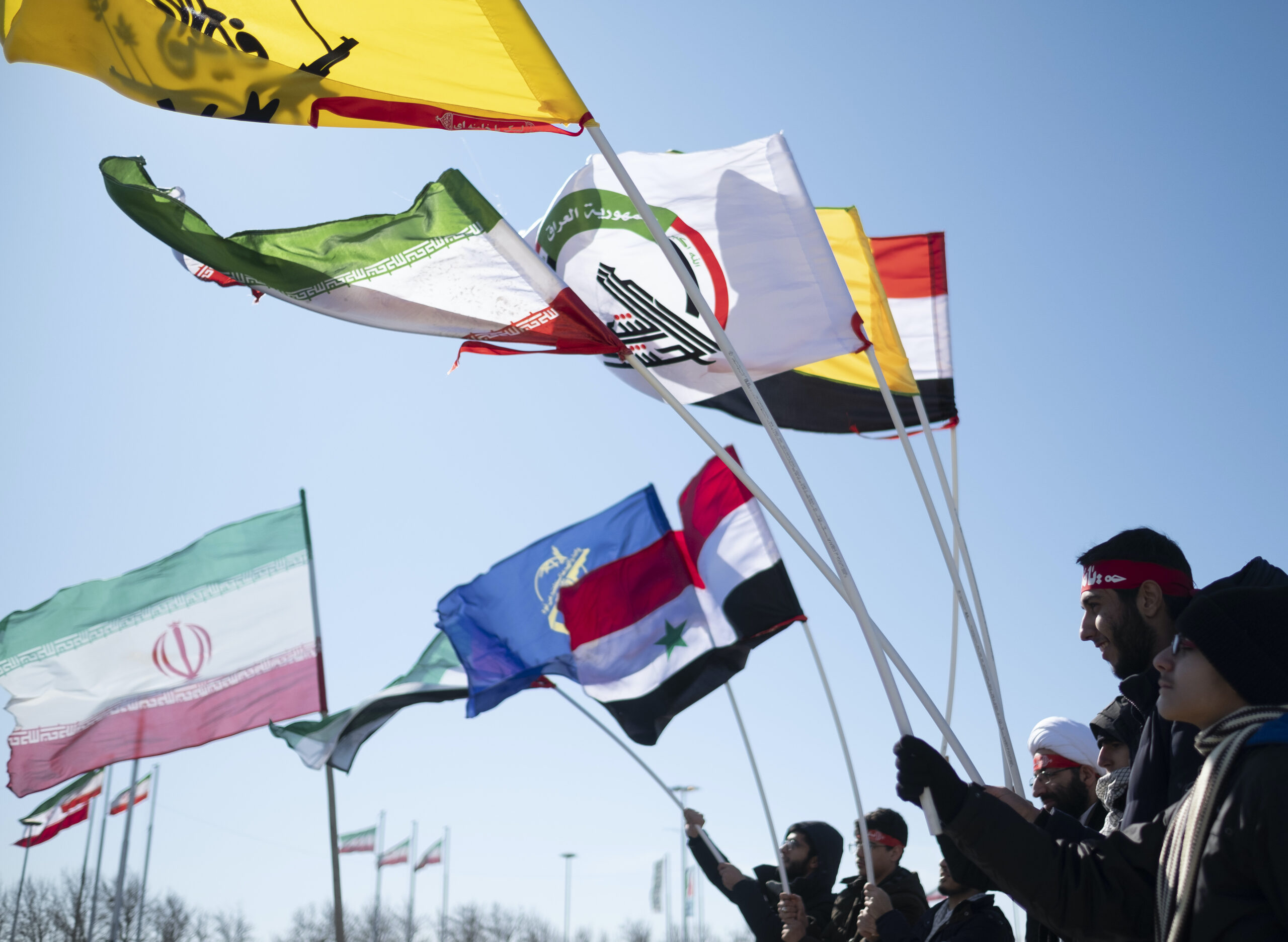
    Supporters of Lebanese Shiite groups Hezbollah and Amal wave flags and chant in front of army soldiers in the capital Beirut, on November 25, 2019.
  • التحليل
  • Hezbollah and Amal change tactics and ratchet up violence amid ongoing protests

    While Hezbollah has largely remained immune to criticism, owing to its widely perceived role as an effective resistance movement against Israeli aggression, the powerful Iran-backed Shi’a militia and political party is now viewed by many demonstrators as part of the corrupt and morally bankrupt political establishment that must be replaced. Against this backdrop, supporters of Hezbollah and its Shi’a ally the Amal Movement have been quick to resort to violence.

    December 5, 2019

    Bringing Social Class into Humanitarian Debates: The Case of Northern Lebanon
    (Photo by Vincent LECOMTE / Gamma-Rapho via Getty Images)
  • التحليل
  • Bringing Social Class into Humanitarian Debates: The Case of Northern Lebanon

    Cities are commonly regarded as the primary places where class economies become layered and articulated; however, the debates on “urban humanitarianism” have neglected social class as a key factor that significantly marks the relationship between aid providers and recipients in settings of aid provision. The small city of Halba, in northern Lebanon, vividly illustrates how the class economy has tacitly been shaping humanitarian programming and how the very presence of humanitarian actors on the ground reinforced the pre-existing class-based inequality.

    December 4, 2019

    Leveraging the Current Uprising for Sustained Political Change
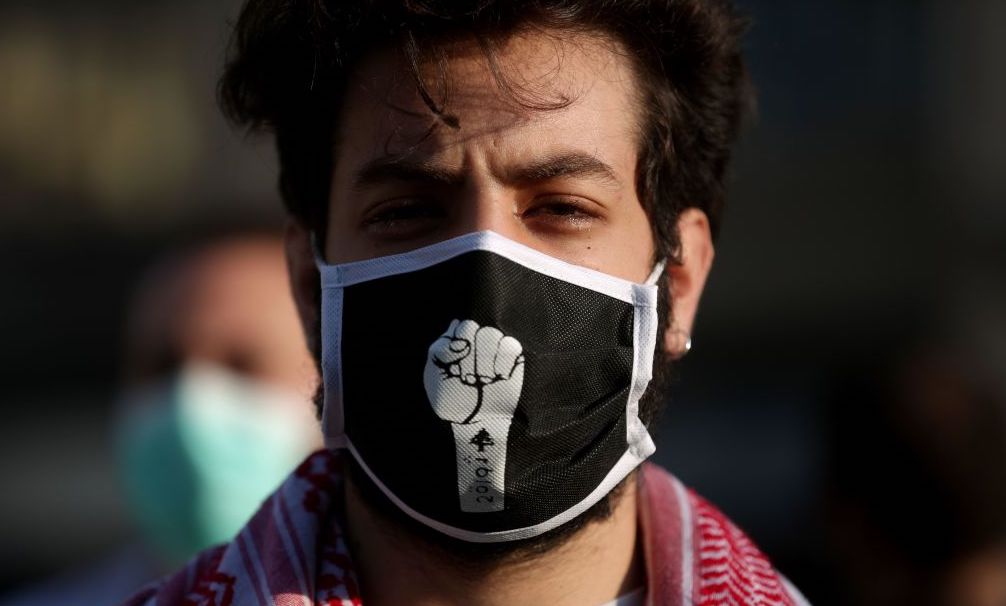
    Lebanese demonstrators raise a new giant sign of a fist that bears the Arabic word
  • التحليل
  • Leveraging the Current Uprising for Sustained Political Change

    The nationwide protests are the most significant domestic political development in Lebanon since the end of the civil war. It would be useful to examine both the short and long term political potential of this new awakening.

    In the short term, the protests have already mobilized the power of the public to bring down a corrupt and ineffective government, and to gain great leverage on the rejection or acceptance of any new government. They have also raised urgent national demands and forced the ruling class to confront these demands. 

    November 22, 2019

    Lebanon’s leap into the unknown
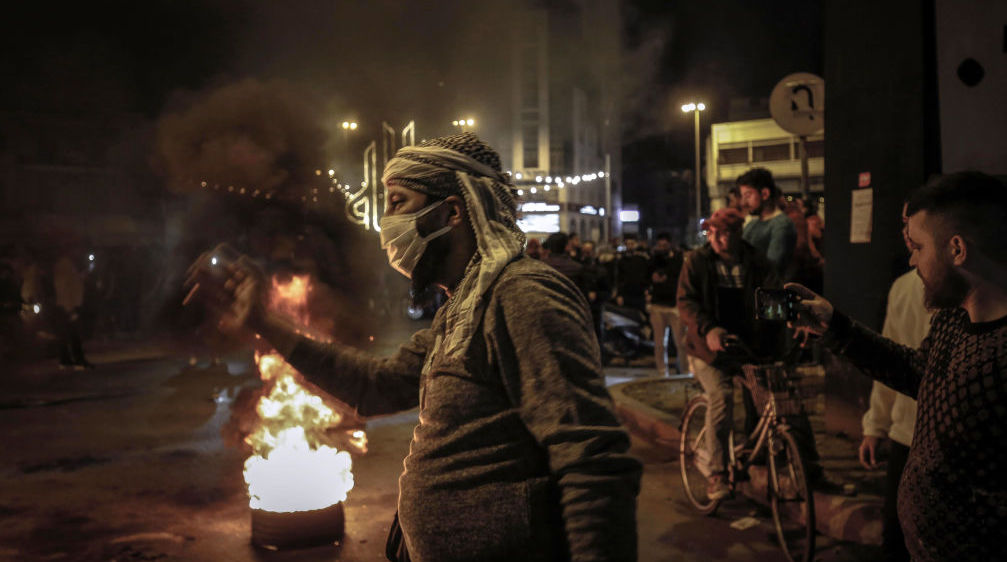
    Anti-government activists take part in a protest in downtown Beirut, demonstrations across Lebanon entered its 2nd months.
  • التحليل
  • Lebanon’s leap into the unknown

    On a recent trip to my native Lebanon I looked on its ongoing, unprecedented protests with both wonder and worry. The country is a month into widespread anti-government demonstrations. The protests’ scale ebbs and flows but the relative calm during my stay had a fleeting if not sinister quality to it. That calm is unraveling. However this chapter of Lebanon’s history unfolds, this complicated country has changed irreversibly.

    November 21, 2019