This text has been translated by AI and may contain errors.
Skip to Content

Research & Commentary Results

Filter by
3382 Results
Israel’s Upcoming Elections: Straws in the Wind
  • Analysis
  • Israel’s Upcoming Elections: Straws in the Wind

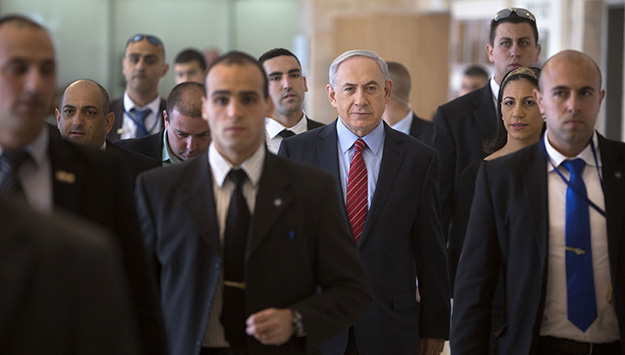
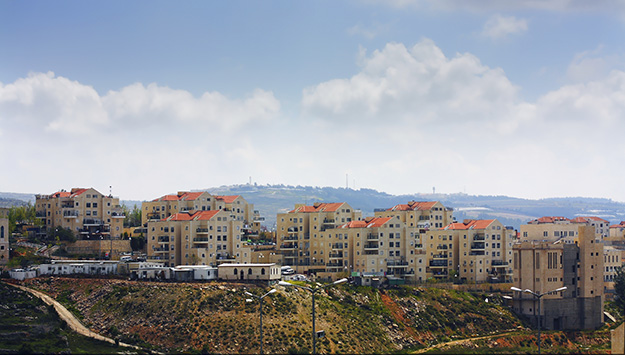
    The electoral campaign in Israel is still unfolding, and with about two months to go anything might happen to upend predictions about the outcome. But there are straws in the wind.

    January 15, 2015

    Why Should Iran Accept U.S. Presence in Afghanistan?
    Middle East Institute
  • Analysis
  • Why Should Iran Accept U.S. Presence in Afghanistan?

    Read the full article on Al-Monitor. 

    At first glance, Iran appears to be unconvinced about Afghanistan’s new President Ashraf Ghani, and the feeling is probably mutual. Ghani chose Saudi Arabia, China and then Pakistan as the first countries to visit as president, and has yet to visit Tehran. 

    Iran as an Occupying Force in Syria
  • Analysis
  • Iran as an Occupying Force in Syria

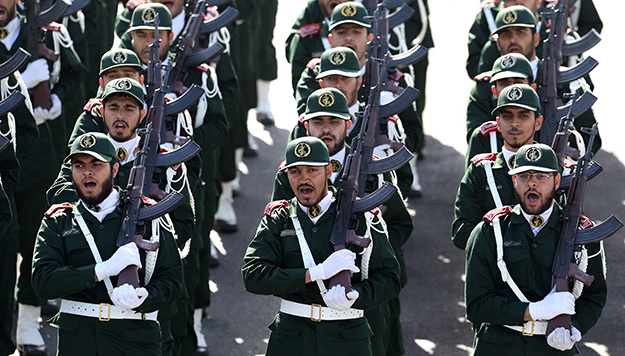
    It is no longer accurate to describe the war in Syria as a conflict between Syrian rebels on the one hand and Bashar al-Assad’s regime forces “supported” by the Iranian Revolutionary Guards (IRG), Hezbollah, and Iraqi militias on the other. Most major battles in Syria—along the frontlines of regime-held areas—are now being directed and fought by the IRG and Hezbollah, along with other non-Syrian Shi‘i militias, with Assad forces in a supportive or secondary role.

    December 17, 2014

    Egypt and Israel: Sinai Heat Thaws the Cold Peace
  • Analysis
  • Egypt and Israel: Sinai Heat Thaws the Cold Peace

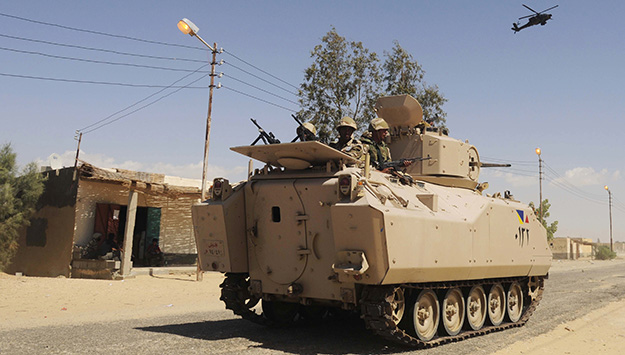
    Egyptian President Abdul-Fattah el-Sisi is no Zionist, as senior Israeli interlocutors like to point out, but his vision of state sovereignty and Egyptian national security often closely aligns with the interests of Israel. When Sinai’s Ansar Beit al-Maqdis, Egypt’s most lethal jihadi group, recently pledged allegiance to the Islamic State in Syria and Iraq, perhaps the most interesting response was the non-response by the governments of Egypt and Israel. From the view of both, the origins and ideologies of Islamist groups are all the same.

    December 16, 2014

    Iran’s Nuclear Secrets Need to be Revealed
  • Analysis
  • Iran’s Nuclear Secrets Need to be Revealed

    Expert American opinion on the outcome of last month’s nuclear negotiations with Iran is sharply divided. Those who want Iran to give up all enrichment technology are relieved that a “bad” deal was averted.

    December 10, 2014

    The American Approach in Syria and Iran: Soft and Dangerous
    Middle East Institute
  • Analysis
  • The American Approach in Syria and Iran: Soft and Dangerous

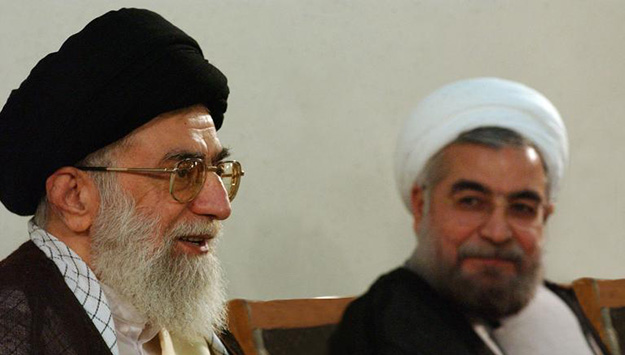
    In his pursuit of foreign policy deals with Syria and Iran, President Obama has taken a soft approach. As a result, Syria and Iran have taken advantage with aggressive opportunism.

    December 10, 2014

    Early Elections in Israel: A Reality Check
  • Analysis
  • Early Elections in Israel: A Reality Check

    There’s an expression in Israel along the lines of “people are scrupulously honest with pollsters, then they get into the voting booth and lie like hell.” It is important to bear this chestnut in mind as one scans survey returns regarding prospects for the major parties in the upcoming elections.

    December 5, 2014

    The Israeli-Palestinian Conflict and Obama’s Legacy
  • Analysis
  • The Israeli-Palestinian Conflict and Obama’s Legacy

    This paper is part of an MEI scholar series, titled “Obama’s Legacy in the Middle East: Passing the Baton in 2017.” Click here to view the full project, or navigate using the table of contents to the right.

    The Israeli-Palestinian conflict has gone through a number of different phases in its long history. It is possible—though only time will tell—that a new phase is beginning now, but not a particularly hopeful one.[1]

    November 14, 2014

    Obama's Legacy on Iran
  • Analysis
  • Obama's Legacy on Iran

    This paper is part of an MEI scholar series, titled “Obama’s Legacy in the Middle East: Passing the Baton in 2017.” Click here to view the full project, or navigate using the table of contents to the right.

    Soft Islam: Indonesia’s Interfaith Mission for Peace in the Middle East
  • Analysis
  • Soft Islam: Indonesia’s Interfaith Mission for Peace in the Middle East

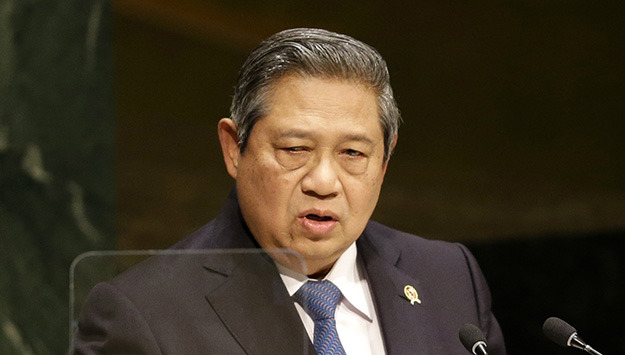
    Historians and anthropologists have focused on Muslim networks of scholars, merchants, and pilgrims that connect the Middle East with Southeast Asia. Especially with respect to the study of Islam in Indonesia, where political scientists and anthropologists approach Islam largely in terms of national politics and local cultures, this burgeoning body of literature on global Muslim networks offers both ethnographic insights into actual practices and an historical appreciation for the longue durée. The importance of this scholarship notwithstanding, much of this work focuses on formal networks of migration, trade, learning, and pilgrimage. In this respect, the cultural and political work of Islam has been largely confined to the study of either Muslim scholars or lay Muslims who participate in trade, travel, study, and migration. Here I shift the focus to a religious diplomacy tour that connected Muslims with states, citizen-believers, and global politics.
    November 12, 2014

    Iran's Headscarf Politics
  • Analysis
  • Iran's Headscarf Politics

    Iranian women have long been in a cat-and-mouse game with the interpretation and enforcement of many aspects of Islamic law, but most especially the hijab. Since 1983, when the first written law was passed, the Islamic Republic has made it officially mandatory for women to wear the headscarf and loose clothing, with punishment for failing to comply ranging from lashes to imprisonment. Even before the law was passed, just a few strands of hair outside the scarf would not be tolerated.

    November 3, 2014

    Contemporary Patterns in Transregional Islam: Indonesia’s Shi‘a
    Middle East Institute
  • Analysis
  • Contemporary Patterns in Transregional Islam: Indonesia’s Shi‘a

    Representing about 1% of the country’s 200 million Muslims, Indonesia’s Shi‘a are but a small group in the overwhelmingly Sunni majority. These contemporary communities of devotees of the ahl al-bayt (“people of the house,” referring to the Prophet Muhammad, his daughter Fatima, her husband ‘Ali, and their sons Hasan and Husayn) explain their identities, albeit with differences, in transregional terms. Recently, this transregional focus has turned from South Asia toward the Islamic Republic of Iran.

    October 31, 2014

    Iran-Pakistan: Will Border Tensions Boil Over?
  • Analysis
  • Iran-Pakistan: Will Border Tensions Boil Over?

    This article was first published on BBC News.

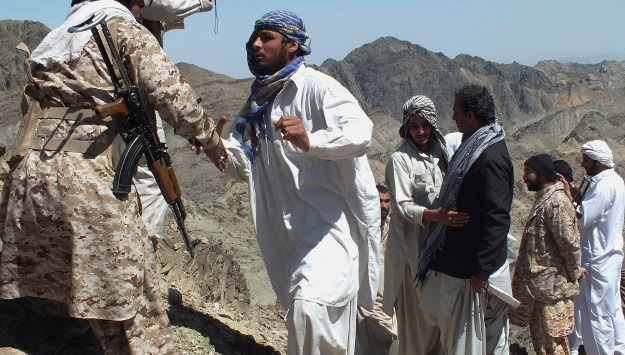
    There have been a number of rounds of border skirmishes between Iran and Pakistan since the first week of October. However, reports that Pakistani forces have returned mortar fire is highly unusual and represents an increase in tensions that have marred this region for years.