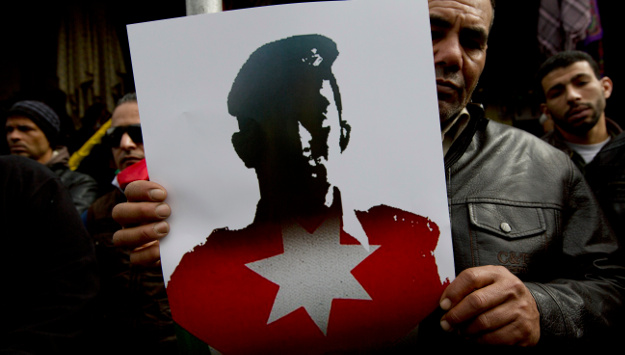
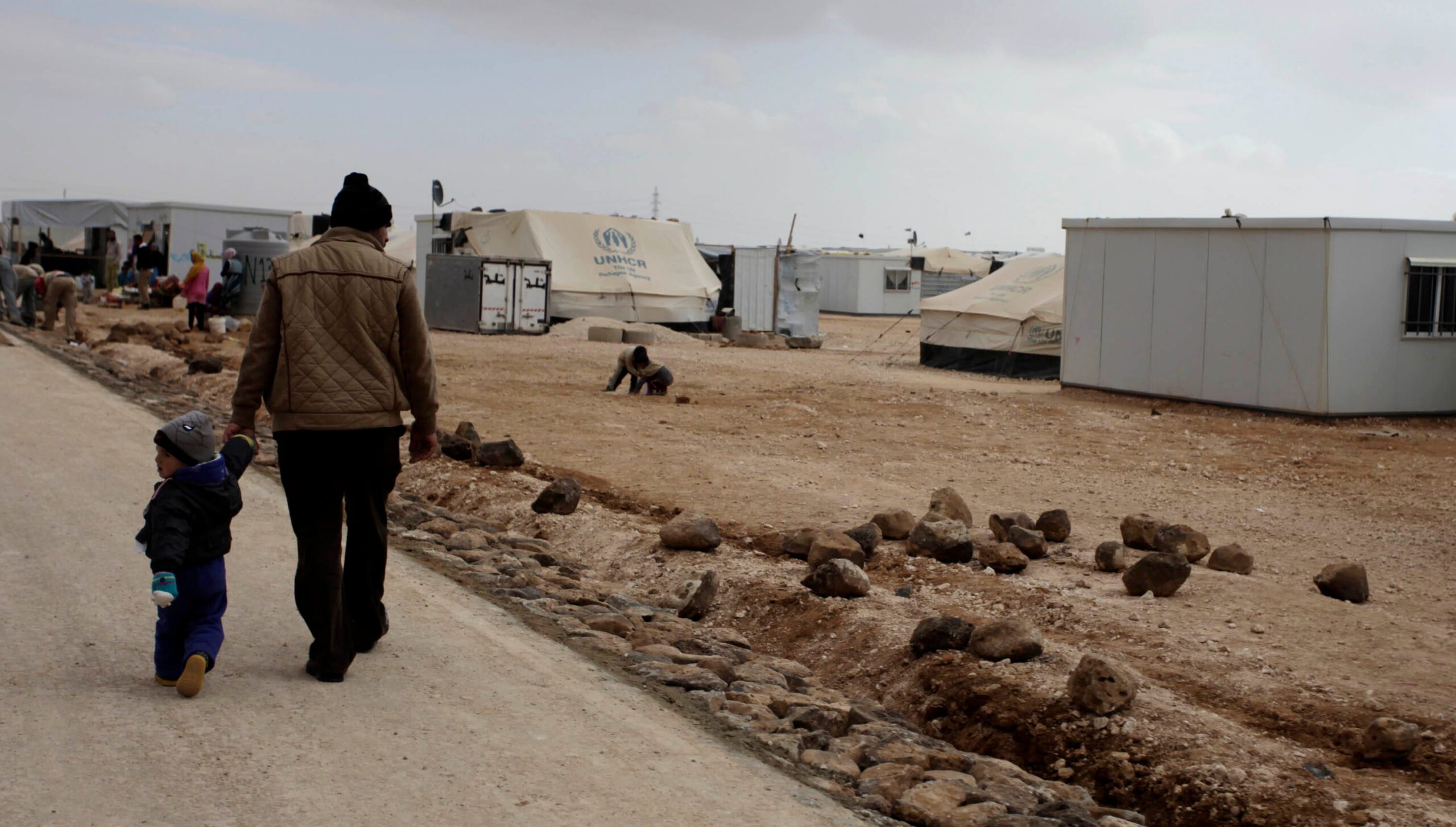
At a time when Arab governments across the region unveil grand economic reform ‘visions,’ Jordan has launched its own bold scheme to revive its faltering economy. Jordan is looking for a cure to what many Jordanians consider an economic burden: over 1.2 million Syrian migrants due to the war next door.
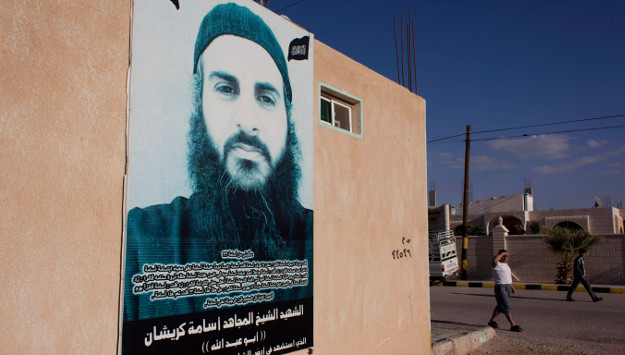
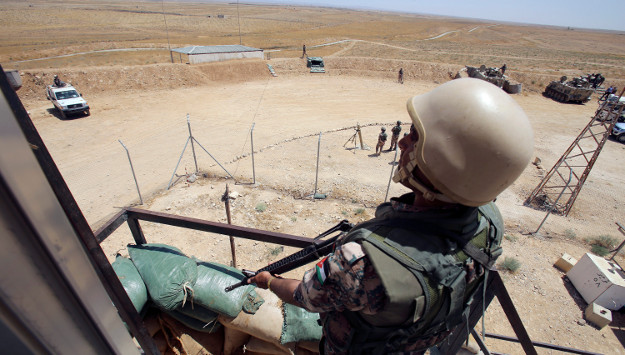
The pre-emptive security operation against a suspected ISIS-linked cell in the northern Jordanian city of Irbid earlier this month was a rude awakening. That all members of the cell were Jordanians added to public anxiety. While praise of the security forces and Jordan’s General Intelligence Department (GID) came from all sides, starting with King Abdullah himself, a sense of unease permeates throughout the kingdom. This was the first armed confrontation with ISIS, called Daesh locally, within the kingdom’s borders.
Humanitarianism in Highly Religious Contexts: Responding to Syrian Refugees in Lebanon
This essay discusses the potential value of and impediments to the provision of assistance to refugees by local religious institutions. It explores this issue by focusing on Lebanon, highlighting the important contribution of a small NGO, the Lebanese Society for Educational and Social Development (LSESD), in mentoring and training pastors and many of the key local church leadership in how to respond to the humanitarian needs of Syrian refugees.
Fate of the Dragon in the Year of the Red Fire Monkey: China and the Middle East 2016
February 2016 marks the beginning of a new phase in the Chinese lunar calendar, drawing to a close a year marked by heightened risks and fortuitous gains in China’s efforts to secure its interests in the Middle East and North Africa (MENA) region. This essay addresses three questions: How well has China adapted to the conflict and instability that have swept the region? And as we enter the Year of the Red Fire Monkey, what are the concerns that are likely to preoccupy Chinese leaders? What, if any, policy adjustments by Beijing, can realistically be expected in light of the current circumstances and uncertain prospects for the region and for China itself?
Has Jordan Acquiesced to Assad Regime Offensive in Southern Syria?
Jordan is yet to react publicly to a fresh land assault by Syrian regime forces, backed by Hezbollah and Iran’s Islamic Revolutionary Guard Corps fighters, against rebel-held towns in southern Syria.
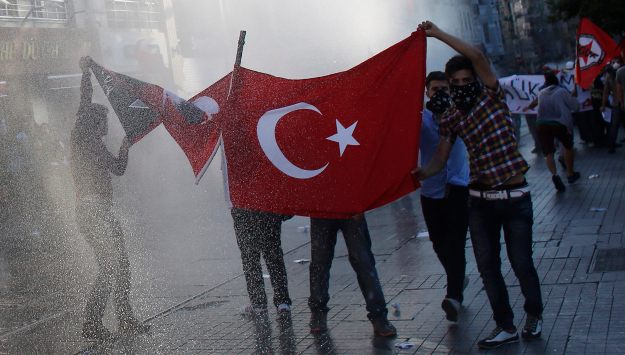
Washington and Ankara are in yet another difficult phase in a relationship cycle that runs from very good to very bad. American public opinion about another country forms slowly, but persists through time once set. As Turkey changes, we keep trying to fit new evidence into the old paradigm. At some point, the contradictions are too obvious to explain away, and the new narrative emerges. Right now, Americans are caught in that dilemma regarding Turkey. Unless we have a better idea of which Turkey we are dealing with, we are certain to make bad choices.
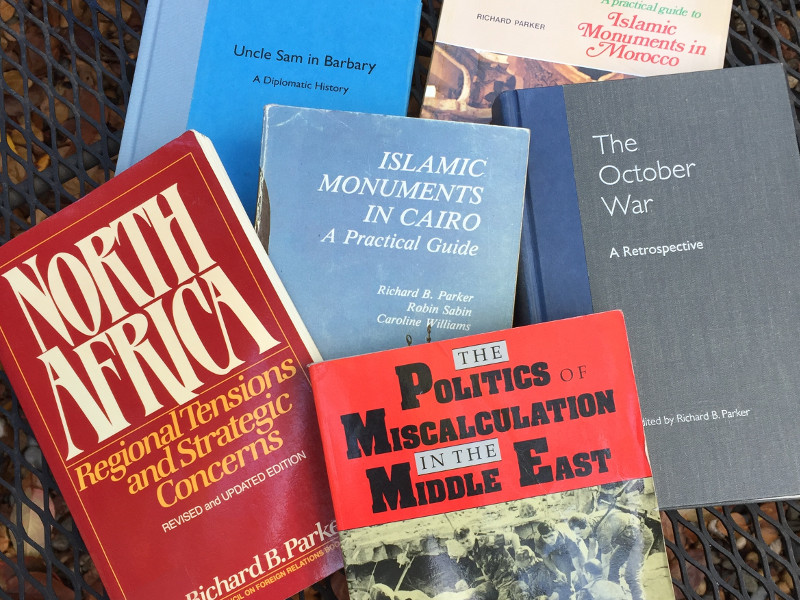
Only a few authors have works that can be found on both floors of the Oman Library at The Middle East Institute, and fewer still that have a personal connection to both the institute and the history of the region. The late Ambassador Richard B. Parker can claim this status, having served 31 years in the Foreign Service and as the third editor of The Middle East Journal. He was also a longtime MEI scholar-in-residence.
Jordan’s future energy landscape is slowly taking form. Despite a population of less than seven million and almost no conventional hydrocarbon resources, Jordan has emerged as a relatively stable market for energy investment as the small nation attempts to diversify its energy mix, increase energy independence, and meet growing demand. Investment in Jordan’s energy sector, in contrast to energy sector growth in Egypt, Israel, and other regional powers, is largely fueled by the country’s lack of conventional energy sources.
Robert Baer’s See No Evil presents a firsthand account of the life of a CIA case officer in the war on terror. From recruiting agents in the volatile Bekaa Valley in Lebanon to wiretapping Abu Nidal students in France, Baer provides a fascinating description of his CIA service.
Collection Spotlight: In the Name of Oil: Anglo-American Relations in the Middle East, 1950-1958
Ivan L. G. Pearson’s In the Name of Oil: Anglo-American Relations in the Middle East, 1950-1958 provides a comprehensive analysis of the extent to which British interests in the Middle East influenced or were furthered by the United States between 1950 and 1958.



 Robert Baer’s See No Evil presents a firsthand account of the life of a CIA case officer in the war on terror. From recruiting agents in the volatile Bekaa Valley in Lebanon to wiretapping Abu Nidal students in France, Baer provides a fascinating description of his CIA service.
 Ivan L. G. Pearson’s In the Name of Oil: Anglo-American Relations in the Middle East, 1950-1958 provides a comprehensive analysis of the extent to which British interests in the Middle East influenced or were furthered by the United States between 1950 and 1958.