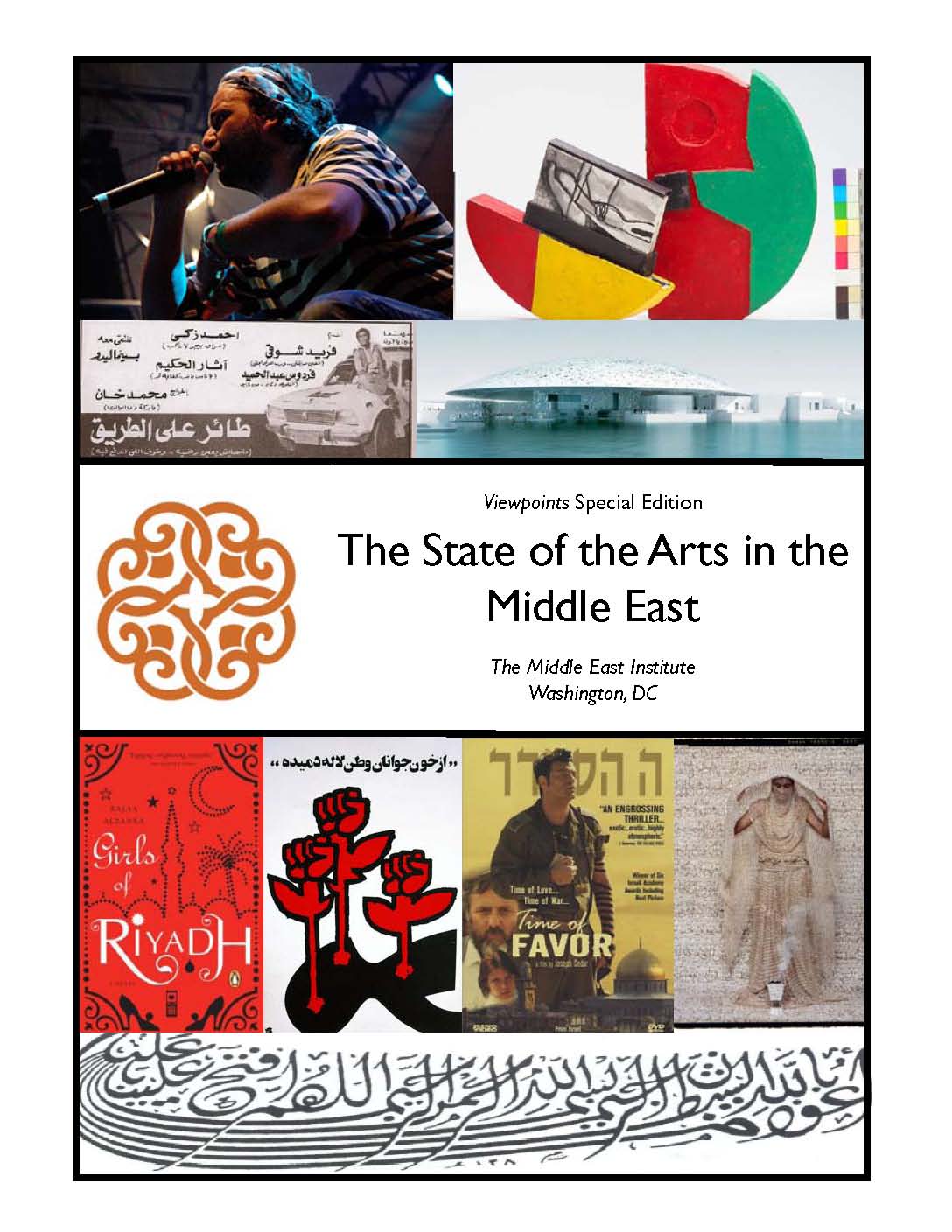
Introduction to The State of the Arts in the Middle East: Volume IV
Literature, visual art, and photography not only serve an aesthetic purpose, but often act as mediums through which their creators explore deeply personal experiences and their broader social implications. In this, the fourth volume of MEI’s “The State of the Arts in the Middle East,” Najat Rahman considers the works of the Palestinian artists Emily Jacir and Eman Haram, and W. Scott Chahanovich (with Pauline Pannier) discusses the memoirs of the Moroccan-born writer Abdellah Taïa.
The Khamenei-Ahmadinejad Regime and the Challenge of the Iranian Opposition
The Middle East Institute is proud to host Iranian scholars Ali Alfoneh and Alex Vatanka for a discussion about the ongoing unrest in Iran and the implications for the stability and future of the Islamic Republic. With the Green Movement having proved its staying power, some scholars and analysts are starting to predict the beginning of the end for the regime of Supreme Leader, Ali Khamenei, while others dismiss the idea as wishful thinking and argue that the Islamic Republic is here for the long-term.
Iranian Migrants in the Arab Countries of the Persian Gulf
This essay examines migration from the Iranian coastal region of the Persian Gulf to the nearby Arab countries. At the center of this research are questions of cross-border relationships, the construction of transnational spaces in border migration, and strategies for maintaining networks in both the home and host countries.
The Middle East Institute is proud to host Dr. Mark Katz, professor at George Mason University, for a discussion of current relations between Iran and Russia. The Obama Administration has attempted to improve US relations both with both countries. However, neither Tehran nor Moscow has responded favorably toward the new administration's initiatives. While Tehran and Moscow continue to distrust Washington, they also distrust each other.
Economic Peace in the West Bank and the Fayyad Plan: Are They Working?
There can be a democratic, de facto Palestinian state by 2011, according to Salam Fayyad, the Prime Minister of the Palestinian Authority (PA). The goal was outlined in an eloquent two-year plan entitled “Ending the Occupation, Establishing the State,”[1] published in August 2009, which called for the formation of the institutional foundations of statehood prior to, and independent of, an agreement with Israel.
Introduction to The Legacy of Camp David: 1979-2009
Since the “Six Day War” in June 1967, countless American and other diplomats have sought almost continuously to broker peace between Israel and its surrounding Arab enemies. From that tangled history, one achievement stands tallest in a forest of scrub: the Egypt-Israel Treaty signed on March 26, 1979 on the White House front lawn by President Anwar Sadat, Prime Minister Menachem Begin, and President Jimmy Carter.
Iran’s political system has not yet developed stable party structures. Most parties are still loose coalitions of individuals and interest groups that combine their own interpretation of Ayatollah Ruhollah Khomeini’s legacy with their personal interests. As party affiliation remains relatively weak, members of one party often have run as candidates for another party or are on several electoral lists. Similarly, unregistered parties or electoral platforms also field candidates for both presidential and parliamentary elections on an ad hoc basis.
Ten years ago, in the summer of 1998, I arrived in Tehran after an absence of more than two decades. Three vignettes describe some of what I experienced and why I decided to stay.
In assessing the progress of the revolution in Iran, it might be useful to recall how other revolutions of the 20th century fared at the 30-year interval. Using their commencement rather than the actual seizure of power as the baseline, the 30th anniversaries of major 20th century revolutions were 1940 for Mexico, 1947 for the Soviet Union, 1964 for China (using the “Long March” as the year), 1975 for Vietnam, 1983 for Cuba (dating its beginning with the attack on the Moncada Barracks), 1984 for Algeria, and 2008 for Nicaragua.
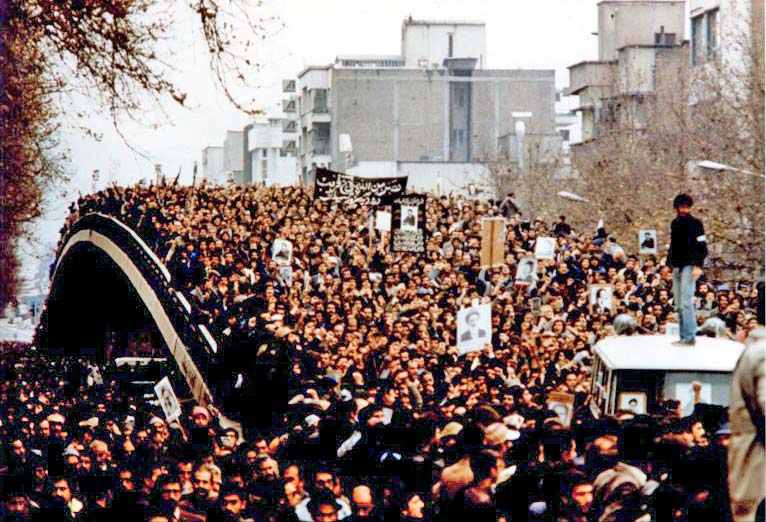
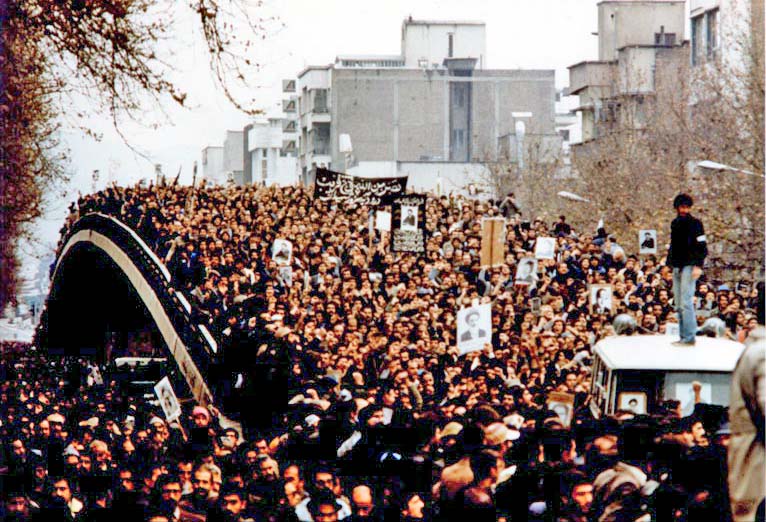
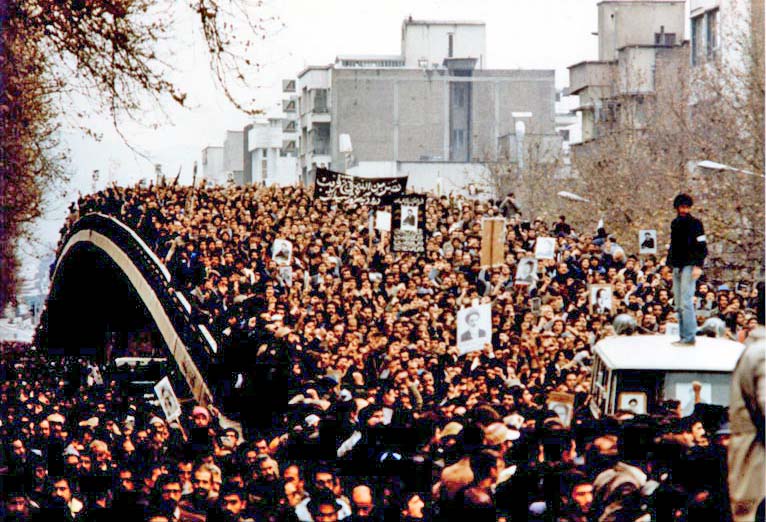
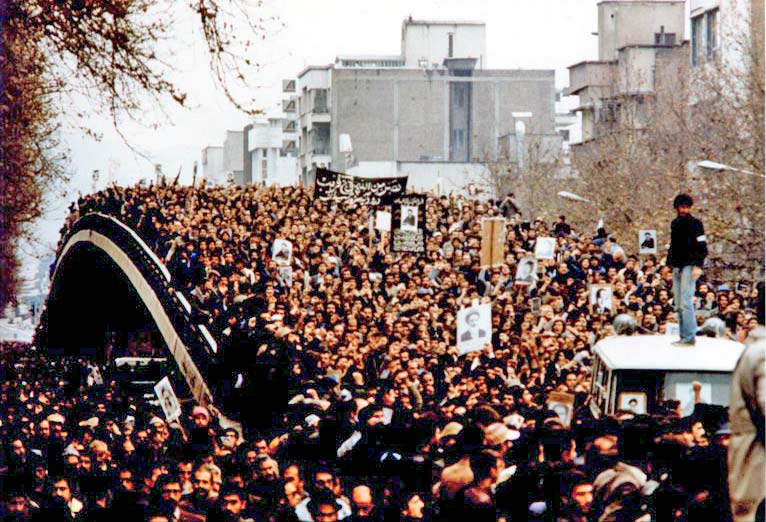
Back to the Future: Bazaar Strikes, Three Decades after the Iranian Revolution
This essay series examines the roles that community-based organizations (CBOs) have played as active participants in the process of “governing” megacities—whether in service delivery, risk mitigation, or the creation of
The Revolutionary Legacy: A Contested and Insecure Polity
Islamic Iran will enter its 30th year with almost as much political noise as it generated at its inception. On the one hand, Iran’s nuclear program and the confrontation it has engendered are daily reminders of the regional and global dimensions of Iran’s revolution. On the other hand, the incessant squabbling among various branches of the government as well as among different political factions point to the fact that, more than anything else, the revolution was about an end to a one-man dominated political system.
The establishment of several para-governmental organizations (bonyads) following the revolution of 1979 in Iran has created a large socio-economic sector. This sector tried to harness a mass society by creating parallel structures of revolutionary legitimacy and authority in order to contribute to the consolidation process.