تمت ترجمة هذا النص بواسطة الذكاء الاصطناعي وقد يحتوي على أخطاء.
تخطي إلى المحتوى

Research & Commentary Results

تصفية حسب
833 Results
Biden Must Keep U.S. Operatives in Afghanistan To Enable the Counterterrorism Mission
  • تعليق
  • Biden Must Keep U.S. Operatives in Afghanistan To Enable the Counterterrorism Mission

    We can and must provide that assistance not to help defeat the Taliban, fix Afghanistan, or remove our moral stain, but to achieve a much more limited objective, one that’s stated by the President himself, which is to ensure that no major attack against the U.S. or U.S. strategic interests is launched from Afghanistan.

    What’s next in Afghanistan? The prospects for future political violence
    Photo by MARCUS YAM/LOS ANGELES TIMES/Getty Images
  • التحليل
  • What’s next in Afghanistan? The prospects for future political violence

    As the U.S. withdrew troops from Afghanistan, the Taliban pushed through large portions of the country, capturing strategic regional centers and ultimately securing the capital city of Kabul. In its pursuit, the Taliban faced relatively little resistance as it seized government strongholds. Rather than widespread fighting, reports indicate that Taliban fighters often cut deals with soldiers, offering payoffs or demanding surrenders. At the same time and as of the time of writing, the Taliban announced a general amnesty, encouraging former government officials and women to support the group.
    Whether and how long this period of limited resistance and amnesty might last are unclear. What are the prospects for future political violence both within and outside the country?

    August 19, 2021

    روسيا تعيد النظر في الوضع الراهن في جنوب سوريا
    Photo courtesy of the author.
  • التحليل
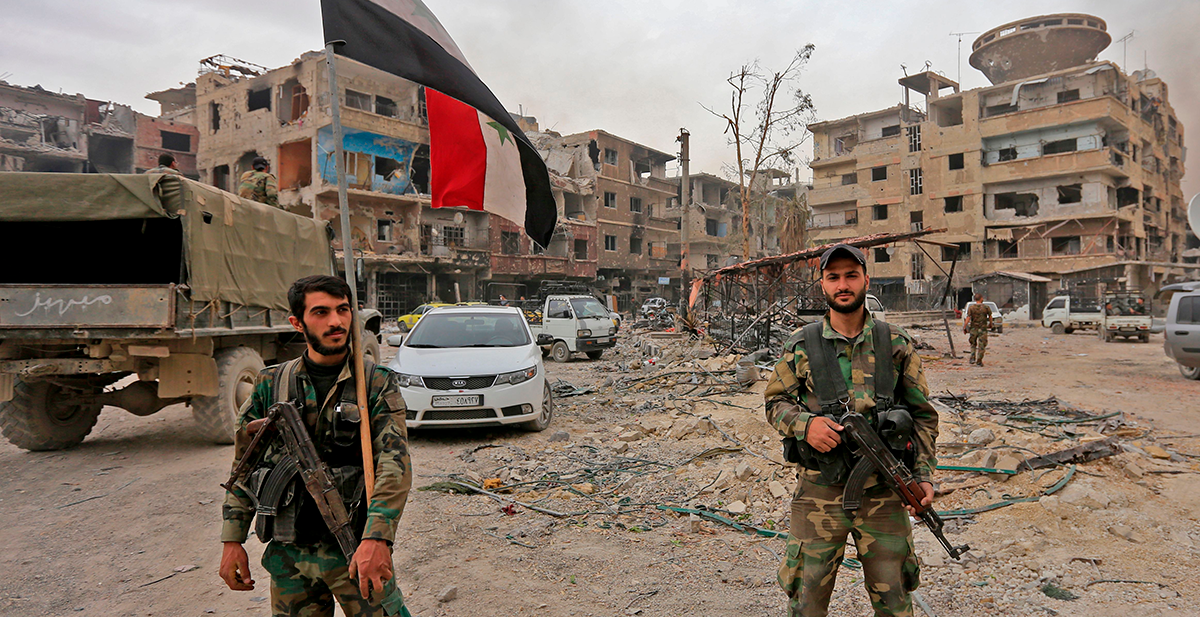
  • روسيا تعيد النظر في الوضع الراهن في جنوب سوريا

    In June 2021, southern Syria once again dominated the headlines when the regime laid siege to the Daraa al-Balad area of Daraa city. A few days after the monthlong siege, an agreement to end the escalation collapsed and the Syrian army’s Fourth Division spearheaded a major military push in the area. Intense clashes broke out as groups of unreconciled rebels violently repelled the advancement of Syrian military forces. Armed confrontations spread into eastern and western Daraa amid heavy bombardment via missiles, artillery, and mortar shells, marking the deadliest and most intense fighting in Syria’s south-west since the conclusion of the 2018 “reconciliation” agreements.

    Expert Views: The crisis in Afghanistan
    Photo by Paula Bronstein/Getty Images
  • التحليل
  • Expert Views: The crisis in Afghanistan

    Weeks before the official U.S. military withdrawal, Afghanistan is unraveling rapidly as the Taliban continue their swift military advance. They now control more than two-thirds of the country and half of the provincial capitals. With the government’s hold on Kabul in doubt, the Biden administration has dispatched troops to evacuate U.S. citizens from the country. We asked experts and scholars from across MEI to weigh in with their thoughts on the situation and what it means for the country, the wider region, and key international players.

    Now is the time for difficult conversations on Afghanistan
    Photo by Andrew Renneisen/Getty Images
  • تعليق
  • Now is the time for difficult conversations on Afghanistan

    The debate about whether Afghanistan was worth thousands of U.S. lives and a trillion U.S. taxpayer dollars should have occurred before those lives were lost and the money was spent. The decision to pull out our remaining 2,500 troops was made after all of that was done. That minimal number of troops preserved everything we fought for in the last two decades. We had significantly reduced the risk to our forces and the expense to the U.S. taxpayer. 

    Irregular Warfare: A Case Study in CIA and US Army Special Forces Operations in Northern Iraq, 2002-03
    Photo Patrick Barth/Getty Images
  • التحليل
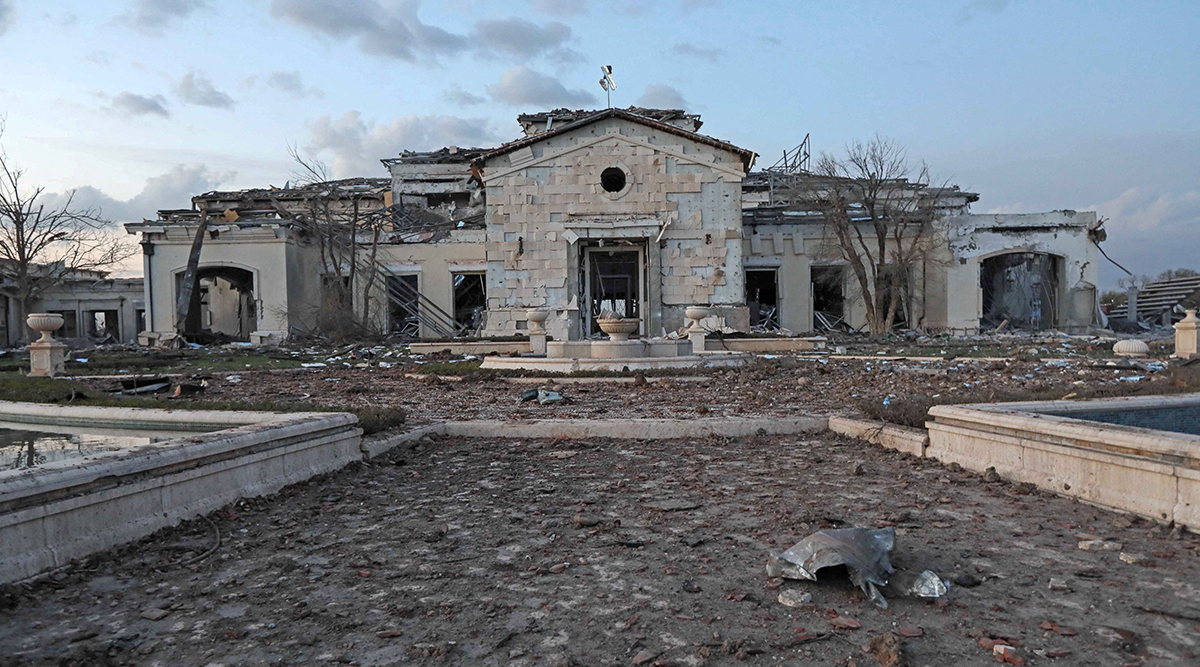
  • Irregular Warfare: A Case Study in CIA and US Army Special Forces Operations in Northern Iraq, 2002-03

    Irregular warfare (IW) is increasingly common in the 21st century and the U.S. must learn from its successful experiences with it and apply those lessons to great power competition. For the past two decades the CIA and Army Special Forces have demonstrated how to leverage interagency relationships and apply complementary capabilities to achieve successful IW outcomes. The CIA/Army Special Forces partnership in Northern Iraq during the invasion of Iraq demonstrates the value of this interagency team and provides lessons and a model for the conduct of IW in the future.

    Now more than ever, the US needs to reaffirm its commitment to Georgia
    Photo by VANO SHLAMOV/AFP via Getty Images
  • التحليل
  • Now more than ever, the US needs to reaffirm its commitment to Georgia

    As we near the 13th anniversary of the end of the Russia-Georgia war, we reflect on the continuing tragedy of Russia’s invasion and occupation of Georgia. The consequences of this Russian aggression continue to place a heavy burden on Georgia today. Since 2008, we have witnessed the country’s tremendous commitment to overcoming Russia’s malign influence. Georgians’ overwhelming and bipartisan support for the country’s path toward EU and NATO integration has not been diminished — despite continuous Russian pressure.

    August 9, 2021

    Move the US-Iraq relationship out of crisis mode
    Photo by Tom Brenner-Pool/Getty Images
  • تعليق
  • Move the US-Iraq relationship out of crisis mode

    There were two parts to the Iraqi prime minister’s request to President Biden on July 26 in their meeting at the White House: end Washington’s combat mission in Iraq but maintain U.S. military assistance there. The first part was aimed mostly at Mustafa al-Kadhimi’s domestic audience; the roughly 2,500 U.S. troops in Iraq are there primarily to advise and assist the Iraqi army. But the second part deserves a bit of thought.  

    August 9, 2021

    Enabling US Security Cooperation
  • تعليق
  • Enabling US Security Cooperation

    One of US President Joe Biden’s top foreign-policy priorities is to rebuild America’s alliances and partnerships, which are vital to US strategic interests and international security. Yet to ‘pick up the pieces of Donald Trump’s broken foreign policy’, as Biden tweeted in January 2020, will require a great deal of effort given the harm that his predecessor inflicted on the country’s reputation as a partner of choice.

    August 4, 2021

    Can the IRGC-Taliban honeymoon continue? (Part 2)
    Photo by TASNIM NEWS/AFP via Getty Images
  • التحليل
  • Can the IRGC-Taliban honeymoon continue? (Part 2)

    the years leading up to the U.S. invasion of Afghanistan, the Taliban had strained relations with Iran. Tensions between the two sides escalated to the point that the Iranian government and the Quds Force actually assisted American forces during the 2001 U.S.-led invasion.

    July 30, 2021

    Can the IRGC-Taliban honeymoon continue? (Part 1)
    Photo by Sobhan Farajvan/Pacific Press/LightRocket via Getty Images
  • التحليل
  • Can the IRGC-Taliban honeymoon continue? (Part 1)

    Tehran’s policy toward the Afghan Taliban has created new clashes within Iranian government circles. These clashes recently escalated as influential hard-line media and associates of the Islamic Revolutionary Guard Corps (IRGC) made public efforts to portray the Taliban in a positive light. 

    July 30, 2021

    The future of US cooperation with Pakistan
    الصورة من قبل AAMIR QURESHI/AFP عبر Getty Images
  • التحليل
  • The future of US cooperation with Pakistan

    The United States and Pakistan have had a complex and often disappointing “love-hate” relationship since 1947 — one severely tested during the 20-year U.S.-led intervention in Afghanistan. We believe the time has come for serious policy consideration of whether and how both nations can achieve a more strategically beneficial and sustainable post-intervention relationship between the American and Pakistani governments and their populations

    Hezbollah’s Regional Activities in Support of Iran’s Proxy Networks
    Photo by Marwan Naamani/picture alliance via Getty Images.
  • التحليل
  • Hezbollah’s Regional Activities in Support of Iran’s Proxy Networks

    As a Lebanese actor ideologically tied to Iran, Hezbollah has multiple allegiances and objectives that do not always align symmetrically. Hezbollah’s regional activities are a reflection of the group’s increasingly close alignment with Iran, rather than the interests of the Lebanese state or citizenry. Today, Hezbollah’s regional adventurism is most pronounced in its expeditionary forces deployed in Syria and elsewhere in the region, but no less important are the group’s advanced training regimen for other Shi’a militias aligned with Iran, its expansive illicit financing activities across the region, and its procurement, intelligence, cyber, and disinformation activities. Together, these underscore the scale and scope of the group’s all-in approach to transforming from one of several Lebanese militias into a regional player acting at Iran’s behest.

    July 26, 2021

    After Afghanistan: Western militaries and the rise of new strategic threats
    Photo by HAUKE-CHRISTIAN DITTRICH/POOL/AFP via Getty Images
  • التحليل
  • After Afghanistan: Western militaries and the rise of new strategic threats

    The withdrawal from Afghanistan marks the end of a historic chapter. It involves more than just the conclusion of a drawn-out international military engagement in Afghanistan. Rather, it signals the end of a decades-long phase in which Western militaries placed the broader Middle East and the fight against international terrorism at the center of their strategic attention. With competition between the great powers on the rise, Western militaries have realized their current vulnerabilities vis-à-vis near-peer competitors and the need to shift gears.

    July 26, 2021

    Turkey and the Taliban
    Photo by SAJJAD HUSSAIN/AFP via Getty Images
  • تعليق
  • Turkey and the Taliban

    In a politically significant statement, Turkish President Recep Tayyip Erdoğan has asked the Afghan Taliban to “end the occupation of their brothers’ soil.” This follows a Taliban warning of severe consequences if Turkey were to remain in charge of security at Kabul Airport after the exit of American troops. Erdoğan’s message is likely to be interpreted differently by different stakeholders in the unfolding Afghan tragedy, a situation characterized by escalating violence, political uncertainty, and regional chaos.

    July 23, 2021