This text has been translated by AI and may contain errors.
Skip to Content

Research & Commentary Results

Filter by
946 Results
Special Briefing: The Trump administration’s potential last-minute Middle East policy moves
  • Commentary
  • Special Briefing: The Trump administration’s potential last-minute Middle East policy moves

    From Israel/Palestine and Lebanon to Iran and Afghanistan, there are a number of areas where the Trump administration may make policy moves before leaving office on Jan. 20. Experts from across MEI weigh in with their thoughts on what to watch out for over the next seven weeks.

    December 3, 2020

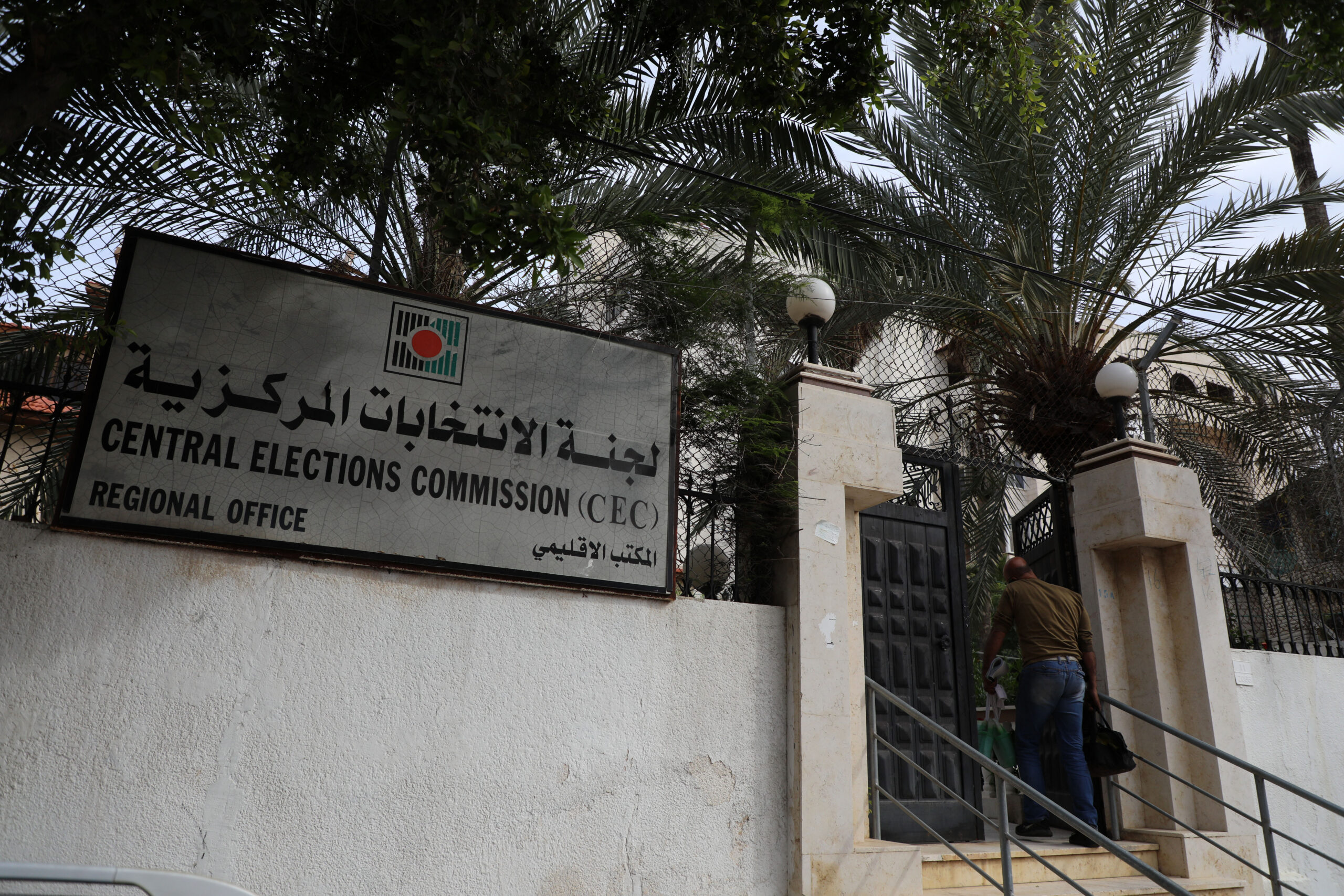
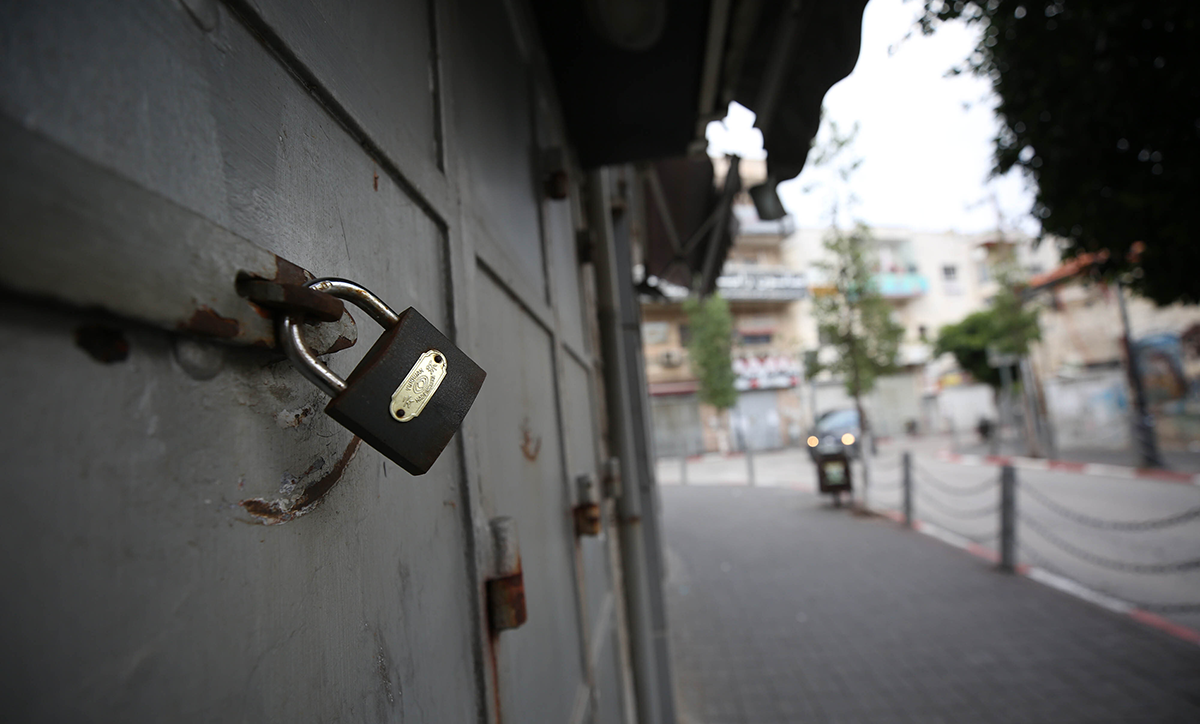
    Economic desperation and dependence are driving the Palestinian Authority’s political decisions
    Photo by Issam Rimawi/Anadolu Agency via Getty Images
  • Analysis
  • Economic desperation and dependence are driving the Palestinian Authority’s political decisions

    Faced with the Trump and Netanyahu governments’ persistent dismissal of the Palestinians and their rights, the PA has spent the better part of the last three years threatening to terminate all relations with Israel, and even to withdraw the Palestine Liberation Organization’s (PLO) recognition of Israel. The deteriorating situation culminated in Palestinian President Mahmoud Abbas’ May 2020 declaration that the Palestinian leadership was absolved “of all the agreements and understandings with the American and Israeli governments.” Notwithstanding previous similar warnings from Abbas in recent years, the announcement prompted speculation among Palestinian political parties, Palestinians at home and in the diaspora, scholars, activists, and journalists over the future of Palestinian politics in the post-Oslo era.

    December 2, 2020

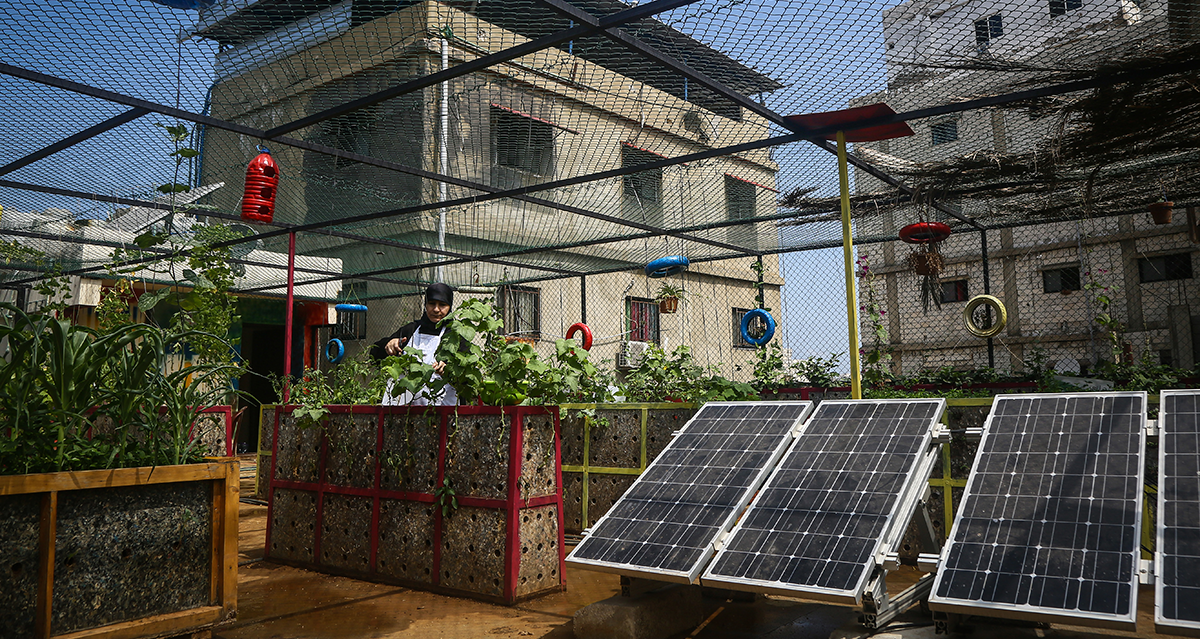
    DIY futures in the Middle East: What if small got bigger?
    Photo by Marwan Naamani/picture alliance via Getty Images
  • Analysis
  • DIY futures in the Middle East: What if small got bigger?

    It’s difficult to look at the Middle East and consider its future optimistically. Much of the analysis of the region centers on crisis and collapse. There is plenty of both, fueled by wars and civil conflicts, poverty, extremism, and more. Given the human toll, focusing on all this is natural. It is also necessary if solutions to deeply rooted problems are ever to be developed, leading to a better future.A related risk is becoming blinded to “weak signals” — early indicators of what could become features of potential alternative futures. Weak signals are developments that are emerging outside the dominant norms and trends of today. In the Middle East, probably the most dominant norm is the inability of governments throughout the region to provide security and prosperity for their citizens. The COVID-19 pandemic is making this even more apparent, and markedly worse. It is not just the obvious failed states — as Steven Cook recently observed, “sometimes state failure is a more chronic condition.” But in the midst of this — and fueled by it — there is evidence of activities at the local level to create what is missing. Could these be signals of a future different than the one it is so easy to expect for the region?

    December 1, 2020

    Biden could generate momentum for Israeli-Palestinian peace
  • Analysis
  • Biden could generate momentum for Israeli-Palestinian peace

    While the Israeli-Palestinian issue and renewal of negotiations is unlikely to feature prominently on his agenda anytime soon, Biden’s election generates renewed positive momentum.

    November 30, 2020

    Biden’s presidency cannot mean a return to the status quo for Palestinians
    Palestinians wave national flags as they march in the streets of the occupied West Bank city of Ramallah, calling for the cessation of divisions between Fatah and Hamas and the unification of the West Bank and Gaza Strip, on January 12, 2019.
  • Commentary
  • Biden’s presidency cannot mean a return to the status quo for Palestinians

    On Nov. 17 and 19, MEI’s Program on Palestine and Palestinian-Israeli Affairs convened a two-part series looking at the future of Palestinian politics and the Palestinian national movement. Below is a summary of Part 2, “Toward a Palestinian National Strategy,” which examined the efficacy of the Palestinian leadership’s current focus on a negotiated two-state settlement, as well as alternative visions and means of liberation, such as a one-state solution and the Boycott, Divestment, and Sanctions (BDS) movement.

    November 25, 2020

    Biden’s presidency indicates new opportunities for Palestinian politics
    A man waves a Palestinian flag while protesting.
  • Commentary
  • Biden’s presidency indicates new opportunities for Palestinian politics

    On Nov. 17 and 19, MEI’s Program on Palestine and Palestinian-Israeli Affairs convened a two-part series looking at the future of Palestinian politics and the Palestinian national movement. Below is a summary of Part 1, “Reviving Palestinian Political Life,” which focused on issues such as national reconciliation, elections, succession, the future of institutions like the Palestinian Authority (PA), and reform of the Palestine Liberation Organization (PLO).

    November 24, 2020

    Pompeo’s settlement visit caps a four-year effort to destroy the two-state solution
  • Commentary
  • Pompeo’s settlement visit caps a four-year effort to destroy the two-state solution

    Secretary of State Mike Pompeo made history this week by visiting two Israeli settlements, the Psagot winery located on the outskirts of Ramallah in the heart of the Israeli-occupied West Bank, and the City of David located in the Palestinian neighborhood of Silwan just outside Jerusalem’s Old City, the first ever such visits by a sitting American secretary of state. The visits were clearly aimed at legitimizing and normalizing Israel’s settlement enterprise, which is considered illegal under international law, in keeping with the administration’s approach of the last three years.

    November 20, 2020

    What Biden’s election means for Hezbollah
    Photo by Kaveh Kazemi/Getty Images
  • Analysis
  • What Biden’s election means for Hezbollah

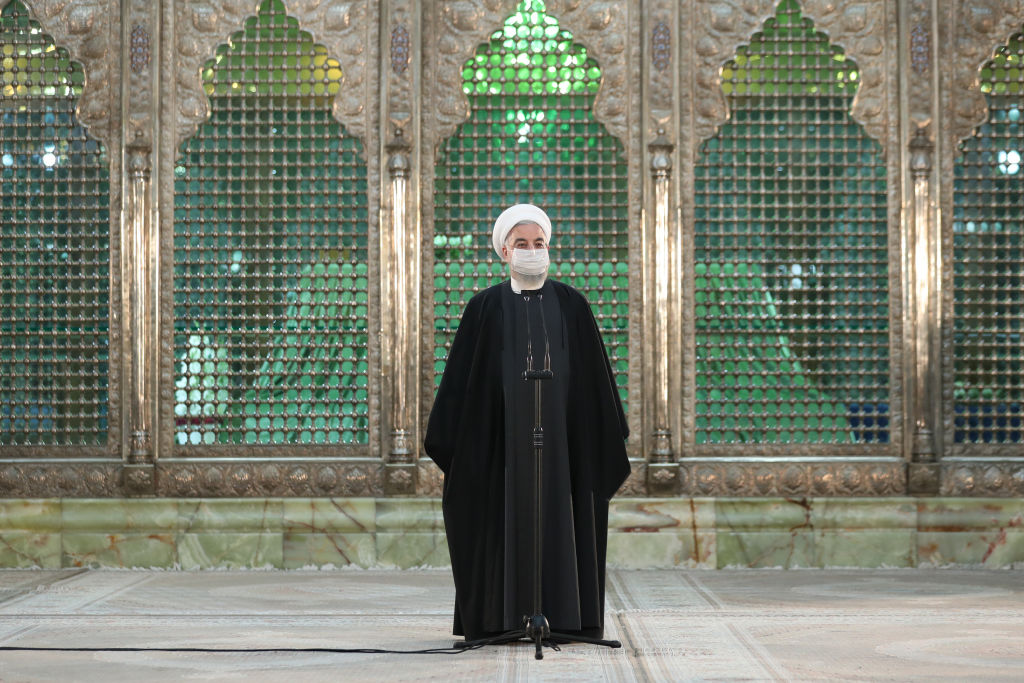
    Despite fresh comments from Hezbollah’s leader Hassan Nasrallah that Joe Biden’s victory in the U.S. elections would not dramatically alter America’s pro-Israeli foreign policy in the Middle East, Hezbollah appears largely optimistic of its future under the new administration. The Party of God seems wary of the next few months, however, until President Donald Trump leaves the White House in January. While Hezbollah will certainly benefit from a reboot in diplomatic relations between the U.S and Iran, which could translate into much-needed liquidity for the organization and a strengthening of its internal position, it still faces numerous domestic challenges that money alone cannot solve.

    November 19, 2020

    A Sea Change?: China's Role in the Black Sea
  • Analysis
  • A Sea Change?: China's Role in the Black Sea

    Through its Belt and Road Initiative, China seeks to play a larger role in the Black Sea region. China has been wooing littoral states in hopes of securing new markets for its goods and investing in infrastructure projects. But some worry that there is more to Chinese actions in the region than meets the eye. The worry is that China will increase its political and diplomatic clout in a region that is considered vital for Russian interests and create tension between Moscow and Washington. Despite the uneasiness in the West about China’s increasing presence in the Black Sea, there is not enough focus on the issue in the scholarly debates in Western capitals. The MEI’s Frontier Europe Initiative aims to contribute to the debate on the role of China in the Black Sea. We hope the articles in this report will help to address several important unaddressed questions.

    November 18, 2020

    Trusted networks: How the Assad regime subverts clan ties in Daraa
    Photo by MOHAMAD ABAZEED/AFP via Getty Images
  • Analysis
  • Trusted networks: How the Assad regime subverts clan ties in Daraa

    In 2018, Assad’s Syrian government forces, with Russian support, managed to regain control of opposition-held areas in Daraa. Russia has emerged as the primary power broker by arranging agreements between the rebels and the regime, which, in turn, has allowed the rebels to keep some of their arms under the banner of the Russian-formed Eighth Brigade. Nevertheless, since 2018, the tight-knit tribal networks in Daraa have functioned as a nucleus for the continuation of the uprising against the Assad regime. The same tribal attributes that create interconnectedness among the people of Daraa, however, also render them susceptible to the regime’s strategy of pitting clans against each other and leveraging the resulting strife to justify the use of force with the goal of asserting full control.

    November 18, 2020

    Lebanese maritime security: Navigating rough seas with good policy
  • Analysis
  • Lebanese maritime security: Navigating rough seas with good policy

    Lebanon has a coastline of 120 nautical miles (NM) along the eastern Mediterranean and an exclusive economic zone (EEZ) that encompasses an area of 5000 square nautical miles (SNM). While this wide expanse presents many opportunities, it also represents a pressing security challenge for the Lebanese Navy and the region in general.

    November 16, 2020

    The Palestinian-Israeli conflict: Has the equation changed?
  • Analysis
  • The Palestinian-Israeli conflict: Has the equation changed?

    Throughout his term in office, the longest in Israeli history, Benjamin Netanyahu has sought to implement his expansionist vision regarding the Palestinian territories occupied in 1967. Netanyahu’s vision was explicitly articulated in the Nation-State Law, which declares that “the state views the development of Jewish settlement as a national value and will act to encourage and promote its establishment and consolidation.” The Israeli PM reiterated his stance at the most recent U.N. General Assembly meeting in a speech that described such Palestinian demands as the right of return for refugees, Israeli withdrawal from the occupied Palestinian Territories, and the evacuation of Israeli settlers from the West Bank as unrealistic.

    November 12, 2020

    In memoriam: Saeb Erakat
    Photo by AHMAD GHARABLI/AFP via Getty Images
  • Commentary
  • In memoriam: Saeb Erakat

    The passing of Palestinian chief negotiator Saeb Erakat is a tremendous loss, not only for his family but for the Palestinian people and all those who knew and worked with him as well. He was a tireless advocate for his people who dedicated his life to the goal of Palestinian freedom and the dream of Israeli-Palestinian peace.

    November 10, 2020

    Forget the US elections, the Palestinians need to choose their own way forward
    MAHMUD HAMS/AFP via Getty Images
  • Analysis
  • Forget the US elections, the Palestinians need to choose their own way forward

    Since Fatah and Hamas reached a reconciliation agreement in September, Palestinian scholars, activists, and journalists have speculated over when, how, and if this latest reconciliation might actually go forward. Many observers, both inside and outside of Palestine, view the move as a response to the recent rapprochement of Arab countries with Israel, as well as to uncertainty over this week’s U.S. presidential elections.

    November 3, 2020