تمت ترجمة هذا النص بواسطة الذكاء الاصطناعي وقد يحتوي على أخطاء.
تخطي إلى المحتوى

Research & Commentary Results

تصفية حسب
1230 Results
Jordan adopts sweeping cybersecurity legislation
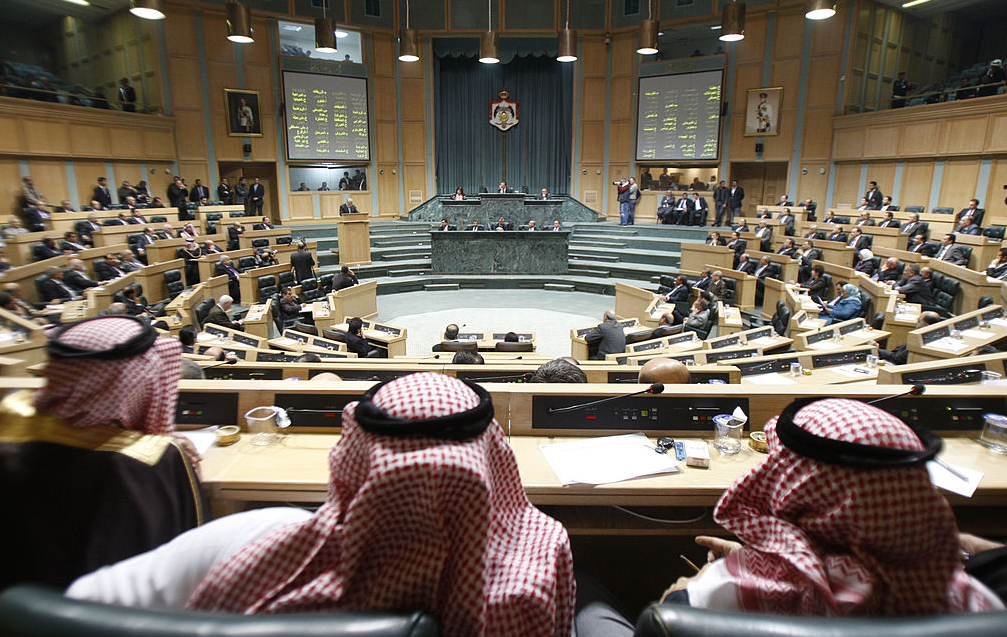
Jordanian parliament
  • التحليل
  • Jordan adopts sweeping cybersecurity legislation

    Jordan is bracing for protracted cyber insecurity. Since 2010, the Hashemite Kingdom has rolled out a raft of policies to manage digital vulnerabilities. In keeping with its proactive approach to cybersecurity, Amman is taking additional measures to inoculate the kingdom against digital ailments, including, most recently, the adoption of the 2019 Cybersecurity Law.
    January 30, 2020

    Lebanon’s inconvenient truths
    BEIRUT, LEBANON - JANUARY 16: An anti-government protester bangs a pan as they demonstrate ahead of the expected naming of a new cabinet tomorrow by Prime Minister Designate Hassan Diab, on January 16, 2020 in Beirut, Lebanon.
  • التحليل
  • Lebanon’s inconvenient truths

    By any objective standard, the Lebanese protest movement has failed. This is not necessarily an indictment against it. Rather, it’s a reality one cannot and should not ignore. The responsible thing to do now is to try to understand why it has fallen flat, despite more than 100 days of demonstrations in various regions of the country including the capital, Beirut. 

    First, a word of solace. In the annals of history, the Lebanese are in good company as most uprisings and revolutions failed to attain their goals. And even when they did, success either didn’t last long or was completely reversed due to counterrevolutions and other spoilers, both foreign and domestic.

    January 29, 2020

    Qassem Soleimani’s reign may be over, but his legacy in Syria will endure
    yrians take part in a protest against the United States and in support of Iranian general Qassem Soleimani at the Saadallah al-Jabiri Square in Aleppo, northern Syria, on Jan. 7, 2020.
  • التحليل
  • Qassem Soleimani’s reign may be over, but his legacy in Syria will endure

    The U.S. assassination of Iranian Gen. Qassem Soleimani came as a seismic shock to the Middle East, not least to the embattled political system in Damascus that has reaped the benefits of Iran’s military involvement across the region. While his death will be a severe blow, it will not necessarily translate into a decline in Iran’s influence or military presence in Syria. Soleimani’s army of militias and supporters will outlast him, possibly by decades. 

    For Russia, Libya and Idlib are now part of the same gamble
    Syria's President Bashar al-Assad (L) and Russia's President Vladimir Putin during a meeting in the Cathedral of Our Lady of the Dormition.
  • التحليل
  • For Russia, Libya and Idlib are now part of the same gamble

    Although Moscow continues to reap the benefits of its Syrian campaign, it is increasingly faced with diminishing returns. Despite its greater geopolitical involvement in the country, the Kremlin has so far failed to extract major economic dividends and may soon face increased competition from Tehran. With Syria’s future clouded in uncertainty and the unresolved issue of the Idlib region hanging like the sword of Damocles over any potential political settlement, Russia is now trying to bring the Libyan conflict into the equation as well.

    January 21, 2020

    Foreign policy and commercial interests drive closer UAE-Syria ties
    The United Arab Emirates embassy is pictured in the Syrian capital Damascus on December 27, 2018 after its reopening, the latest sign of efforts to bring the Syrian government back into the Arab fold
  • التحليل
  • Foreign policy and commercial interests drive closer UAE-Syria ties

    On Dec. 2, a series of public statements from Emirati and Syrian officials brought widespread attention to the UAE’s rapprochement with Syria. In a video circulated by Russian state media outlet RT, the UAE’s charge d’affaires in Syria, Abdul-Hakim Naimi, praised the “wise leadership” of Syrian President Bashar al-Assad and hailed the Syria-UAE relationship as “solid, distinct, and strong.” Syrian Deputy Foreign Minister Faisal Mekdad responded enthusiastically to Naimi’s comments by praising the UAE for standing by the Syrian government in its war against terrorism.

    January 21, 2020

    Trends to Watch in the Middle East in 2020
    معهد الشرق الأوسط
  • Podcast
  • Trends to Watch in the Middle East in 2020

    MEI experts Robert S. Ford, Fatima Abo Alasrar, and Emad Badi join host Alistair Taylor to survey what lies ahead for the Middle East in 2020, with particular attention to Iran, Syria, Yemen, Libya, Iraq and Algeria.

    January 17, 2020

    The Humanitarian Disaster During the Battle for Baghouz
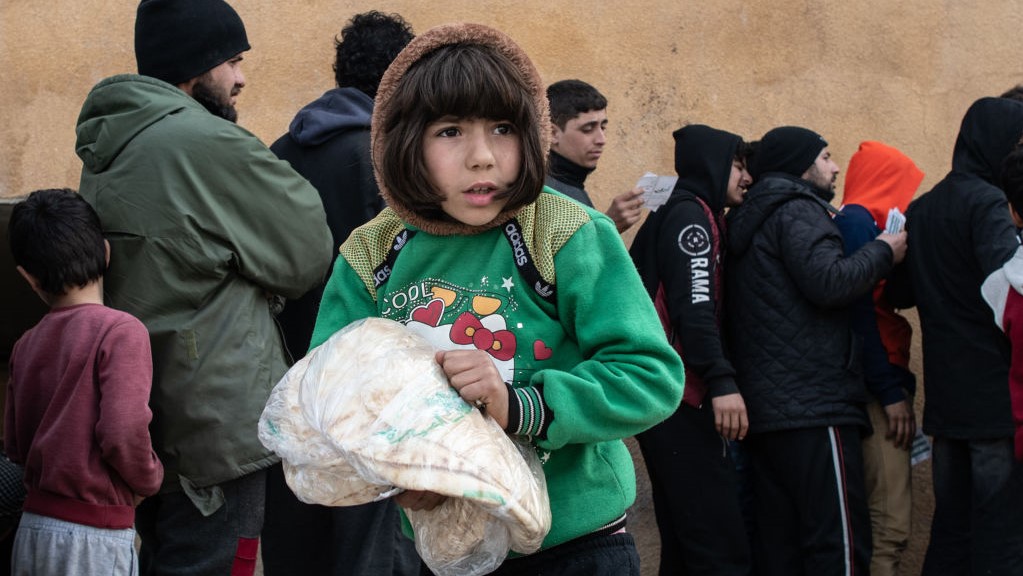
    Civilians evacuated from the Islamic State (IS) group's embattled holdout of Baghouz wait for bread and water at a screening area held by the Kurdish-led Syrian Democratic Forces (SDF), in the eastern Syrian province of Deir Ezzor, on March 5, 2019. - More than 7,000 people, mostly women and children, have fled the shrinking pocket over the past two days, as US-backed forces press ahead with an offensive to crush holdout jihadists. (Photo by Bulent KILIC / AFP) (Photo credit should read BULENT KILIC/AFP via
  • التحليل
  • The Humanitarian Disaster During the Battle for Baghouz

    It is unclear how many civilians were killed in February and March 2019, when the U.S.-led coalition and the Syrian Democratic Forces (SDF) pounded ISIS’s last enclave around the town of Baghouz. Presumably, the numbers reached into the thousands. Those who escaped found themselves in the desert, hundreds of kilometers away from lifesaving aid. The reasons for the failure of the humanitarian response were mainly political.

    January 14, 2020

    Cease-fires in Idlib and Libya as Turkey looks to buy time
    Russian President Vladimir Putin (L) and Turkish President Recep Tayyip Erdogan (R) attend the opening ceremony of the TurkStream on January 08, 2020 in Istanbul, Turkey.
  • تعليق
  • Cease-fires in Idlib and Libya as Turkey looks to buy time

    It is increasingly the case that the Russian-Turkish decisions on Idlib or Syria need to be understood as part of a broader Russian-Turkish partnership.

    January 13, 2020

    The prospects for Syria in 2020 are grim
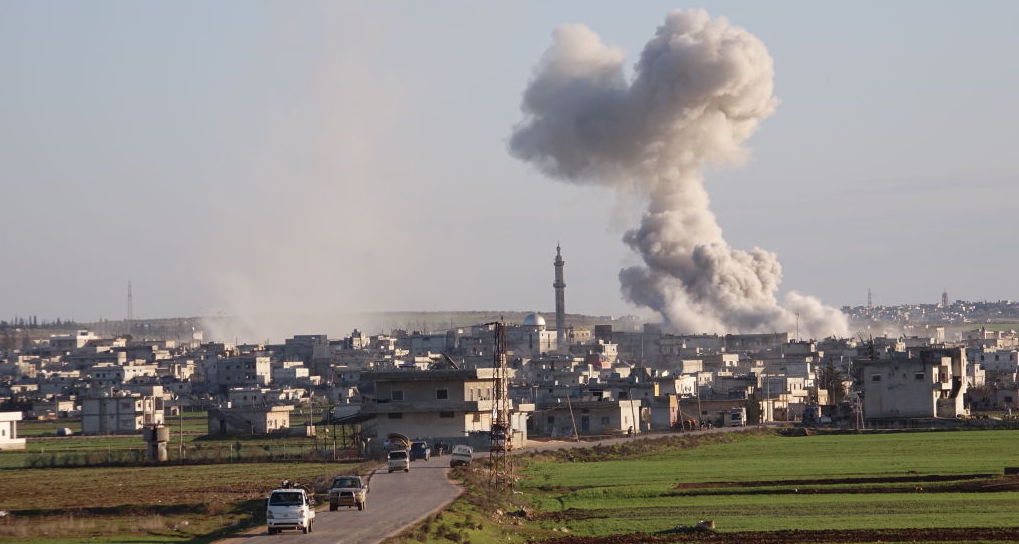
    An aerial view taken on December 8, 2019 shows the damage caused by reported Syrian regime and Russian air strikes the previous day in the town of Al-Bara in the south of Syria's Idlib province, that killed at least four civilans, including a child and wounding several others.
  • تعليق
  • The prospects for Syria in 2020 are grim

    Militarily, the most concerning issue remains the fate of Idlib, where at least three million people remain crammed in a killing-zone that encompasses just 3.5 percent of Syria’s territory

    The Syrian refugee crisis brings Turkey and Hungary closer together
    Turkish President Recep Tayyip Erdogan (L) poses with Hungarian Prime minister Viktor Orbán after they met for discussions on Syria and migration on November 7, 2019 in Budapest, Hungary.
  • التحليل
  • The Syrian refugee crisis brings Turkey and Hungary closer together

    Having raised eyebrows among many European officials with rhetoric targeting Syrian and other Middle Eastern/North African refugees in Hungary, Hungarian Prime Minister Viktor Orbán sees the return of Syrian refugees to their home country as serving vital Hungarian and European interests. As Hungary continues to align closely with Russia while deepening its ties with Turkey and other non-Western governments, Budapest’s foreign policy is eroding an EU consensus.

    December 23, 2019

    Reviewing the Middle East in 2019
    معهد الشرق الأوسط
  • Podcast
  • Reviewing the Middle East in 2019

    In our annual year in review episode, MEI experts Paul Salem, Gonul Tol, Charles Lister, Alex Vatanka, Marvin Weinbaum, and Mirette Mabrouk sit with host Alistair Taylor to discuss the key events across the region in 2019, what surprised them, and where things stand as we head into 2020.

    December 19, 2019

    Caesar Bill could ratchet up US sanctions on the Syrian regime and its allies
    Members of the Syrian security forces gather at the border-crossing between Albu Kamal in Syria and Al-Qaim in Iraq, on the Syrian side in the eastern region of Deir Ezzor, on September 30, 2019.
  • التحليل
  • Caesar Bill could ratchet up US sanctions on the Syrian regime and its allies

    After several years of behind-the-scenes efforts, the Caesar Syria Civilian Protection Act will be signed into law in Washington. It is an extraordinarily expansive and aggressive piece of legislation, allowing for a significant expansion of sanctions against Syrian regime figures and bodies, including the Central Bank and multiple sectors of the state economy. More significantly, the “Caesar Bill” will place an expectation on the U.S. government to sanction any individual or organization anywhere in the world who provides any form of financial support to the Syrian regime that furthers its ability to repress its people.