تمت ترجمة هذا النص بواسطة الذكاء الاصطناعي وقد يحتوي على أخطاء.
تخطي إلى المحتوى

Research & Commentary Results

تصفية حسب
1035 Results
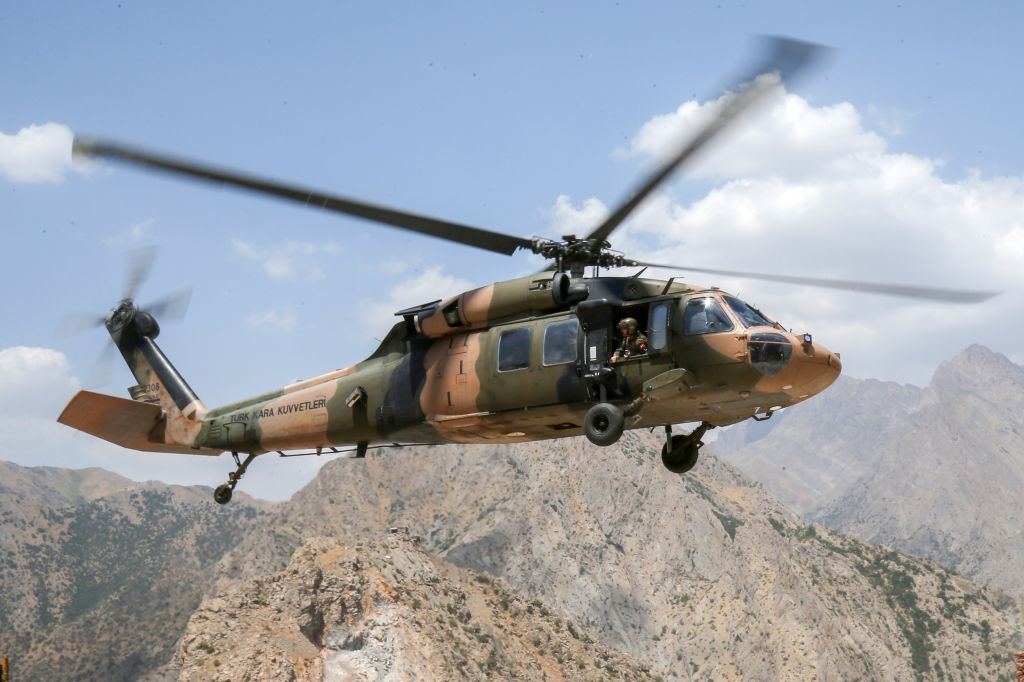
Assassinations could upset the status quo in Turkey-PKK conflict
 Turkish soldiers arrive operation site between Ikiyaka Mountains and Daglica by military helicopter as Turkish Armed Forces stage operation against PKK terrorists near Iraq border, in Hakkari, Turkey on August 15, 2017.
  • التحليل
  • Assassinations could upset the status quo in Turkey-PKK conflict

    Despite the fiery rhetoric, the long-time conflict between Turkey and the PKK has mostly been a controlled fight following tacit rules. But recent events, including Turkey’s increased efforts to assassinate PKK leaders and the targeted killing of a Turkish consulate official in the Iraqi Kurdish capital on July 17, risk overturning the status quo and ushering in a violent new era.

    August 6, 2019

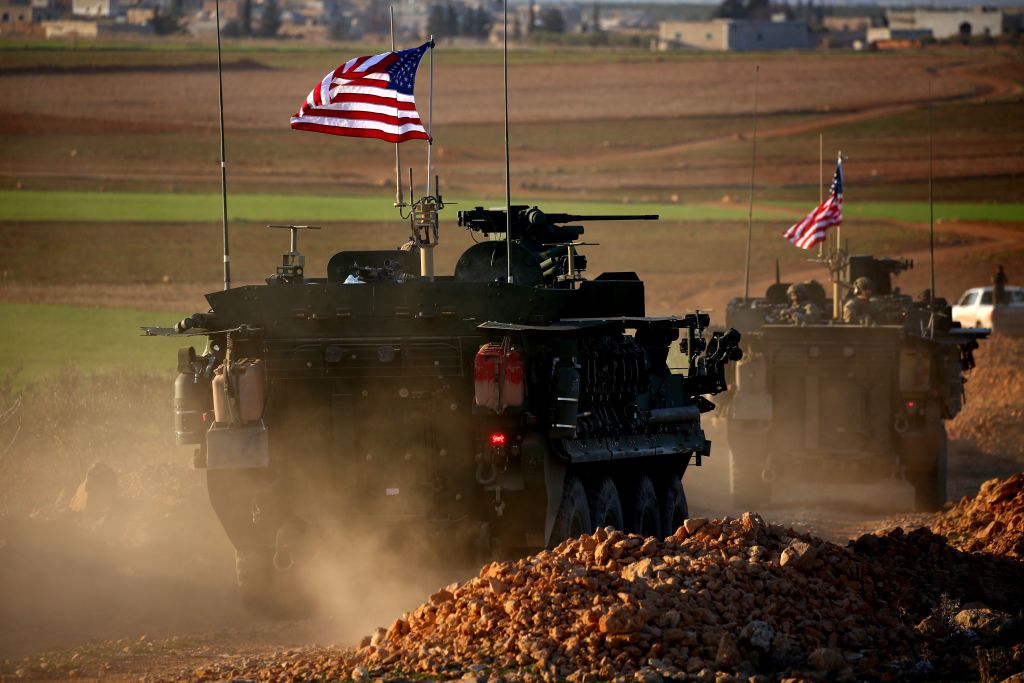
    The progressive case for staying in Syria, for now
    A convoy of US forces armoured vehicles drives near the village of Yalanli, on the western outskirts of the northern Syrian city of Manbij, on March 5, 2017
  • التحليل
  • The progressive case for staying in Syria, for now

    Ideally, the various sides of the Syrian civil war would seize the opportunity to reach an agreement. However, the Assad regime’s current intransigence and inability counter ISIS necessitate continued U.S. protection of northeastern Syria and efforts to stabilize it until such a deal can be made. This is not an ideal scenario, but the cost of a pullout at this stage will be immense.

    August 5, 2019

    Monday Briefing: US-Turkey dispute over Syria comes to a head
  • التحليل
  • Monday Briefing: US-Turkey dispute over Syria comes to a head

    This week’s briefing on recent news and upcoming events in the region including the Turkish-U.S. crisis meeting in Ankara on Syria, the resumption of U.S.-Taliban negotiations, Trump’s creation of a new “dovish” line on Iran, a rise in Egypt’s poverty levels, Sudan’s democratic transition, the easing of female guardianship rules in Saudi Arabia, and the end of the ceasefire in Idlib, featuring Charles Lister, Marvin G. Weinbaum, Paul Salem, W. Robert Pearson, Mirette F. Mabrouk, Thomas W. Lippman, and Robert S. Ford.

    Turkey’s Potential Pivot to Russia
    معهد الشرق الأوسط
  • Podcast
  • Turkey’s Potential Pivot to Russia

    In light of Turkey’s purchase of the Russian S-400 missile defense system, the United States and its other NATO allies have questioned Turkey’s commitment to the alliance. Retired Lieutenant General Ben Hodges, former commanding general of the United States Army Europe and Pershing Chair in Strategic Studies at the Center for European Policy Analysis, and MEI’s Gonul Tol join host Alistair Taylor to discuss the reasons for President Erdogan’s decision and what it means for the future of U.S.-Turkey relations.

    July 30, 2019

    Divided over narratives: The new fault line in the Arab World
    a helicopter flying over flags at the Ithra center during the 29th Summit of the Arab League in Dhahran in Eastern Province, Saudi Arabia on April 15, 2018.
  • التحليل
  • Divided over narratives: The new fault line in the Arab World

    Many of the divisions in the Arab World today are ideological and revolve around narratives — carefully constructed ontological representations of both how the world works and how it is supposed to work conforming to clearly set out interests and values. While the old sectarian narratives might still play an underlying role, what divides Arabs from Morocco to Oman are different grand-strategic visions of the region’s future after the Arab Spring.

    July 24, 2019

    OPEC+ agrees to production-cut extension and new charter amid rising Middle East tensions
    Oil ministers attend the 176th meeting of the Organization of the Petroleum Exporting Countries (OPEC) conference and the 6th meeting of the OPEC and non-OPEC countries on July 1, 2019 in Vienna, Austria.
  • التحليل
  • OPEC+ agrees to production-cut extension and new charter amid rising Middle East tensions

    OPEC+ nations have ended speculation about whether they would continue oil production cuts by agreeing to a nine-month extension. Led by the global petroleum powers Saudi Arabia and Russia, the group agreed on July 2 to extend the current level of cuts until the second quarter of 2020.

    July 24, 2019

    Missile defense, spinach pastry, and fighter jets: The S-400 leaves Turkey looking for an F-35 alternative
    Russian S-400 hardware deployment starts
  • التحليل
  • Missile defense, spinach pastry, and fighter jets: The S-400 leaves Turkey looking for an F-35 alternative

    Turkey began taking delivery of the first Russian S-400s last week despite repeated warnings from the U.S., and the new missile defense system has received a warm welcome. Columnists, analysts, and TV commentators — pro- and anti-Erdogan alike — hailed the delivery of the missile system as the “country’s liberation from the West.” The U.S. response followed several days later, when it officially expelled Turkey from the F-35 stealth fighter jet program in retaliation. The U.S. announcement has not changed the jubilant mood in Ankara, although it has underscored the need for Turkey to find — or develop — an alternative.

    Monday Briefing: Pakistani PM Khan heads to the White House
  • التحليل
  • Monday Briefing: Pakistani PM Khan heads to the White House

    This week’s briefing on recent news and upcoming events in the region including Imran Khan’s visit to the White House, tensions between President Trump and Congress over Turkey’s new S-400 system, escalation in the Straits of Gibraltar and Hormuz, military restructuring in Iraq, increased collaboration on the region’s power supply, and changes to Egypt’s social safety net, featuring Arif Rafiq, Gonul Tol, Ruba Husari, Robert S. Ford, Dr. Ibrahim Saif, and Mirette F. Mabrouk.

    Monday Briefing: US and Turkey face S-400 confrontation
  • التحليل
  • Monday Briefing: US and Turkey face S-400 confrontation

    This week’s briefing on recent news and upcoming events in the region including Turkey’s confrontation with the U.S. over its S-400 defense system, the latest round of Afghan peace talks, the UAE’s drawdown in Yemen, Turkey’s media signaling on Syria, and the 21st consecutive week of protests in Algeria, featuring W. Robert Pearson, Marvin G. Weinbaum, Ibrahim Jalal, Guney Yildiz, and Robert S. Ford.

    Turkey, Russia, and the Looming S-400 Crisis
    Russian S-400 missile system
  • التحليل
  • Turkey, Russia, and the Looming S-400 Crisis

    With delivery of the Russian S-400 air defense system to Turkey looming, a new crisis in U.S.-Turkey relations is slowly emerging. While it is obvious that Turkey needs a new air and missile defense system given the security risks in its region, it remains unclear why Turkish President Recep Tayyip Erdogan seeks to acquire the capability from a historical rival and potential adversary instead of through NATO. This decision will likely have major consequences for Turkey and its future geopolitical orientation.

    July 10, 2019

    Interconnected: Trade, food security, and stability in the GCC and MENA
    An Emirati man reads the front of a package of Indian Basmati rice in a supermarket in Dubai on July 19, 2008. Faced with the scarcity of fertile land and water, and the surging world prices of food, the wealthy Gulf states are seeking to secure food supplies through agricultural investments abroad.
  • التحليل
  • Interconnected: Trade, food security, and stability in the GCC and MENA

    It is easy to overlook the fact that food security could be an issue of concern in the Gulf Cooperation Council. After all, its member states have some of the world’s highest per capita income levels. Food supplies in the Gulf are normally abundant and stable. Were they to be disrupted, however, it could lead to food security challenges and a chain of adverse consequences for human security throughout the region.

    July 9, 2019

    Monday Briefing: Strengthening Egypt’s ties with Africa
  • التحليل
  • Monday Briefing: Strengthening Egypt’s ties with Africa

    In this week’s Monday Briefing, MEI experts Mirette F. Mabrouk, Charles Lister, Gonul Tol, and Alex Vatanka provide analysis on recent and upcoming events including Egypt’s engagement with Africa to boost trade and investment, the reshuffling of leadership of Syria’s security apparatus, the firing of Turkey’s central bank governor, and Russia’s positioning to act as mediator between Iran and the Gulf states.

    The Gulf-backed counter-revolution in Khartoum
    Mohamed Hamdan Dagalo, known as Himediti, deputy head of Sudan's ruling Transitional Military Council (TMC) and commander of the Rapid Support Forces (RSF) paramilitaries, waves a baton to supporters on a vehicle as he arrives for a rally in the village of Abraq, about 60 kilometers northwest of Khartoum, on June 22, 2019. (YASUYOSHI CHIBA/AFP/Getty Images)
  • التحليل
  • The Gulf-backed counter-revolution in Khartoum

    One hallmark of Sudan’s most recent protests has been the protestors’ fierce determination that the military not be their partner in the struggle for democratization. Some GCC states, however, are getting involved in Sudan, using their financial means to influence the country’s future. In doing so, they risk making it the Arab world’s next theater for intra-GCC rivalry.

    July 2, 2019

    Monday Briefing: Iran exceeds nuclear deal enrichment limits
  • التحليل
  • Monday Briefing: Iran exceeds nuclear deal enrichment limits

    In this week’s Monday Briefing, MEI experts Alex Vatanka, Gonul Tol, Gerald Feierstein, Marvin G. Weinbaum, Rauf Mammadov, and Robert S. Ford provide analysis on recent and upcoming events including Iran’s announcement that it has exceeded its enriched uranium limit, Turkey’s purchase of Russia’s S-400s missile defense system over American objections, an Emirati announcement that it will downsize military involvement in Yemen, the resumption of intra-Afghan peace talks, Russia’s continuing embrace of OPEC+ oil production cuts, and the emergence of potential threats to Tunisia’s democracy.

    A way out for Russia and Turkey from Idlib's spiral of violence
    Heavy armoured vehicles of Syrian opposition forces are being withdrawn from Syria's Idlib to complete the establishment of the disarmament field due to the Sochi Agreement, agreed by Turkey and Russia, on October 08, 2018. (Photo by Gokhan Balci/Anadolu Agency/Getty Images)
  • التحليل
  • A way out for Russia and Turkey from Idlib's spiral of violence

    Since the start of the regime’s military campaign in Idlib last month, a group of Free Syrian Army factions that fought alongside Turkish soldiers has gradually entered the region. This development may balance the Hayat Tahrir al-Sham presence and ultimately help to force the group out of the demilitarized zone, ensuring a continued Turkish-Russian consensus on Idlib.

    July 1, 2019