Bad Neighbor, Good Neighbor: Libya-Egypt Relations
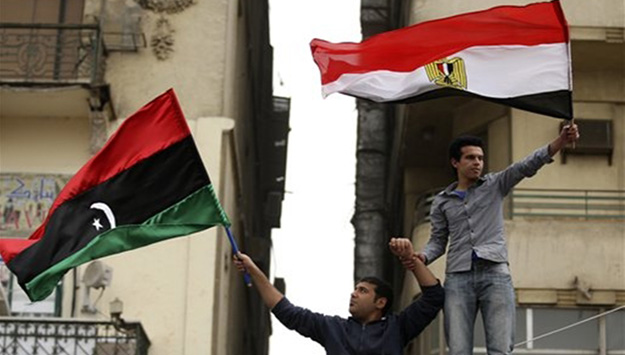
In 2011, many observers predicted that relations between Libya and Egypt would become closer after both countries underwent similar revolutions followed by attempts at democratic transition. But three years later, the realization of this prediction appears unlikely. Political realities and ideological differences have led to a relationship that is contentious at best.
Jawad Nabulsi was looking straight at the policeman the moment he was shot in the face. The black-clad officer raised the barrel of his gun, pointed it directly at Nabulsi’s eyes, and pulled the trigger.
It was 11pm on January 28, 2011. The “Friday of Rage,” as protesters called it, would later be labeled the bloodiest day in the revolution that toppled autocrat Hosni Mubarak.
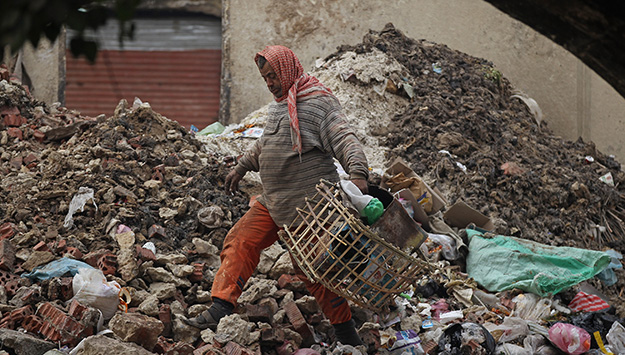
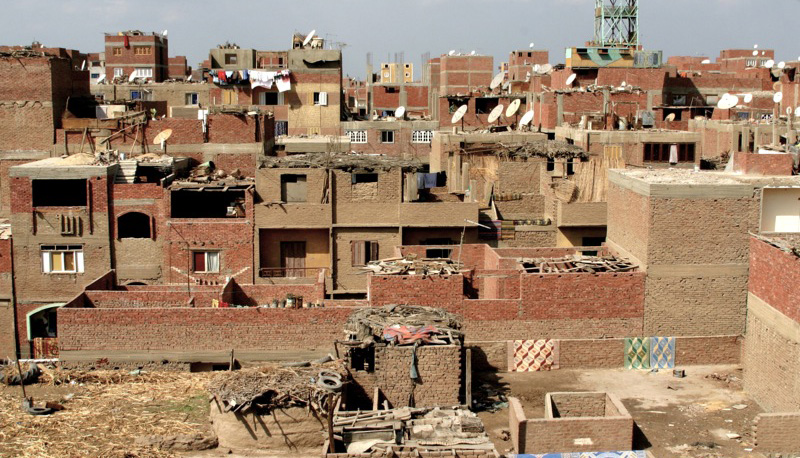
Coverage of Egypt over the past three years has focused on the dramatic political events, yet it was the dire economic situation that created the pressure for the multiple uprisings. And if economic decline is not reversed over the next few years, Egypt might fall over an economic precipice that risks rendering the country eventually ungovernable. Security and political reform are urgently necessary in their own right, and will have a positive effect on the economy if achieved, but bold structural economic reform is also necessary to reverse Egypt’s downward spiral.
All Retributive Justice, No Restorative Justice in the Post-Arab Spring Middle East
In the wake of the revolutionary fervor that has swept the Middle East and North Africa since the beginning of 2011, retributive justice has taken precedence over restorative justice approaches as countries seek to address human rights violations.
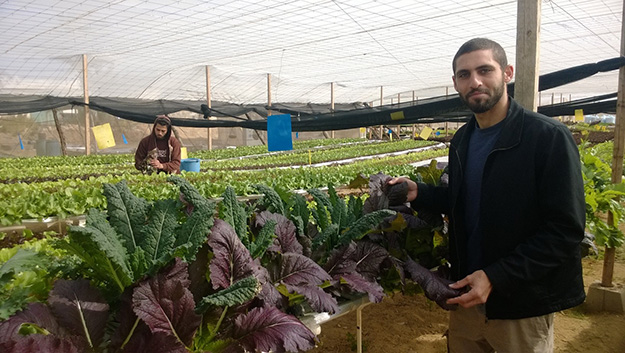
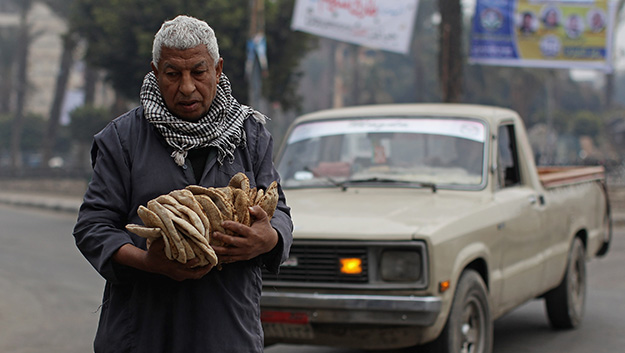
The Egyptian revolutionary motto, “bread, freedom, social justice,” which echoed over 18 days until Hosni Mubarak’s ouster on February 11, 2011, illustrated how restricted access to food had become one of the people’s main grievances. In the aftermath of the revolution, infused by a renewed sense of ownership of their country, many citizens launched environmental initiatives with a focus on sustainable agriculture.
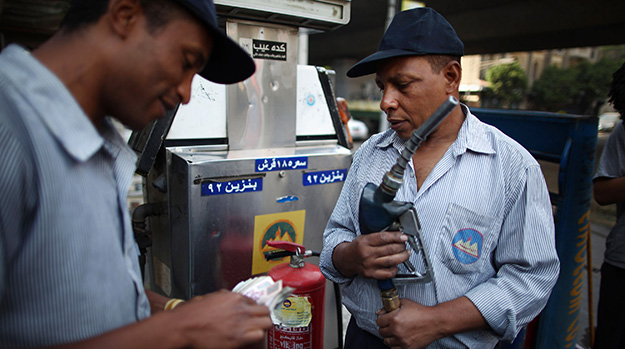
In December 2012, the Central Bank of Egypt announced that the country’s foreign reserves had reached an alarming low of $15 billion, less than 50 percent of its holdings following Hosni Mubarak’s ouster in February 2011. At that point, the Bank was no longer capable of providing the treasury with the monthly dollar transfers necessary for the purchase of basic food and energy imports, and thus had to rely on foreign borrowing to cover these imports and debt service as well as to support local currency.
The Arab Awakening: Determinants and Economic Consequences
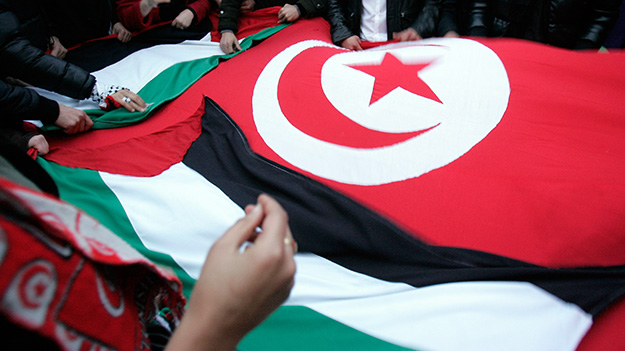
Economist Zubair Iqbal explains the daunting economic challenges facing Arab countries in transition following the Arab Awakening and the different trajectories stemming from those nations’ policy responses. Tunisia and Egypt provide an instructive case study: the former made hard fiscal decisions and has embraced sound economic principles and achieved broad support for a reform plan, while the latter, suffering from more difficult political conditions, has been faced with limited policy options that increase the risk for long-term challenges.
Al Qaeda's Expansion in Egypt: Implications for U.S. Homeland Security
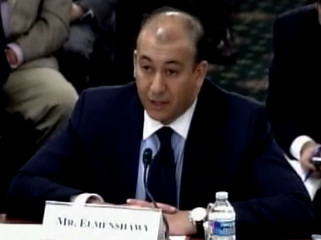
Testimony of MEI Resident Scholar Mohamed Elmenshawy before the House Committee on Homeland Security Subcommittee on Counterterrorism and Intelligence, delivered February 11, 2014. Click here for video clips and additional testimony from this hearing.
The Christmas visit of Egypt’s interim president Adly Mansour to the Coptic Cathedral in Cairo occasioned much commentary in the Egyptian press about a new era in church-state relations. Indeed, newspaper headlines heralded the visit as the first undertaken by an Egyptian president to a Coptic patriarch to offer congratulations on a Coptic holiday. The interim president’s magnanimity in making the visit was set in stark contrast to the parsimonious attitude of Hosni Mubarak, who would typically leave such obligatory greetings to a lesser figure in the Egyptian government.
The recent attacks against Egypt’s police and military have raised concerns over the return of the militant insurgency that plagued Egypt during the 1980s and 1990s. Ansar Bayt al-Maqdis (ABM), a Sinai-based militant group, has repeatedly and publicly claimed responsibility for the cascade of bombings.
The situation in Egypt has been very complicated, with the democratic process and path toward transitional justice shifting under four different ruling systems—Mubarak, SCAF, the Muslim Brotherhood, and the interim ruling authorities—over a short period of time. All four systems committed abuses against the people, leaving victims and cases to be investigated. The combination of sharp divisions within society, disagreements about transitional justice itself, and delayed government responses to people’s demands has made the situation particularly charged.
Copts in Egyptian Civil Society: Challenge and Hope in Transition
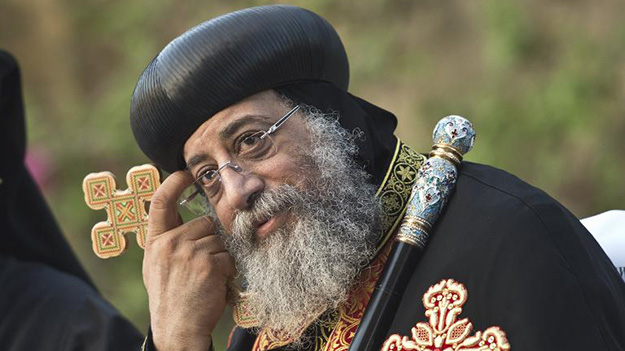
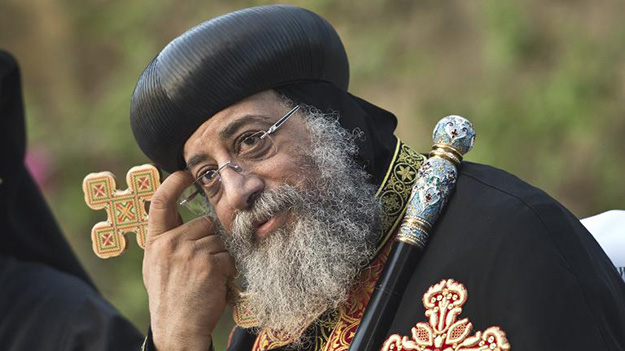
“Through wisdom a house is built, and by understanding it is established.” Pope Tawadros II, the Pope of the Coptic Orthodox Church, tweeted this verse of scripture in December 2012. He wrote it as one of a series of daily reflections on the book of Proverbs. This phrase, however, also provides an entry point into the Coptic Orthodox Church and its place in Egyptian civil society. Egypt is in the midst of rebuilding its government and society following an 18-day revolution in 2011, 18 months of military rule that ended with the election of Mohamed Morsi, and the removal of President Morsi one year later by the Egyptian military in July 2013. Egyptian Christians now have the opportunity and challenge to renegotiate their place in Egyptian civil society during this time of unrest and transition. What wisdom, understanding, and vision will Christian clergy and lay leaders put forth in order to co-labor with their neighbors, the state, and other stakeholders to build a new house for Egyptian society? This new vision must be rooted in Copts’ historical experience and include the possibility for new models of engagement and representation.
Since the inception of its transitional justice and accountability program in November 2012, the Egyptian Initiative for Personal Rights (EIPR) has faced a number of challenges related to its work. Of these, one of the most arduous has been operating in a context of ongoing political and social upheaval. The period since November 2012 can generally be divided into three distinct phases, each marking a change in EIPR’s organizational and conceptual approaches to transitional justice. Though EIPR sees its work in Egypt less in phases and more as a long and complicated struggle against injustice and impunity that will likely continue for the foreseeable future, the three phases are helpful for documenting its approach to transitional justice since 2012.