Iran’s Foreign Ministry Slams Israel for Syria Attack
Iran’s Foreign Ministry slammed Israel for allegedly launching an air strike against Syria, the Islamic Republic News Agency reported. “Repeated acts of aggression by the Israeli regime against Syria violate this country’s sovereignty and territorial integrity and is in breach of international norms,” Foreign Ministry Spokesman Bahram Ghassemi said. “There is no doubt such attacks are aimed at weakening the legitimate government of Syria… and is against international peace and security.” He also called on the United Nations to make sure such attacks are not repeated.
New Iranian Ambassador Arrives in Damascus after Six-Month Hiatus
Iran’s new ambassador to Syria, Javad Torkabadi, presented his credentials to Syrian Foreign Minister Walid Muallem on Wednesday, the Iranian media reports. He arrived in Damascus on Tuesday and was welcomed by Iranian and Syrian officials, including Syrian Social Affairs Minister Rima al-Qadiri.
Testimony: Syria After the Missile Strikes: Policy Options
The following testimony was presented to the United States House Committee on Foreign Affairs on April 27, 2017.
Mr. Chairman, Mr. Ranking Member, Members of the Committee:
First, thank you for providing me with this opportunity to speak to you today, and to address the situation in Syria and what policy options the United States might consider going forward.
Iran Reportedly Offers to Deploy Ground Forces to Syria to Counter Potential U.S.-led Intervention
The latest air strikes on an airport near Damascus purportedly by Israel and increased U.S. military activities on Jordan’s northern border have triggered a concern in Tehran about the possibility of a broader U.S.-led military campaign in Syria.
Iran’s FM Zarif Defends Hostile I.R.G.C. Encounter with U.S. Navy in Persian Gulf
American officials said on Wednesday that a U.S. Navy guided-missile destroyer fired a warning flare to deter an Islamic Revolution Guards Corps (I.R.G.C.) vessel approaching it in the Persian Gulf.
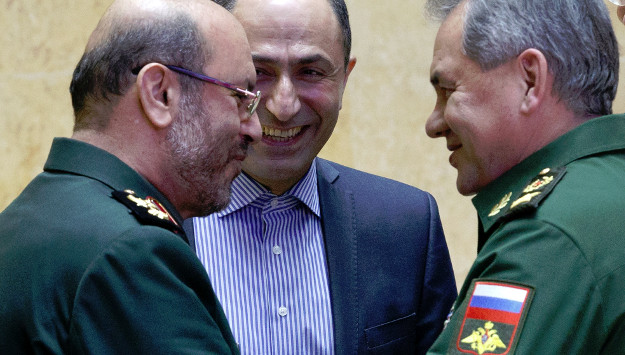
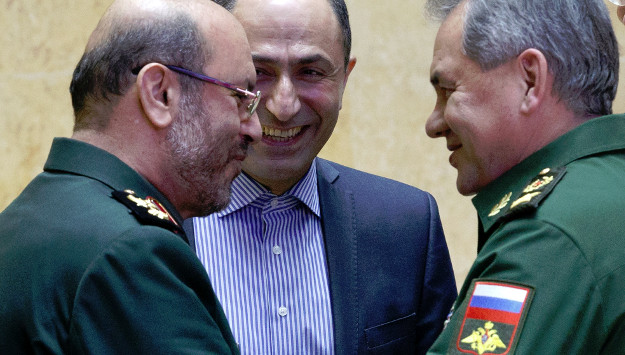
Iran, Russia and Syria Vow to Continue Joint Military Efforts
Iranian Defense Minister Brigadier General Hossein Dehqan and his Russian and Syrian counterparts, Sergey Shoygu and Fahd Jassem al-Freij, stressed that they will co
Iran’s Defense Minister Calls for New World Order to Counter U.S.-led “Global Fascism”
The Iranian defense minister has called for establishing a new multi-polar world order to tackle international security threats and counter U.S.-led “hegemonic” ambitions in East Asia, the Middle East and Eastern Europe.
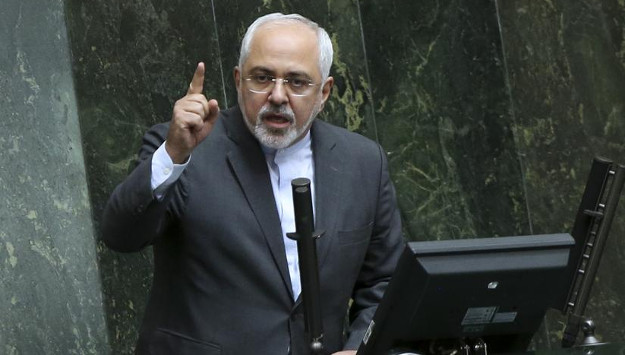
Iran’s Foreign Minister Zarif: Do Not Pay Much Attention to Trump’s Words
The Iranian foreign minister on Wednesday played down latest remarks by President Donald Trump on the possibility of Washington walking away from the 2015 Iran nuclear deal, the Iranian media reported. “I believe they have broken the spirit of the agreement,” Trump had told the Associated Press. “There is a spirit to agreements, and they have broken it.” Asked by the Iranian press on the sidelines of a cabinet session in Tehran about Trump’s statement, Javad Zarif replied: “Do not pay much attention to Trump’s words.”
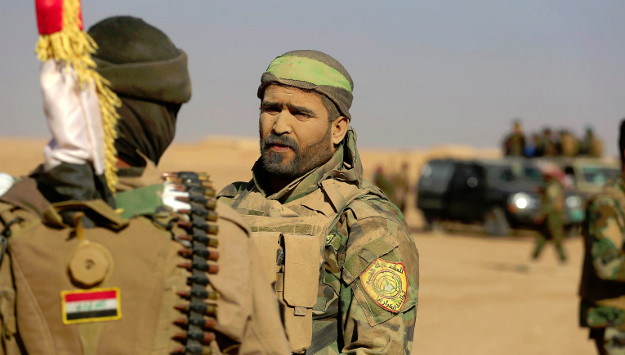
Iran-Backed Iraqi Militia Forces Retake Ancient City of al-Hadar in Western Mosul
The Iraqi Popular Mobilization Forces (P.M.F.) today liberated the historic city of al-Hadar in western Mosul from the Islamic State, the Iranian media reports. Iraqi security forces cooperated with the P.M.F. in al-Hadar offensive.
India-Saudi Arabia Relations: New Bilateral Dynamics
This essay discusses the progressive development of India-Saudi Arabia relations. It looks first at the landmark visits that have laid the foundation and supplied the momentum for progress in the relationship. The essay focuses on five pillars of cooperation: trade and investment, energy relations, overseas employment, defense and security ties, and cultural interaction.
The Horn of Africa’s Growing Importance to the U.A.E.
The Horn of Africa is currently playing a pivotal role in the U.A.E.’s security interests at a time of international uncertainty, regional conflicts, and demanding domestic transformations. The U.A.E. is expanding its foothold in the region, with Eritrea to host its first military base abroad and another in Somaliland in the works. Abu Dhabi’s ‘pivot to the Horn’ strategy is designed to tackle three rising security concerns now: Yemen’s instability, freedom of navigation threats, and piracy.
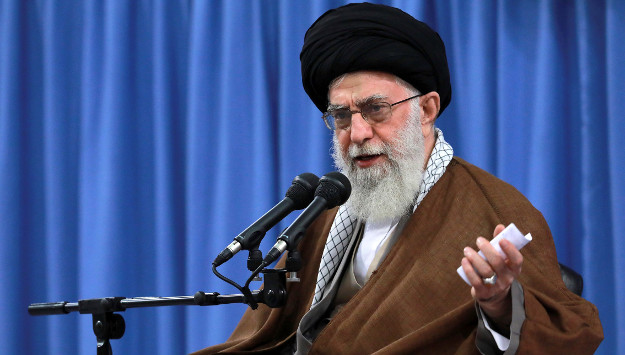
Khamenei Asks Presidential Candidates to Pledge Not to Rely on West
Iran’s Supreme Leader Ali Khamenei today called on next month’s presidential candidates to make a pledge not to seek foreign investment to bolster the country’s fragile economy and instead to promote self-sufficiency and domestic production.
Tehran’s New Envoy Calls for Expanding Ties with Baghdad in Meeting with Abadi
Brigadier General Iraj Masjedi, the new Iranian ambassador to Baghdad, met with Iraqi Prime Haider al-Abadi on Monday to discuss ways to further boost bilateral ties between the two countries, the