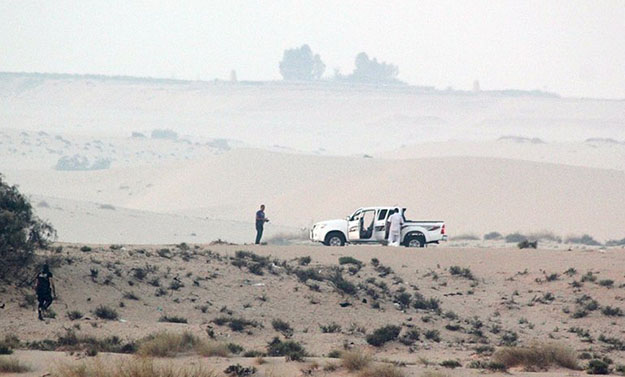
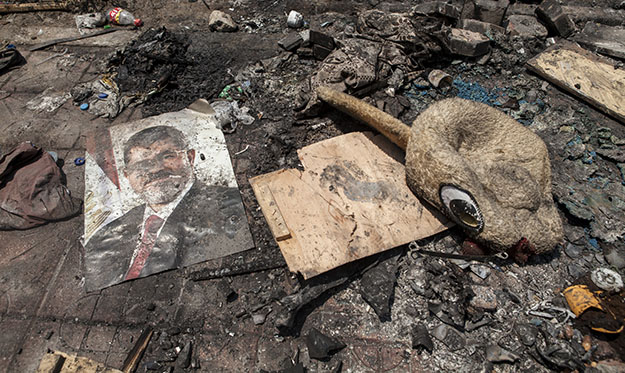
Much of the analysis on the causes for the military’s ouster of Mohamed Morsi focuses on the Muslim Brotherhood’s performance, or lack thereof, in domestic affairs. Glaringly absent, however, is an examination of the preeminence of Sinai in the military’s decision to intervene in otherwise civilian political disputes between the burgeoning liberal parties and the veteran Muslim Brotherhood and its Islamist allies.
Gulf Governments Offer Financing for U.S. Strike on Syria
Like pieces fitting together in a jigsaw puzzle, Arab governments – presumably from the oil-rich Gulf Cooperation Council – offered to finance a U.S. military strike on Syria, according to comments made by Secretary of State John Kerry during testimony September 4 with the House Foreign Affairs Committee. In an exchange with Representative Ileana Ros-Lehtinen (R-FL) on the potential cost of U.S. military action in Syria, Kerry said,
Egyptians call their desert country “the protected” (al-mahrousa) in homage to its longevity and the idiosyncratic features that have consistently saved it from destitution: a geostrategic location, Nile-fed farmland, and a stunning array of in situ antiquities. While much has remained unchanged in Egypt since the 2011 uprising, including the authoritarian nature of its government, alarming quantities of the country’s precious agricultural and archeological land have been vanishing to make way for cheaply-built homes of low-income citizens.
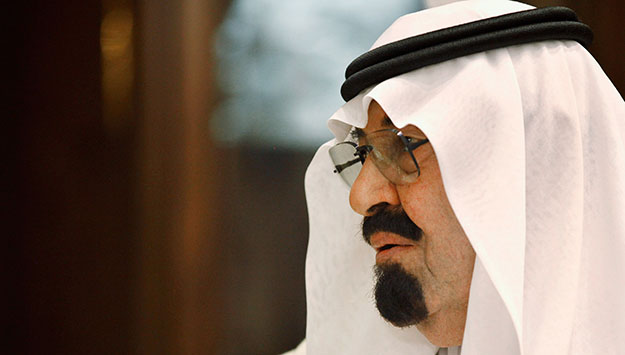
When King Abdullah of Saudi Arabia and his foreign minister, Prince Saud al-Faisal, issued unequivocal pledges of support for Egypt’s military government and its crackdown on the Muslim Brotherhood, their move was widely depicted in the news media as a logical extension of the kingdom’s opposition to revolutionary movements in the Arab world. This simplistic view overlooks the fact that Saudi Arabia has responded differently to different uprisings—it supports the rebels in Syria, helped to crush them in Bahrain—and that aligning itself with Egypt’s new rulers could be a risky strategy.
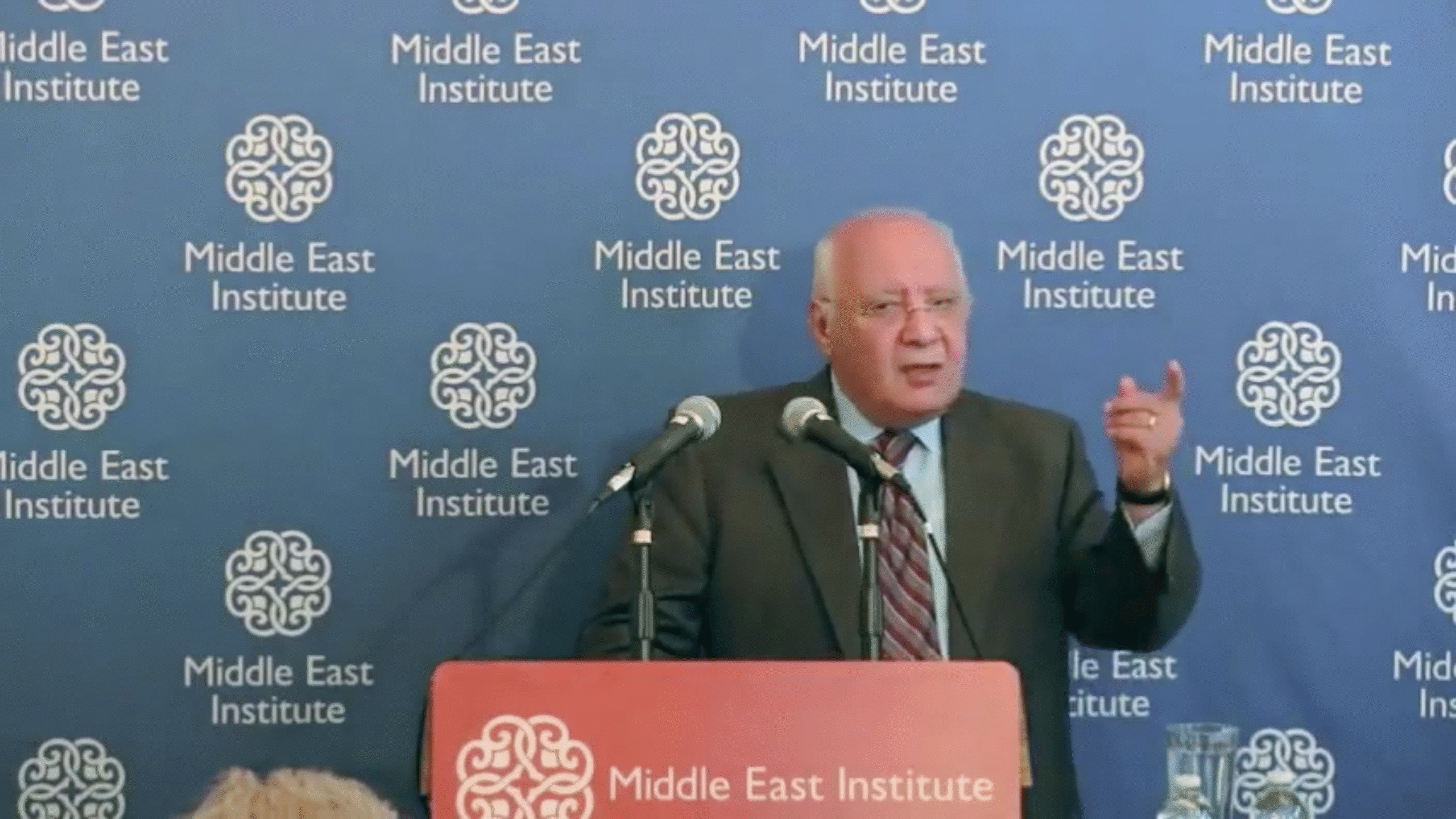
The Middle East Institute is pleased to welcome H.E. Ambassador Raouf Adly Saad, former special envoy to Africa of the interim president of Egypt, for a conversation about Egypt’s political transition and future. In light of Egypt’s many challenges, Ambassador Saad will discuss the transitional government’s goals and priorities and offer his insights about how to get Egypt on a path toward economic stability and democracy.
The American relationship with Egypt needs to change if Washington wants to have substantive influence in Cairo. America’s recent strategy in Egypt has been focused on buying Egyptian compliance through military and economic aid, but it seems to have had little effect.
With the dual announcement this week of the completion of a preliminary constitutional draft by a ten-member committee of experts, in addition to appointments to the quasi-governmental National Council on Human Rights, Egyptians finally have reason to be cautiously optimistic.
Wed, 8/14/2013 12:00 pm to 1:00 pm The Middle East Institute is pleased to welcome H.E. Ambassador Raouf Adly Saad, former special envoy to Africa of the interim president of Egypt, for a conversation about Egypt’s political transition and future. In light of Egypt’s many challenges, Ambassador Saad will discuss the transitional government’s goals and priorities and offer his insights about how to get Egypt on a path toward economic stability and democracy.Bios:H.E. Ambassador Raouf Adly Saad served as the special envoy to Africa for Interim Egyptian President Adly Mansour.
Wed, 8/14/2013 12:00 pm to 1:00 pm The Middle East Institute is pleased to welcome H.E. Ambassador Raouf Adly Saad, former special envoy to Africa of the interim president of Egypt, for a conversation about Egypt’s political transition and future. In light of Egypt’s many challenges, Ambassador Saad will discuss the transitional government’s goals and priorities and offer his insights about how to get Egypt on a path toward economic stability and democracy.Bios:H.E. Ambassador Raouf Adly Saad served as the special envoy to Africa for Interim Egyptian President Adly Mansour.
Wed, 8/14/2013 12:00 pm to 1:00 pm The Middle East Institute is pleased to welcome H.E. Ambassador Raouf Adly Saad, former special envoy to Africa of the interim president of Egypt, for a conversation about Egypt’s political transition and future. In light of Egypt’s many challenges, Ambassador Saad will discuss the transitional government’s goals and priorities and offer his insights about how to get Egypt on a path toward economic stability and democracy.Bios:H.E. Ambassador Raouf Adly Saad served as the special envoy to Africa for Interim Egyptian President Adly Mansour.
Wed, 8/14/2013 12:00 pm to 1:00 pm The Middle East Institute is pleased to welcome H.E. Ambassador Raouf Adly Saad, former special envoy to Africa of the interim president of Egypt, for a conversation about Egypt’s political transition and future. In light of Egypt’s many challenges, Ambassador Saad will discuss the transitional government’s goals and priorities and offer his insights about how to get Egypt on a path toward economic stability and democracy.Bios:H.E. Ambassador Raouf Adly Saad served as the special envoy to Africa for Interim Egyptian President Adly Mansour.
1. The current state apparatus is intent on using force to disperse sit-ins—protests that are a direct response to a genuine political crisis. Blood has been spilled; victims are being shot down. Political solutions have been willfully ignored, and so has the fact that efforts to bring about such solutions are absolutely critical, regardless of what difficulties or obstacles may stand in the way.
Since the 1970s oil boom, the Gulf region has been one of the principal destinations for workers from South Asia, with the result that today Indians constitute a large percentage of the non-nationals living in the region. Indeed, at five million out of an estimated 15 million people, the Indian community forms the largest expatriate group in each of the Gulf countries. Most Indian immigrants are from the south Indian state of Kerala, while many of the rest originate from Tamil Nadu, Punjab, Uttar Pradesh, and Bihar.
Egypt after June 30: Violence in Speech, Politics, & Institutions
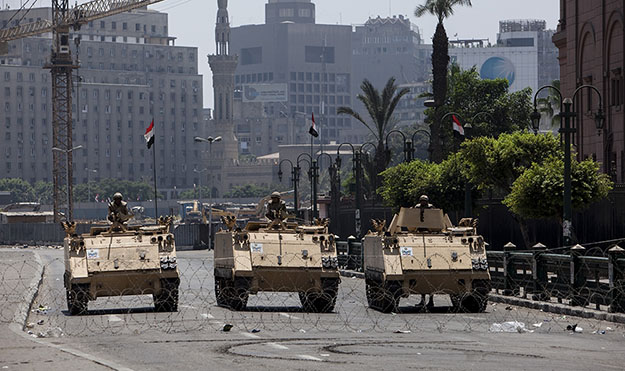
The current wave of violence in Egypt, which began in the wake of June 30, 2013, is unlike any other the Egyptian public has witnessed since the January 25 revolution of 2011. Both verbal and political forms of violence are driving Egypt’s state and society toward a dangerous precipice—and to a total departure from the path to democratic transformation.