American policy toward conflict in Libya is bearing disappointing fruit. The conflict there seems to be settling in to a stalemate with the likely prospect of becoming an extended civil war. In the face of this prospect, John McCain and other Senators are calling for greater US involvement. That goes against the grain of American public opinion. It raises in sharp relief the question: Will our current limited engagement policy work? And if so, when?
The Middle East Institute is proud to host Dr. Mona Makram-Ebeid, Professor of Political Science, American University of Cairo, and former Egyptian Parliamentarian, for an examination of the unprecedented changes that have taken place in Egypt over the last three months. Dr. Makram-Ebeid will analyze the current situation in Egypt, as well as expectations for upcoming parliamentary and presidential elections.
Libyan Intervention: Justified By the Circumstances
It was absolutely predictable that Republicans would attack President Obama whatever he did in Libya, though Newt Gingrich, in his overeagerness, overreached by criticizing him for too explicitly opposite reasons. It was also likely that the anti-interventionist left, which sees (almost?) any use of American military power as imperialistic and unwarranted would likewise be opposed.
Rahm Emanuel famously quipped that a crisis should never go to waste. In his absence, the Administration seems determined not to take sufficient advantage of the ongoing and huge crisis in the Arab world. Its hesitant, uncertain, and (to date) completely ineffectual response to events in Libya sadly make this all too clear.
It now appears that the US finally has gotten serious about doing something meaningful to assist opposition forces in Libya. Exaggerated fears and an insufficient grasp of the adverse consequences of not taking such action previously paralyzed US (and most European) policymakers with respect to even an eastern no-fly zone, let alone more robust measures. Meanwhile, what is left of the organized Libyan opposition is increasingly hard-pressed.
The greatest threat to U.S. national security is Congress’s abdication of its constitutional responsibilities. Nothing could make this point more clear than the current discussion of whether Washington should bear the lion’s share of the costs and risks of a no-fly zone over Libya.
Israel After Egypt: Opportunities and Challenges for Peace
The Middle East Institute is proud to host the Honorable Robert Wexler and Dr. Yoram Peri for a discussion about the challenges facing Israel and the Middle East peace process in the wake of the resignation of Egyptian president Hosni Mubarak. Some in Israel, including former Israeli Prime Minister Ehud Olmert, argue that current events in the region make it imperative that Israel move quickly to secure a peace treaty with the Palestinians. Others insist Israel proceed with caution, given the increased instability in the region.
After the People's Revolution: An Examination of the Egyptian Military
The Middle East Institute is proud to host Dr. Graeme Bannerman and Col. Joseph Engelhardt for an in-depth look at the Egyptian military and its anticipated role in the wake of the resignation of Egyptian President Hosni Mubarak. Bannerman and Engelhardt have had extensive interaction with members of the Egyptian military over the past thirty years.
Covering Egypt, Covering Islam: What the Media Get Wrong (and Occasionally Right)
Drawing on over thirty years' experience covering Middle Eastern and Islamic issues, mostly for the BBC, Roger Hardy argues that the media have all too often shown a chronic lack of understanding of Islam and Muslim societies – and by distorting or sensationalizing Muslim issues have made it harder to combat extremism and win the 'war of ideas.' As Arab and Muslim protesters take to the streets of Cairo and the Arab world, Hardy examines if coverage and understanding of the Muslim world has deepened or improved.
After Mubarak:What do the Egyptian People Really Want?
The Middle East Institute is proud to host Steven Kull and Shibley Telhami for an examination of Egyptian views and attitudes towards governance and their future. As Egyptian demonstrators celebrate the resignation of President Hosni Mubarak, many wonder what kind of system the Egyptian people really want. How do they view the Muslim Brotherhood? If Egypt were to become more democratic what are we likely to see in terms of its relation with the US, Israel and other countries in the region?
US-Libya Relations: Surviving the Wikileaks Controversy?
US-Libya Business Association Honorary Chairman Amb. David Mack and Executive Director Charles Dittrich traveled to Libya for five days in mid-December. They met with Libyan government officials, Libyan private business leaders and representatives of American companies working in the country. They will share impressions regarding the political and economic climate in Libya and the implications for both overall US-Libyan relations and the prospects for American business interests.
The Middle East Institute is proud to host Amb. Alan Goulty and Amb. Edward Walker for an examination of the unrest roiling Tunisia and Egypt and its implications for the region at large. Between them, Goulty and Walker have more than 60 years of experience serving in the Arab world. They will draw upon their unique experience and understanding of the region to examine the evolving crises in Tunisia and Egypt, the impact of the street protests on regional governments and the role that Western governments can play during this period of transition.
The US and Libya: Normalization of a Stormy Relationship
*This article was first published in January 2011 by the Foreign Service Journal.
Relations between Libya and the U.S. have a turbulent history: War at the beginning of the 19th century; U.S. government support for Libyan independence after World War II; official and private-sector American engagement in the development of Libya’s oil wealth and human resources in the mid-20th century; Libyan terrorism and U.S. military retaliation in the 1980s; U.S.-engineered economic sanctions and isolation in the late 20th century; and restoration of diplomatic relations in 2006.
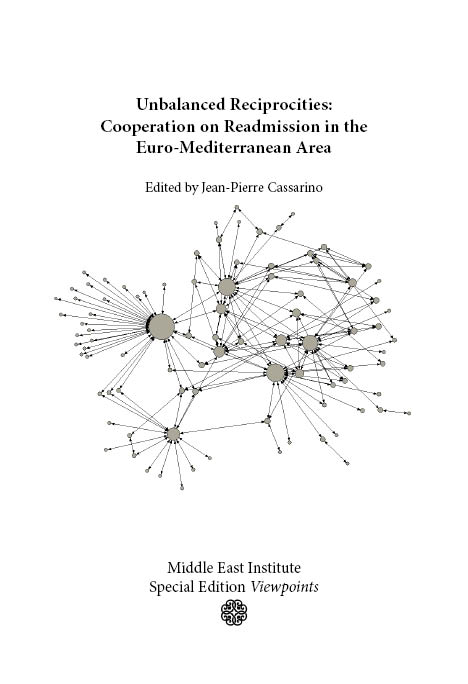
Unbalanced Reciprocities: Cooperation on Readmission in the Euro-Mediterranean Area
Readmission Agreements are a mechanism for countering illegal immigration. Such agreements involve reciprocal undertakings to return illegal residents (or irregular migrants) to their country of origin or transit. This special edition of MEI Viewpoints brings together extensive research on agreements between European and North African states. The following chapters explore what can be argued as the unbalanced costs and benefits for all parties.