When Russian archaeologist Viktor Sarianidi excavated Tilya Tepe in 1978, 21,000 bejeweled, gold artifacts created during the Greco-Bactrian era known as The Golden Hoard of Bactria were reported as inventoried, photographed, and catalogued. But in consideration of the time (1978), and the fact that the Kremlin was considering military intervention in Afghanistan in support of the Communist regime, it seems prudent to challenge the veracity of Professor Sarianidi’s findings.
Delivering on the Commitments of Afghanistan Conferences
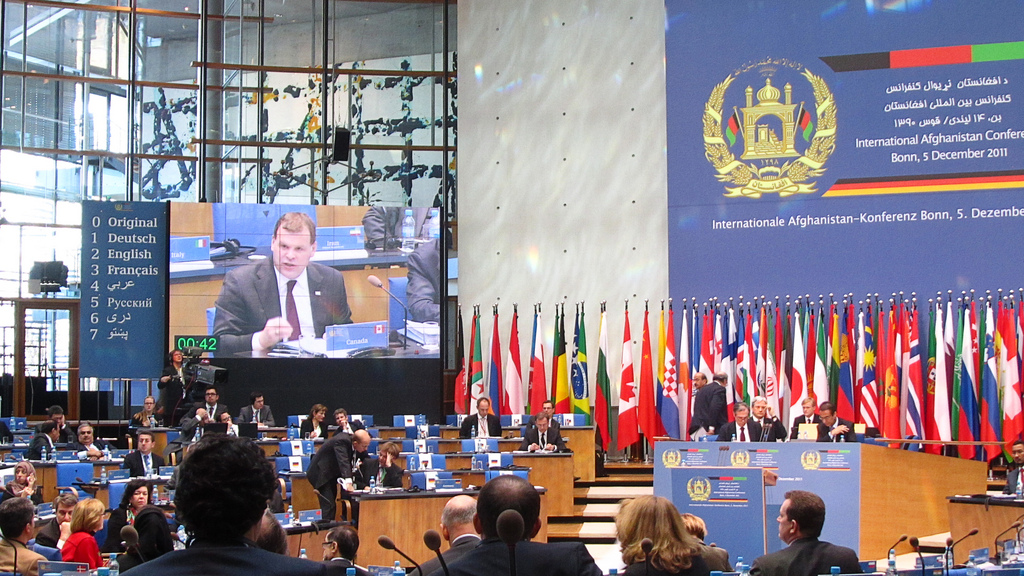
Last December in Bonn, Germany hosted and Afghanistan chaired an international conference on “Afghanistan and the International Community: From Transition to the Transformation Decade.” Eighty-five countries and 15 international organizations participated in the Conference to celebrate their shared 10-year achievements, and to recommit to consolidating and sustaining these achievements beyond 2014 into a decade of transformation until 2024.
Civil Society and Community Mobilization in Afghanistan
Originally posted December 2009
Civil Society (CS) consists of various kinds of community-based, non-governmental movements that, without waiting for or requesting government orders or assistance, come together mainly to solve problems and effect change. CS actors in Afghanistan exist at the local, district, and national levels. They are engaged in resolving problems and in calling upon people to contribute to, or participate in, community-based activities.
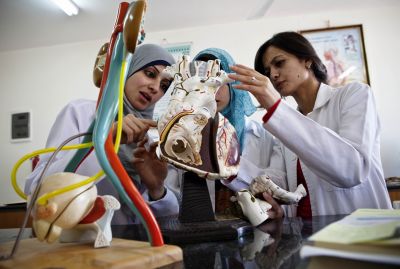
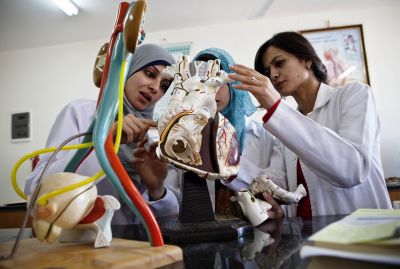
Experts throughout the massive aid community in Afghanistan agree that education is vital for development. Education shapes the quality of productivity, products, and services. Education informs citizens of the roles that they must play so that good governance may thrive. Education molds the quality of leadership. Yet, despite the rhetoric, the education sector is perennially underfunded; typically, it receives scarcely 10% of what is provided to other sectors.
The Emerging Afghan Media: Beyond the Stereotyping of Women?
Originally posted December 2009
For the past 30 or more years, media content in Afghanistan mostly has been controlled by the central government and its supporters. During this period, as throughout the 20th century, the most important and widely available forms of media have been national radio and television. However, rural perspectives and the realities of rural life have been conspicuously absent from most media content. Moreover, because of traditionally rigid gender roles, Afghan women have had very limited or almost no access to media and information sources.
Women's Agency in Afghanistan: From Survivors to Agents of Change
Originally posted December 2009
Often, policy debates on the empowerment of women in Afghanistan are impaired by the historic backlashes against radical top-down reforms and women’s emancipation (e.g., unseating kings) or by the assumption that the male-dominated culture makes it nearly impossible to create space for the advancement of women’s rights. As a result, the effort to develop a cohesive strategy for enhancing women’s participation in the reconstruction agenda is hampered.
The NGO people drive around in big white cars, live in our cities’ best houses and receive high salaries, though most of them would be jobless in their own country. They come here for two, three hours, and we tell them what they need to hear. They express empathy with our difficult situation, and then they get back into their air-conditioned four wheel drives and race off leaving us behind in a cloud of dust. Often they are never seen again. —Farmers in rural Kunduz Province, 2006