This text has been translated by AI and may contain errors.
Skip to Content

Research & Commentary Results

Filter by
1207 Results
Exploring the rising workforce participation among Saudi women
Photo by FAYEZ NURELDINE/AFP via Getty Images
  • Analysis
  • Exploring the rising workforce participation among Saudi women

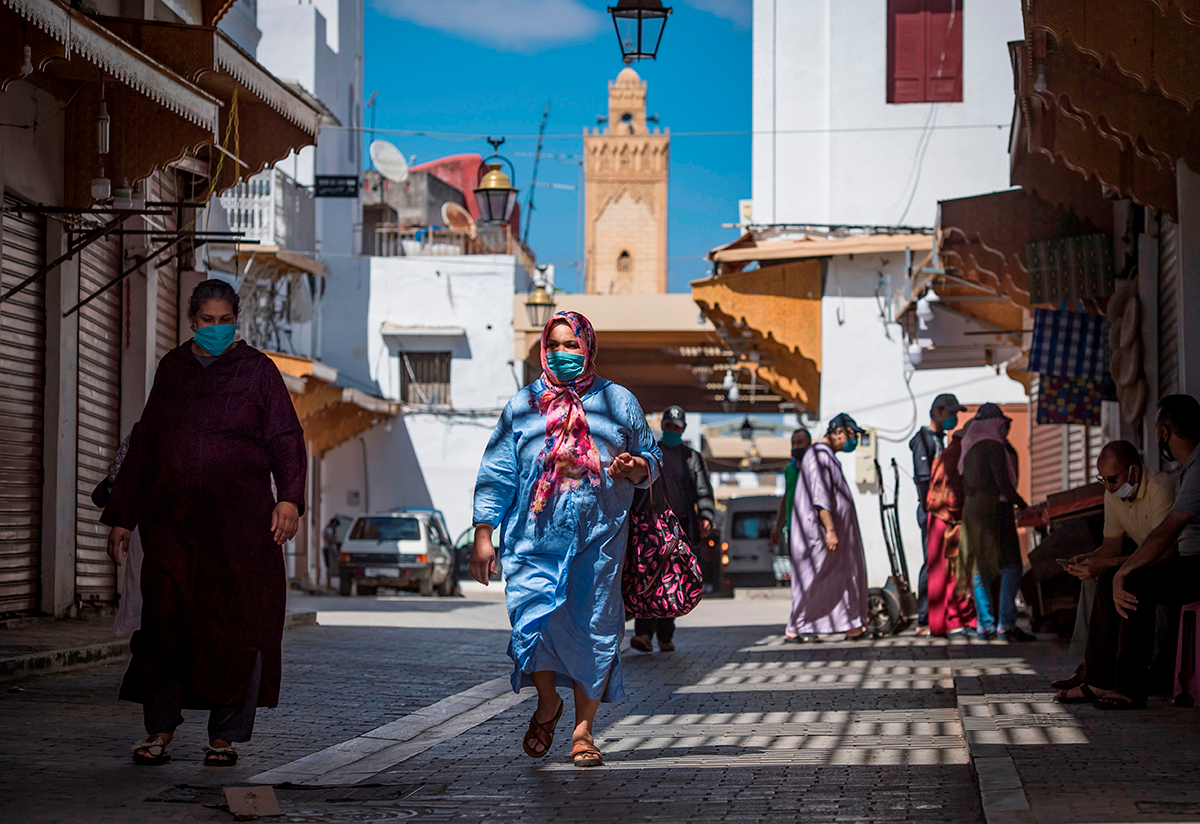
    In the past few months, several articles have been written on the significant rise in the Saudi female labor force participation rate (LFPR) from 17.7% in Q2, 2016 to 33.2% in Q4, 2020. Interestingly, this increase in female LFPR was not coupled with a rise in unemployment, which often occurs when workforce participation rises for a particular group. In fact, the unemployment rate among female nationals declined to its lowest level in four years, at 24.4% in Q4, 2020. However, it still remains over twice as high as that for male nationals. Another positive labor market indicator, albeit one receiving little attention from analysts, is the significant change in the employment rate among Saudi women. In other words, Saudi women not only increased their share in the workforce, but were also able to gain jobs once they entered the labor force.

    July 9, 2021

    Serbia’s best friend in the Arab world: The UAE
    Photo by Martyn Aim/Getty Images
  • Analysis
  • Serbia’s best friend in the Arab world: The UAE

    On July 1, 2021, Serbian President Aleksandar Vučić, accompanied by Mohamed Alabbar, an entrepreneur and the chairman of UAE real estate firm Eagle Hills, attended a ceremony in Belgrade. It commemoratedthe final work on a tower within Waterfront Belgrade, a major real estate project funded by the UAE. The ceremony was an illustration of the growing ties between Serbia and the UAE, which over the past nine years has become Belgrade’s primary partner in the Arab world. The UAE has also emerged as a source of cash and an instrument of domestic political promotion for the Serbian leadership.

    July 9, 2021

    Singapore and the Gulf: Economic engagement beyond hydrocarbons
    Lauryn Ishak/Bloomberg via Getty Images
  • Analysis
  • Singapore and the Gulf: Economic engagement beyond hydrocarbons

    Oil and gas have long dominated trade and investment flows between Singapore and the Gulf. In the wake of two new projects — one in Singapore and the other in the United Arab Emirates — unveiled last month, this article considers whether Singapore and the Gulf are on the cusp of a new level and type of economic relations.

    Egypt's Nile strategy
    Photo by SELMAN ELOTEFY/AFP via Getty Images
  • Analysis
  • Egypt's Nile strategy

    Egypt, Ethiopia, and Sudan are caught in a dangerous deadlock over the Nile River and despite what the international community seems to think, the risk of military confrontation among the three nations is not at all far-fetched. Addis Ababa began the second phase of filling the reservoir behind its giant Grand Ethiopian Renaissance Dam (GERD) in early May without an agreement with the riparian nations — Egypt and Sudan. However, much has changed over the past year and the second filling has played out rather differently from the first last July. In the intervening months Egypt has ramped up its diplomatic outreach and emerged as an influential player in the Nile Basin, the Horn of Africa, and East and Central Africa. Cairo succeeded in forging strategic alignment with Khartoum to exert diplomatic pressure on Addis Ababa, forming webs of alliances with different regional powers across East and Central Africa and the Horn of Africa to project power and influence, and exerting geopolitical forward pressure on Ethiopia in parallel with the diplomatic track to solve the GERD dispute. 

    With Netanyahu gone, the Abraham Accords will not only survive, they might even flourish
    Photo by JACK GUEZ/AFP via Getty Images
  • Analysis
  • With Netanyahu gone, the Abraham Accords will not only survive, they might even flourish

    Some international concern has been voiced about the future prospects of the Abraham Accords under Israel’s new government. This stems from the perception that the normalization agreements Israel signed in 2020 with the UAE and Bahrain were the personal achievements of two former leaders — Donald Trump and Benjamin Netanyahu — and would not have happened without them. The question thus arises of whether the agreements can survive their departure from power. Not only will the Abraham Accords survive, they will now be able to flourish and reach new heights. Foreign Minister Yair Lapid’s statement that his first visit abroad will be to the UAE is a good indicator. 

    June 24, 2021

    Algeria’s election reinforces political divisions
    Photo by Billal Bensalem/NurPhoto via Getty Images
  • Analysis
  • Algeria’s election reinforces political divisions

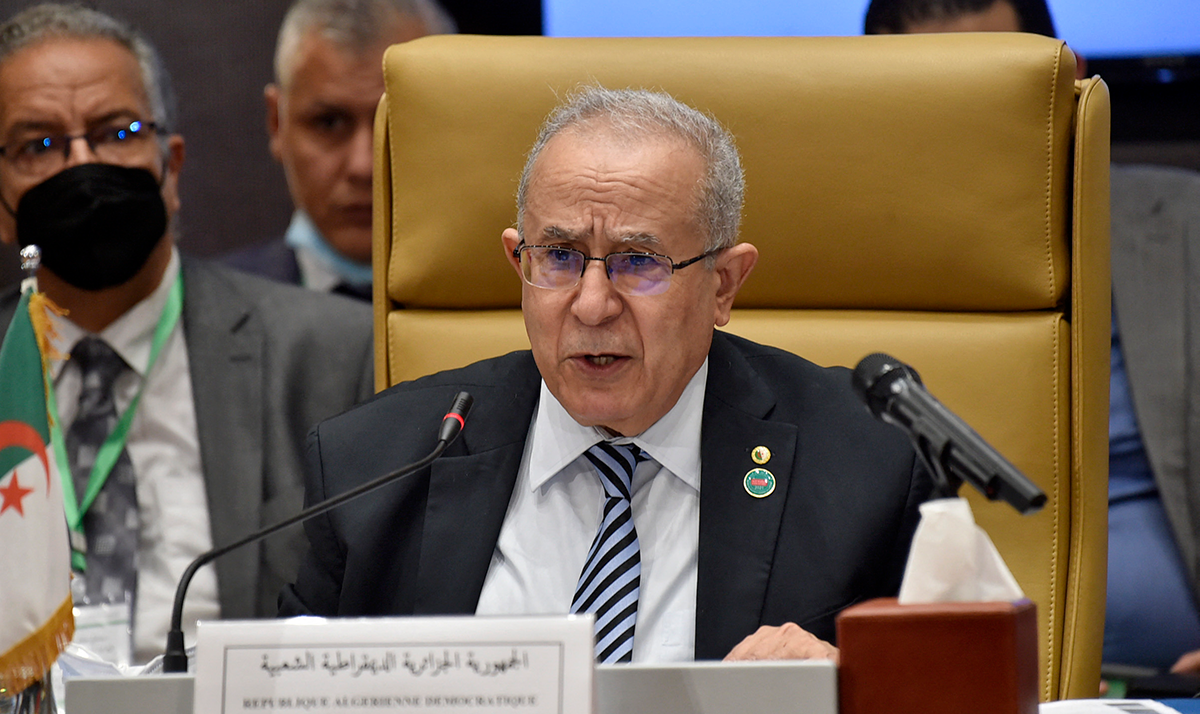
    The June 12 election for the National Assembly, the lower house of the Algerian parliament, shows that the country is stuck between, on the one side, a political system led by President Abdelmadjid Tebboune and backed by the army that rejects deep change and, on the other side, a population that has lost faith in the old system. Preliminary results announced June 15 indicated the phoenix-like return of discredited political parties that had strongly supported former President Abdelaziz Bouteflika, deposed in 2019. But in a sense President Tebboune is now more isolated than ever. His remark that he didn’t care about the record low voter turnout in the election shows the distance between him and most of the Algerian public.

    With the Hope Line, Iran aims to boost seawater transfer to fight growing drought
    Photo by Presidency of Iran / Handout/Anadolu Agency via Getty Images
  • Analysis
  • With the Hope Line, Iran aims to boost seawater transfer to fight growing drought

    Blessed with milder temperatures than its Gulf neighbors as well as abundant rain and snow fall, Iran is one of the last countries in the region to introduce a seawater transfer plan to fight unprecedented levels of drought. The plan, once fully implemented, could help build water corridors linking the shores of Iran’s southern Gulf to those of its northern Caspian Sea. Named the Hope Transfer Line, the plan promises prosperity for farmers and industrialists, and potable water for communities in some 10,000 villages and urban areas located in so-called Red Zones, a category that applies to regions coping with severe water scarcity. 

    June 9, 2021

    Is Morocco willing to jeopardize its relationship with Europe over the Western Sahara?
    Photo by Joan Amengual/VIEWpress/Corbis via Getty Images
  • Analysis
  • Is Morocco willing to jeopardize its relationship with Europe over the Western Sahara?

    The scene was a familiar one, even if the scale was not. On May 17 and 18, thousands of migrants entered Ceuta, one of two Spanish enclaves in North Africa that border Morocco. The record flow of irregular migrants surpassed 12,000 people over the course of two days. The Spanish authorities quickly understood that this surge in migration was about more than the usual human desperation that has driven large numbers of people over fences and across water in an effort to enter Europe in recent years. Morocco, troubled over Madrid’s stance on its territorial claims over the Western Sahara, decided to retaliate.

    June 7, 2021

    The policy consequences of Arab state normalization with the Assad regime
    Photo by MAHER AL MOUNES/AFP via Getty Images
  • Analysis
  • The policy consequences of Arab state normalization with the Assad regime

    The recent push by a number of Arab states to normalize relations with the Assad regime is based on the false premise that the war is over and it is necessary to restore ties to lobby Damascus to change its relationship with Iran. Other regional dynamics are also a factor: The UAE, for example, sees it as a necessary balance against what it perceives as adversarial actions by Turkey with the Syrian jihadist group HTS in Idlib. Yet these rationales for rehabilitating the Assad regime are completely fallacious. The downsides and policy consequences will not only affect Arab states, but will also harm American interests, making it difficult for the U.S. to fully pivot to address the rising threat from China.

    June 2, 2021

    Sudan: A key area in US-Russia competition?
    Photo by Kirill KukhmarTASS via Getty Images
  • Analysis
  • Sudan: A key area in US-Russia competition?

    Russia’s foreign policy in areas of the Arab world and Africa where the Soviets once wielded significant influence decades ago has become increasingly assertive in recent years. One such area is Sudan, a pro-Soviet country from 1969, when Gaafar Nimeiri took power, until the communist-backed coup of 1971.

    June 1, 2021

    The first test of the Abraham Accords
    Photo by JACK GUEZ/AFP via Getty Images
  • Analysis
  • The first test of the Abraham Accords

    The recent round of fighting between Israel and Hamas, and especially the events that preceded it in Jerusalem, were the first significant test of the Arab-Israeli normalization agreements signed in 2020. Saved by Hamas’ intervention, the four normalizing Arab governments were nevertheless forced to address the consequences of their agreement in the face of popular discontent with the situation at home as well as criticism from other Arab and Muslim states over their relative silence. How they respond to the evolving Israeli-Palestinian tension going forward will be critical not only in regard to their own relations with Israel but also in terms of the future path of Arab-Israeli normalization.

    The Growing Alignment Between the Gulf and the Eastern Mediterranean
    Photo by IAKOVOS HATZISTAVROU/POOL/AFP via Getty Images
  • Analysis
  • The Growing Alignment Between the Gulf and the Eastern Mediterranean

    The synergies between the Gulf and the eastern Mediterranean theaters have grown substantially in recent years. Speaking at a meeting in Paphos, Cyprus in mid-April 2021 with his counterparts from Greece and Israel, as well as the former minister of state for foreign affairs of the UAE (now an advisor to the UAE president), the Cypriot foreign minister noted, “The evolving web of regional cooperation is creating a new narrative.” A week later, the UAE and Israeli fighter jets flew together publicly — for the first time — in an international aerial exercise hosted by Greece. How can we explain the signs of growing cooperation between these actors that seemingly operate in close but not completely overlapping arenas?

    The 5G divide in the Middle East: Further disparity between the Gulf and its neighbors
  • Analysis
  • The 5G divide in the Middle East: Further disparity between the Gulf and its neighbors

    The 5G technology revolution is poised to change society irreversibly in the Middle East. The evolution of the Internet of Things (IoT) powered by 5G networks could prove life-enhancing. Already, the Gulf countries have led the way in adopting 5G technology in the region and the rollout of 5G showcases the Gulf’s new role as a leader in digital technology. Although the Gulf countries have made strides to be global tech leaders, their neighbors in the region seriously lag behind in their abilities to adopt large-scale 5G technology. This disparity will further deepen the divides in development between the Gulf and the rest of MENA. Looking to the future, the Gulf will surely pull ahead as the tech hub of the region, but there are still important benefits for the rest of the region to reap as they slowly adopt next generation technology. 

    May 20, 2021

    Eye on Niamey: Middle East regional powers vie for influence in Niger
    Photo by Arda Kucukkaya/Anadolu Agency via Getty Images
  • Analysis
  • Eye on Niamey: Middle East regional powers vie for influence in Niger

    Due to its relatively stable political institutions, geographic proximity to Libya, and UNSC seat, regional powers in the Middle East are competing for influence in Niger. Egypt and the UAE are trying to counter Turkey’s growing economic and security cooperation with Niger, Saudi Arabia and Iran wish to leverage its UNSC voting power, and Israel is testing the waters for a potential normalization of diplomatic relations. These rivalries are poised to intensify, as the Sahel’s geostrategic significance continues to expand.

    May 20, 2021