Putting Out the Fire in Southern Thailand: An Appeal for Truce Seeking
Observers have struggled to explain ongoing sectarian violence in southern Thailand given that both Thai Buddhists and Malay/Thai Muslims are victims of violence, have historically coexisted peacefully, and share local customs and spiritual traditions. Tim Rackett explores the role of majority and minority ethnic and religious identities in fueling sectarian violence and identifies a way out.
Pakistan is only one of three countries—the others being Afghanistan and Nigeria—in which polio has never been eradicated. Polio in Pakistan has been a particular worry recently, with a disturbing spike in cases. According to the World Health Organization (WHO), 61 out of 77 cases of polio reported worldwide from January through mid-May 2014, or 79 percent, were in Pakistan.[1]
The Tortuous Route of the U.S.-Afghan Security Pact
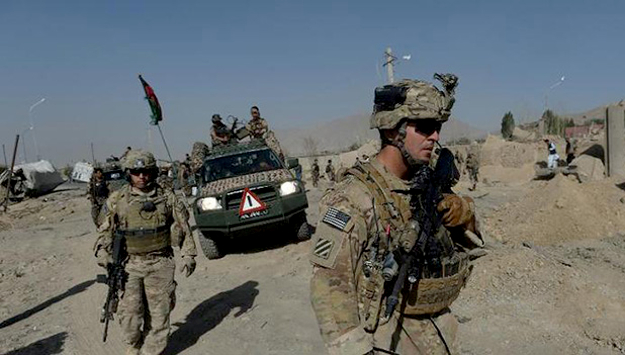
Yesterday, the United States and Afghanistan completed a bilateral security pact ensuring that U.S. troops will remain in the country. It now goes to a council of elders—the loya jirga—for authorization. MEI spoke with Scholar-in-Residence Marvin Weinbaum about the pact’s sticking points, next steps for its approval, and what each country gains from the agreement.
What does the U.S.-Afghan security pact stipulate?
A Discussion With Stephen Cohen, Author of Shooting for a Century: The India-Pakistan Conundrum
The Middle East Institute is proud to host author and Brookings senior fellow Stephen P. Cohen for a reading and discussion of his book, Shooting for a Century: The India-Pakistan Conundrum (Brookings Institution Press, 2013). In his latest book, Dr. Cohen explores one of the most intractable conflicts in modern history and examines the parallels with the ongoing Israeli-Palestinian conflict, observing how nuclear weapons, minority and victim psychology, and outside powers come into play in both regions. Widely regarded as one of America’s foremost experts on South Asian affairs, Dr.
Assessing the Past, Informing the Future: U.S. Aid Policy in Afghanistan & Pakistan
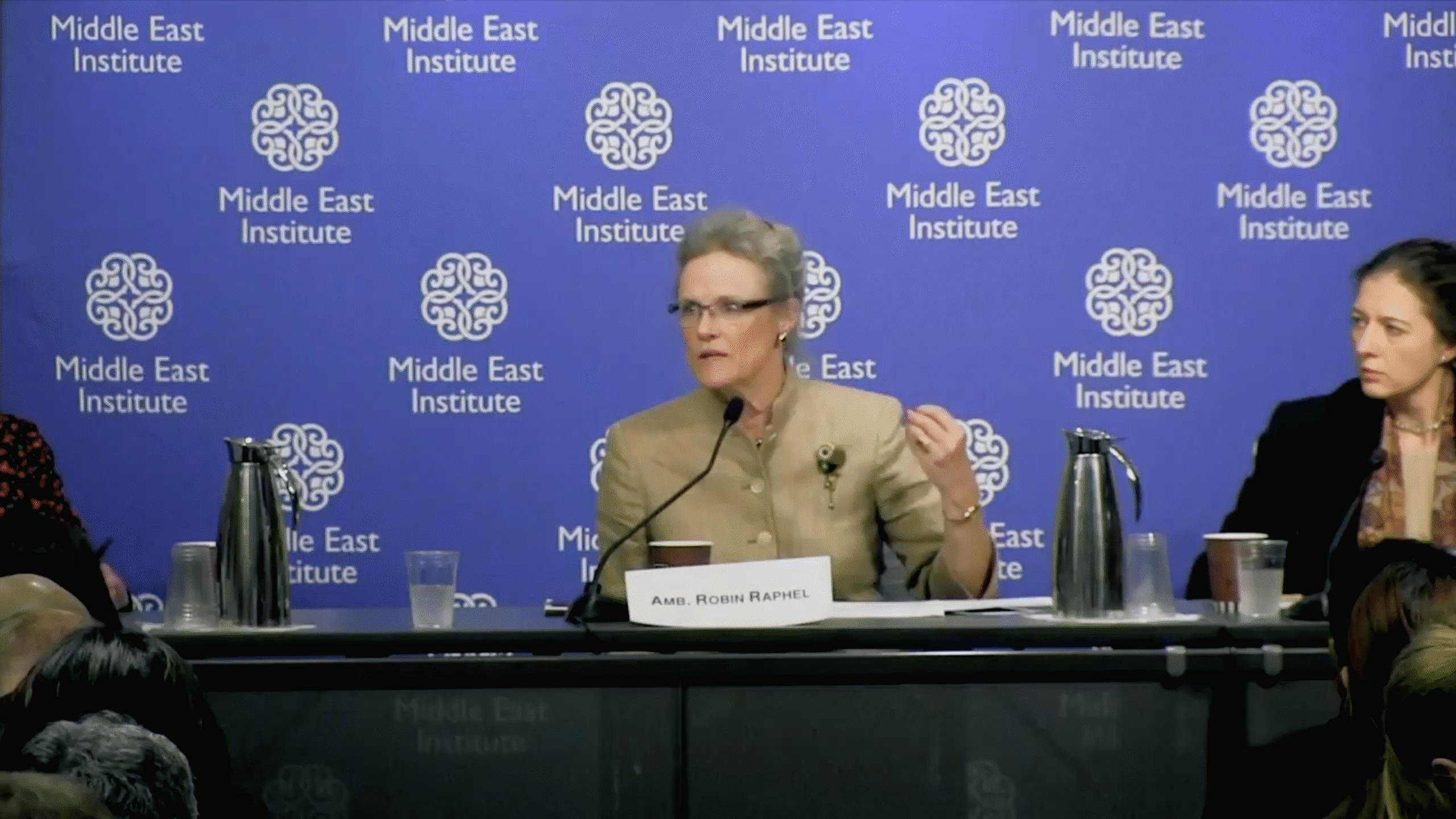
The Middle East Institute is pleased to welcome Vanda Felbab-Brown, senior fellow with the Center for 21st Century Security and Intelligence in the Foreign Policy program at Brookings, independent consultant Polly Nayak, Amb. Robin Raphel, U.S. Coordinator for Non-Military Assistance to Pakistan, and Alex Thier, assistant to the Administrator for Policy, Planning, and Learning at USAID, for a panel discussion examining how the US can contribute to the stability of post-2014 Afghanistan and Pakistan through economic and development assistance.
Instruments such as the shakuhachi and the nay—though both many centuries old—have seldom met because they come from very distant places. The nay is a piece of reed from the Middle East, while the shakuhachi is bamboo from Japan. Although very simple in substance and shape, their sound has a strong character because they have grown to represent in the most complex ways what they have inherited from the past. When Kamal Helou, my musical partner, and I made these two instruments converse, we knew that we were forcing the laws of time. We found the first musical contact timid—both the shakuhachi and the nay imposing their characters, clinging to their traditional aesthetics. The shakuhachi is sharp and focused, the nay moving and warm. Yet the similarities were evident, both instruments having come to reflect similar ethical questions—the universality of being and the intuition of the soul.
Since the 1970s oil boom, the Gulf region has been one of the principal destinations for workers from South Asia, with the result that today Indians constitute a large percentage of the non-nationals living in the region. Indeed, at five million out of an estimated 15 million people, the Indian community forms the largest expatriate group in each of the Gulf countries. Most Indian immigrants are from the south Indian state of Kerala, while many of the rest originate from Tamil Nadu, Punjab, Uttar Pradesh, and Bihar.
When the young Shaykh Tamim bin Hamad al-Thani became ruler of Qatar last month after his father stepped aside in a seamless transition, one of his first official acts was to seal the generational shift by appointing a new prime minister.