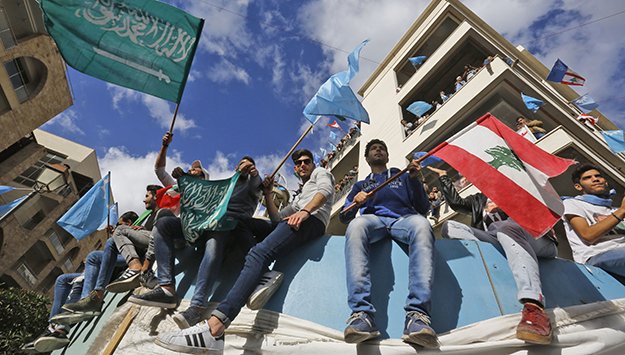
Reversing months of troubled relations, Saudi royal envoy Nizar al-Aloula arrived in Lebanon on Monday with messages of strong support for the country. He emphasized that Saudi Arabia sought strong and supportive relations with the Lebanese state and people, saying, “You will see a new approach from Saudi Arabia.” Aloula also extended an official invitation to Prime Minister Saad Hariri to visit Riyadh. Today Hariri is in Riyadh, where he met with King Salman and is due to meet with the crown prince.
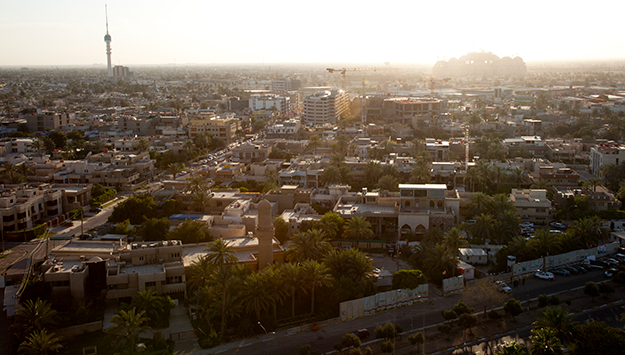
The Baghdad Declaration: good neighborhood principles for the Middle East
Over the course of the last three years, the Middle East Institute convened a regional dialogue involving participants acting in their personal capacities from Egypt, Iraq, Iran, Jordan, Lebanon, Saudi Arabia, Syria, United Arab Emirates and Turkey. The dialogue also involved participants from China, Europe, Russia and the United States. The discussions resulted in the following declaration of good neighborhood principles for the Middle East agreed in Baghdad 15-16 December 2017.
…….
The Middle East dialogue, which began its twice-a-year meetings in October 2012, convened its eleventh meeting in Baghdad 15-16 December. Participants included current and former officials and senior experts from Egypt, Iraq, Iran, Jordan, Lebanon, Saudi Arabia, Syria and United Arab Emirates as well as China, Europe, Russia, and the United States.
Iran-backed Asaib Ahl al-Haq: We’ll form next Iraqi government and will expel US forces
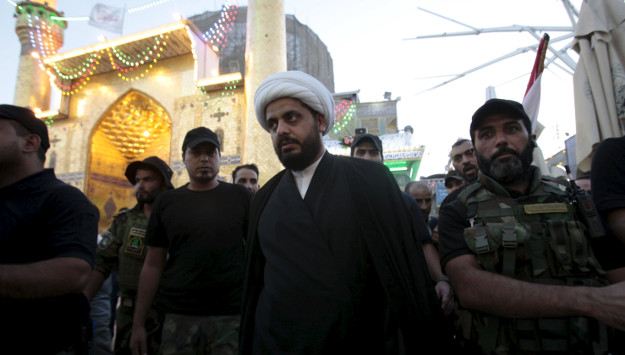
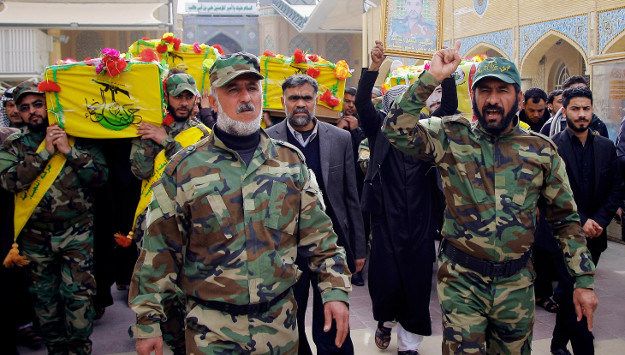
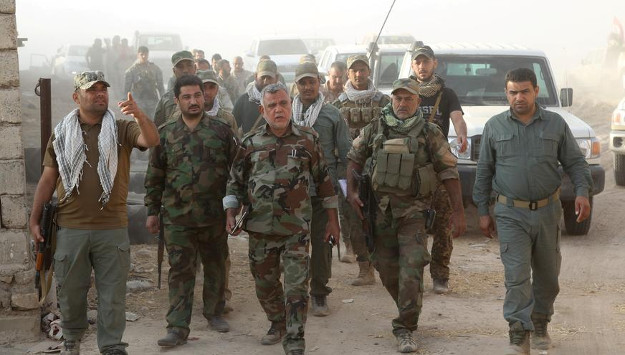
The head of a prominent Iranian-backed militia group in Iraq has said that the priority of the next government in Baghdad will be to “expel the American forces from Iraq and terminate the strategic cooperation agreement between the two countries.” Qais al-Khazali, who is the leader of Asa’ib Ahl al-Haq, also predicted that a coalition of Popular Mobilization Forces (PMF) will form the next government after the upcoming parliamentary elections slated for May 12.
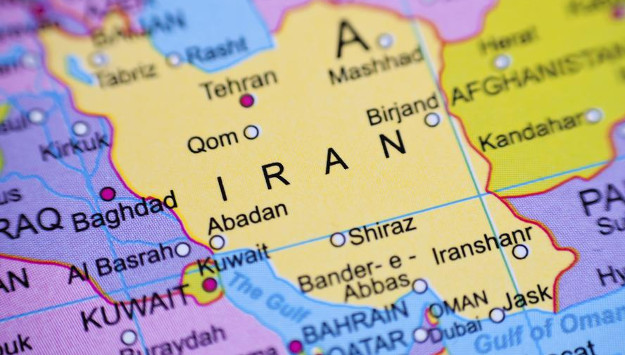
Iran has announced that it will allow Iraqi travelers and businesspeople to visit the Iranian cities of Abadan and Khorramshahr without the need for a visa, Iranian and Iraqi media reported. According to the consulate general of Iran in the Iraqi city of Basra, Tehran is waiting for the Iraqi government to approve the new policy and cancel the visa requirement for its citizens planning on traveling to the two Iranian cities.
Iran-Backed group: We’ll avenge our casualties by cleansing Iraq of US presence
The secretary-general of Harakat al-Nujaba, an Iraqi militia group with close ties with the Islamic Revolution Guards Corps (IRGC), has said that the group will avenge the blood of Iraqi paramilitary forces recently killed in the Iraqi province of Kirkuk by “cleansing” Iraq of the American presence,
Iran’s negligible role in Iraq’s postwar reconstruction
While donor countries and organizations pledged $30 billion for Iraq’s reconstruction at an international conference held in Kuwait on February 14, Iran – which portrays itself as Iraq’s closest ally – made no financial commitments.
Iran’s allies in Iraq dial up calls for US withdrawal as parliamentary elections near
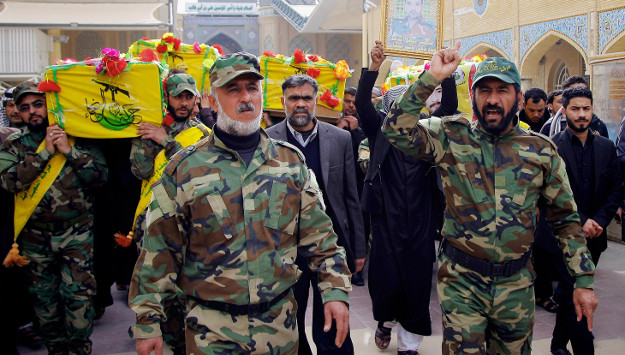
Several Iranian-supported Iraqi militia commanders and politicians this week called for the withdrawal of American troops from the country, argying that they are no longer needed as ISIS is now militarily defeated, Iranian and Iraqi media reported. A senior official of Asa’ib Ahl al-Haq (AAH), a unit within the Popular Mobilization Force with close ties with Iran’s elite Quds Force and the Lebanese Hezbollah, said today that the paramilitary forces and Iraqi parliament will not allow Washington to keep its troops in Iraq.
Lebanon has not held parliamentary elections for almost a decade, delayed in part to await the outcome of the Syrian crisis next door. Polls are now set for May 6 and the race to form a majority coalition is on. What will the elections mean for Lebanon’s ability to manage domestic and external pressures? How strong will Hezbollah’s influence be? And will a new election law help or add to the confusion? MEI’s Paul Salem and Randa Slim join guest host Jerry Feierstein to discuss.
Another Iran-backed Iraqi militia leader visits Lebanon, threatens Israel
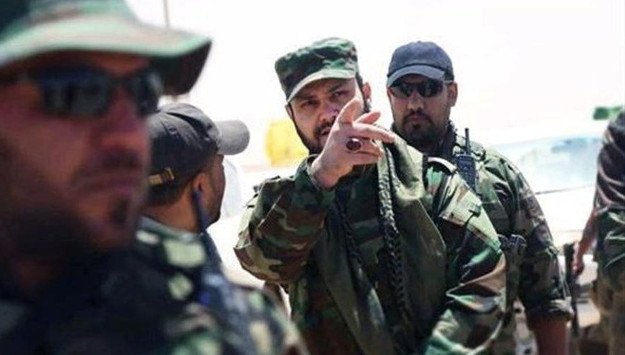
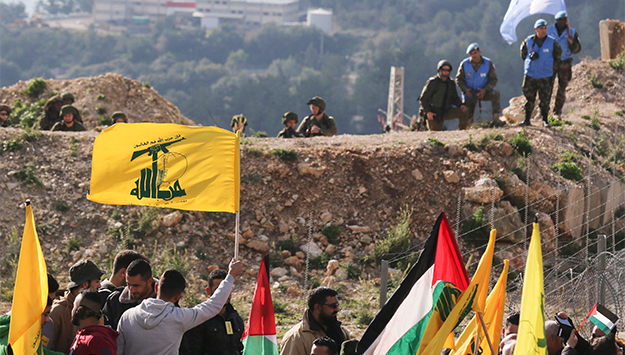
The leader of an Iraqi militia group with close ties to Iran traveled to Lebanon this week to voice solidarity with Hezbollah and pledged to stand with the “axis of resistance” in any future wars with Israel. Akram al-Kaabi, the head of Harakat al-Nujaba, made the remarks to reporters in southern Beirut after visiting the tomb of late Hezbollah commander Imad Mughniyeh, who was allegedly killed by Israel. “We, at the axis of resistance, will mobilize forces against Israel at any place.
Negotiating Protection in the Syrian Refugee Response
This essay examines the humanitarian negotiation of protection in the Syrian refugee response. Focusing on the case of Lebanon, the essay presents three examples of how the United Nations High Commissioner for Refugees (UNHCR) has negotiated refugee protection: by avoiding the refugee label, by establishing the contested notion of “protection space,” and by suspending refugee registration at the request of the Lebanese government.
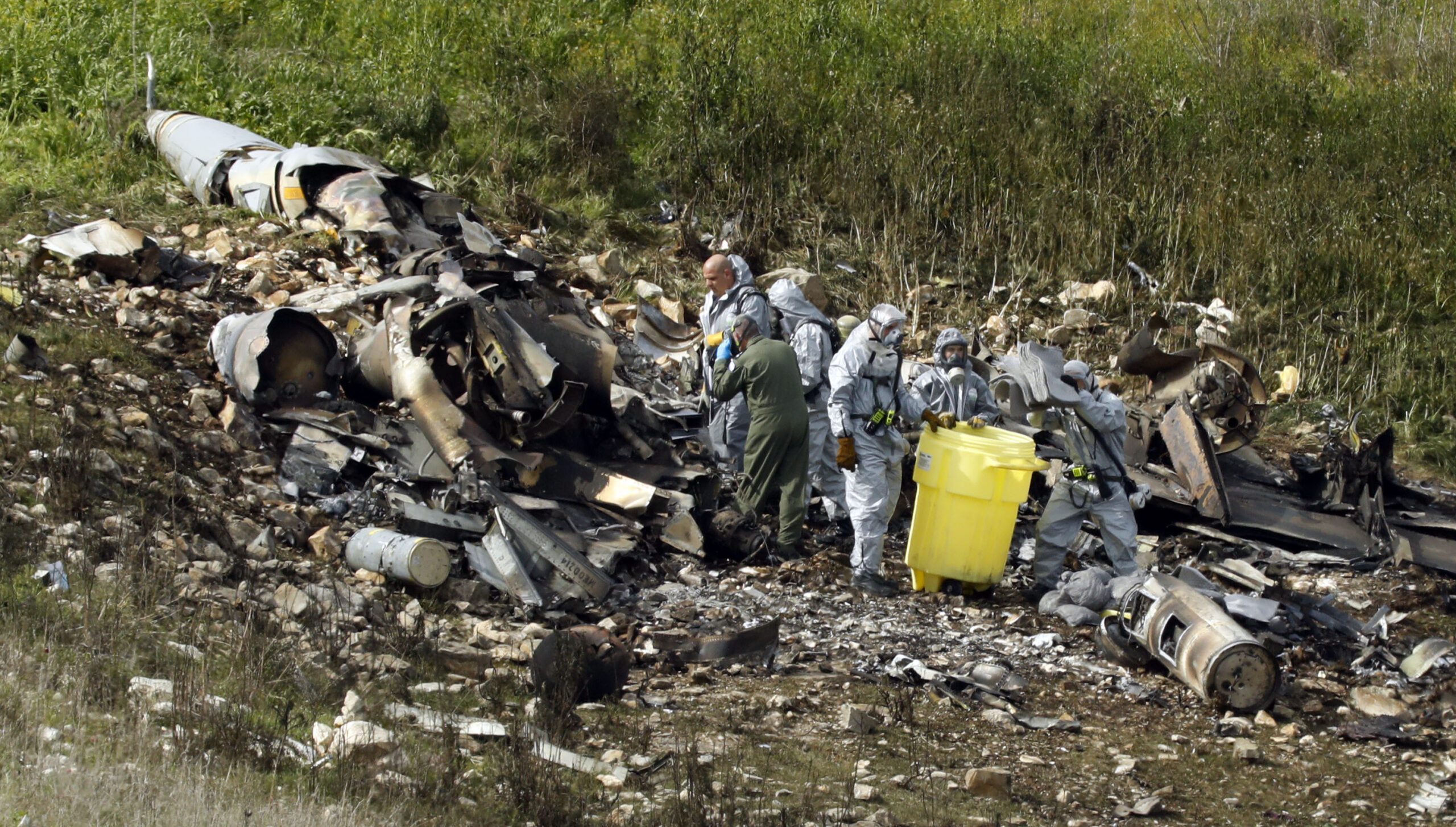
The latest evidence of the evolving nature of the war in Syria was on display Saturday, Feb. 10, when Israel mounted what a senior Israeli officer called “the biggest and most significant attack the air force has conducted against Syrian air defenses” since the 1982 Lebanon war. The unprecedented encounter was precipitated by the intrusion of an Iranian drone into Israeli airspace and led to the downing of a top-of-the-line Israeli F-16 by Syrian air defenses.
Iran-linked militias will play role in Syrian-Iraqi border security
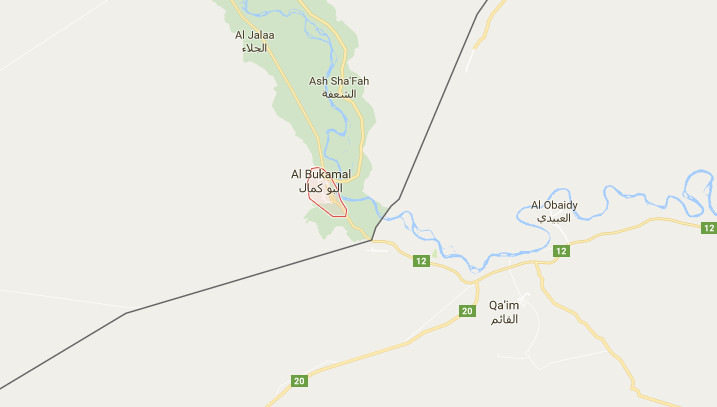
Iraqi Interior Minister Qasim al-Araji announced yesterday that the country is planning on opening the al-Qaim-Abu Kamal border crossing between Iraq and Syria, Iranian and Iraqi media reported. Al-Araji, who is a senior member of Iran-backed Badr Organization, added that his ministry has obtained permission from Prime Minister Haider al-Abadi and Chief of Staff of the Iraqi military, General Othman Al-Ghanimi, to reopen the strategic border crossing.
Monday Briefing: The Syrian-Iranian downing of an Israeli fighter jet
In this week’s Monday Briefing, MEI experts Charles Lister, Bilal Y. Saab, Eran Etzion, Gonul Tol, Paul Salem, and Randa Slim provide analysis on recent and upcoming events including the Syrian-Iranian downing of an Israeli fighter jet, the critical crossroads of U.S. and Turkey relations, Rex Tillerson’s upcoming visit to Lebanon, and Iraqi reconstruction plans.
Another Iran-backed militia group threatens US troops in Iraq
A senior official of Harakat al-Nujaba, an Iranian-supported militia group fighting in Iraq and Syria, issued a threat against the US military in Iraq and called on Washington to pull out its troops from the country, the Iranian media reported. “We will never forget the atrocities of the United States in our country and we still have not settled a score with America,” Nasr al-Shamri, an executive director of the group said in a live interview with Al-Furat TV in Iraq.