تمت ترجمة هذا النص بواسطة الذكاء الاصطناعي وقد يحتوي على أخطاء.
تخطي إلى المحتوى

Research & Commentary Results

تصفية حسب
8748 Results
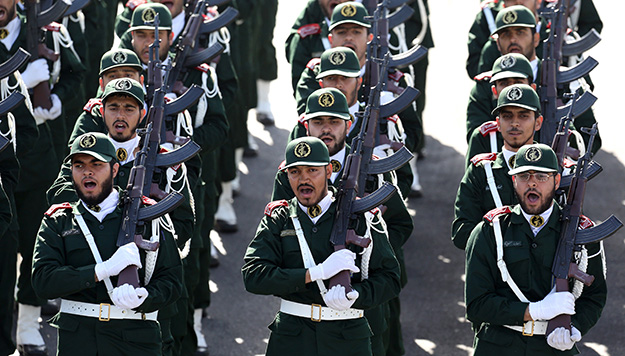
Iran’s Approach to Extreme Sunni Militants
  • التحليل
  • Iran’s Approach to Extreme Sunni Militants

    This article was first published by The National Interest.

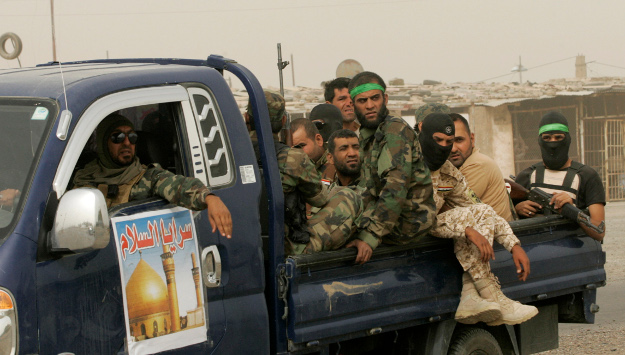
    The conventional wisdom in Washington is that Tehran regards Sunni-jihadist movements as ideologically incompatible rivals. This is not surprising, as the bulk of Sunni-jihadist literature makes it clear that Shia-majority Iran is considered to be the embodiment of apostasy. To most Sunni jihadists, including those from ISIS, Iran is an archenemy surpassing both Israel and the United States.

    Israel: The Future is Asia
    معهد الشرق الأوسط
  • التحليل
  • Israel: The Future is Asia

    The forces of globalization have not erased national boundaries. Nor have they shortened the physical distances between countries. Tel Aviv and Tokyo still lie more than 9,000 kilometers apart. The direct flight time between Ben Gurion Airport and Beijing Capital Airport remains just over nine hours.

    September 22, 2014

    Israel and Indonesia: Window of Opportunity?
    معهد الشرق الأوسط
  • التحليل
  • Israel and Indonesia: Window of Opportunity?

    Israel and Indonesia are two nations whose relations―due to political circumstances―have yet to fulfill their enormous potential. Were there to be progress in peace negotiations between Israelis and Palestinians, a window of opportunity could open for Indonesia’s new president to take practical steps that would begin to unlock this potential.

    September 21, 2014

    India’s National Security Imperatives and Indo-Israeli Strategic Cooperation
    معهد الشرق الأوسط
  • التحليل
  • India’s National Security Imperatives and Indo-Israeli Strategic Cooperation

    Over the past two decades, successive Indian governments have managed to develop increasingly extensive ties with Israel without damaging their relations with Arab countries. This essay discusses the reasons that India, which had distanced itself from Israel for four decades, decided to pursue security cooperation, and assesses the prospects for its further development.

    September 18, 2014

    The New Iraqi Prime Minister: A Change in Style or Substance?
    معهد الشرق الأوسط
  • التحليل
  • The New Iraqi Prime Minister: A Change in Style or Substance?

    During his first week in office, Iraq’s new prime minister, Haydar al-Abbadi, has made a number of significant announcements, ranging from highly symbolic moves to more wide-ranging initiatives. Signs of divergence between Abbadi and his predecessor, Nuri al-Maliki, are clearly visible.

    September 17, 2014

    A Coalition of Uncertainty
  • التحليل
  • A Coalition of Uncertainty

    One way to grasp the immense difficulty facing President Obama as he tries to forge an effective international coalition to oppose the Islamic State is to examine the difference between this effort and the last time the United States led a diverse group of countries to take on a conflict in the Middle East: Operation Desert Storm, in 1991.

    September 15, 2014

    The Huthi Ascent to Power
    معهد الشرق الأوسط
  • التحليل
  • The Huthi Ascent to Power

    After capturing Amran in mid-summer, the emboldened Huthi movement (Ansar Allah) began a fall campaign against the national capital, surrounding Sana‘a with armed camps, organizing large demonstrations around government buildings inside the city, and demanding that the government repeal its recent decision to lift fuel subsidies before resigning. Tensions turned bloody on September 9 when gunfire broke out as Huthi demonstrators tried to force their way into the Prime Minister’s office in downtown Sana‘a.[1]

    September 15, 2014

    Turkey: A Reluctant Partner in the Fight against the Islamic State
  • التحليل
  • Turkey: A Reluctant Partner in the Fight against the Islamic State

    Last week, President Obama laid out his strategy to fight the Islamic State (also known as ISIS or ISIL). The strategy includes a systematic campaign of airstrikes; support to forces fighting ISIS on the ground, including Iraqi Security forces and the Peshmerga (the Kurdish armed forces); redoubling U.S. efforts to cut off ISIS funding; improving intelligence; strengthening defenses; and stemming the flow of foreign fighters into and out of the Middle East.

    Upgrading Israeli-South Korean Relations: Can Seoul Tilt in Favor of Jerusalem?
    معهد الشرق الأوسط
  • التحليل
  • Upgrading Israeli-South Korean Relations: Can Seoul Tilt in Favor of Jerusalem?

    Israel has come to recognize South Korea as being of increasing importance to its economic, security, and diplomatic interests. Meanwhile, Israeli innovation has attracted South Korean businesses and investors. As a result, Israel-South Korean economic ties have grown in recent years, albeit with little fanfare. These positive developments could eventually lead Seoul to alter its official policy toward Israel.

    September 15, 2014

    Secular Parties in Egypt’s Political Landscape
  • التحليل
  • Secular Parties in Egypt’s Political Landscape

    Most of Egypt’s newly created secular political parties have complained bitterly about the Parliament Election Law, which former Interim President Adly Mansour rushed to approve in his last day in office, before handing over power to newly-elected President Abdel Fattah el-Sissi.

    September 11, 2014

    Iran and Saudi Arabia: Detente on the Horizon?
  • التحليل
  • Iran and Saudi Arabia: Detente on the Horizon?

    This article first appeared in The National Interest.

    After a year of hesitation, Iranian president Hassan Rouhani is signaling his readiness to reach out to Tehran’s chief regional rival—Saudi Arabia. Last week, a top official was sent to Riyadh; he was the most senior Iranian visitor to the country since Rouhani’s election in June 2013.

    ISIS strategy check: Rule out a U.S. war
  • التحليل
  • ISIS strategy check: Rule out a U.S. war

    This op-ed was first published in the New York Daily News.

    The United States might not have had a strategy for battling ISIS last week, but it does now. The NATO summit in Wales produced one. It reflects President Obama’s instincts and his ability to corral fractious allies.

    It also says nothing about the use of force by the United States.

    September 8, 2014