Ethnic Divisions and Alliances in the Afghan Elections
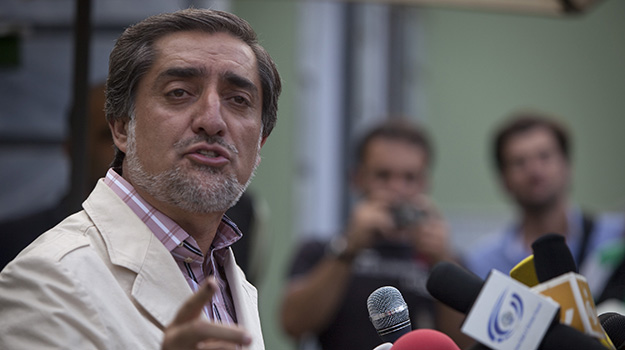
As the April 5 Afghan presidential elections draw closer, there is a growing consensus among most analysts that there will be a runoff vote and that ethnic groups will firmly ally themselves with a particular candidate in this second round of voting.
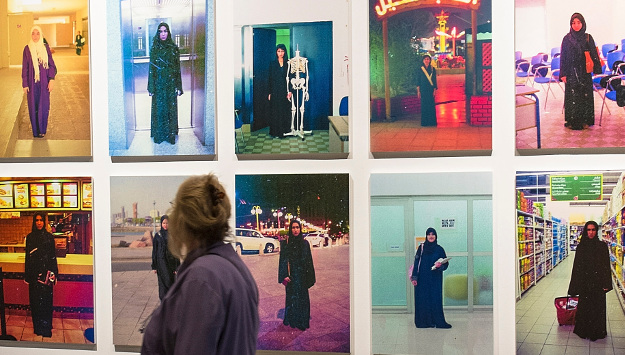
In a historic first, three Arab films—all dealing with the political and social challenges faced by Arab youth—were nominated for Academy Awards this past March for best foreign language film (Omar, Palestine), best documentary feature (The Square, Egypt), and best documentary short (Karama Has No Walls, Yemen).
Democratization and Building a Democratic Army: Lessons from South Korea
Democratization in a country is not just about electing new leaders through free, fair, and competitive elections; it entails a much more comprehensive political overhaul, including deposing ruling elites from the previous autocratic regime, building workable democratic institutions with a new constitution, reaping support from pro-democracy civil society groups, and managing national security and order. Possibly the most significant factor in the success or failure of a state’s democratic transition and subsequent consolidation is establishing a firm and democratic control over the armed forces. Without depoliticizing the once-politically dominant military and making top military officials politically neutral and subordinated under democratically elected leaders, the post-democratization political process of a nation is destined to be highly unstable and most likely will derail from the route to democratic consolidation.
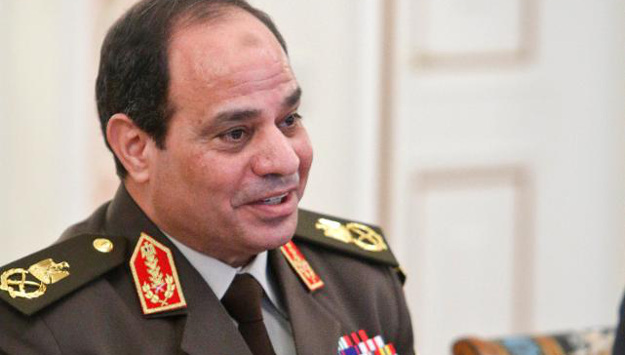
On March 26, Egyptian Field Marshal Abdul-Fattah el-Sisi resigned from the military and announced his presidential bid. What do we know of Sisi’s platform, and what kind of military leadership does he leave behind? MEI spoke with resident scholar Mohamed Elmenshawy about these and other issues.
Will any challengers take on the enormously popular Sisi?
The political crisis in Ukraine and subsequent annexation of Crimea by Russia have sent reverberations throughout the Middle East, where Western and Russian influences continue to weave a complex geopolitical web. MEI interviewed four of its scholars to produce this detailed account of the challenges the conflict poses to the region’s political, security, and economic conditions.
Libyan popular and political support for engaging the international community offers the United States and Western partners an opportunity to help stabilize a North African energy producer and encourage orderly political change. Conversely, a failure to act could have costly, long-term regional and international security consequences. Domestic political limitations to direct U.S. government engagement, along with other issues that compete for attention and resources, are constraints on a more active policy. Moreover, Libyans themselves would not tolerate a dominating U.S. role.
Bad Neighbor, Good Neighbor: Libya-Egypt Relations
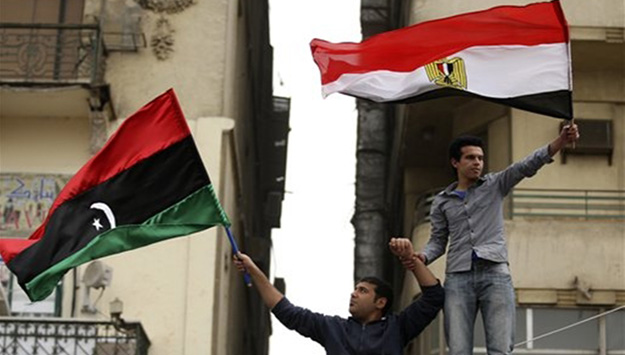
In 2011, many observers predicted that relations between Libya and Egypt would become closer after both countries underwent similar revolutions followed by attempts at democratic transition. But three years later, the realization of this prediction appears unlikely. Political realities and ideological differences have led to a relationship that is contentious at best.
Obstacles to Civilian Control of the Security Sector in Thailand
Over 30 military coups and coup attempts have taken place in Thailand since 1932, when absolute monarchy was overthrown, the latest of which was in 2006. Clearly, achieving democratic civilian control over Thai security forces remains a daunting challenge. When we talk about Thai security forces, we are referring to the country’s army, navy, air force, police, and paramilitaries. The army is much larger than the other services, although the police force is also quite sizeable. Soldiers and police have tended to obey elected civilian authorities due to partisan connections or simply because the appearance of compliance is convenient. But in actuality the security forces are generally insulated from the sanction of elected governments.
Jawad Nabulsi was looking straight at the policeman the moment he was shot in the face. The black-clad officer raised the barrel of his gun, pointed it directly at Nabulsi’s eyes, and pulled the trigger.
It was 11pm on January 28, 2011. The “Friday of Rage,” as protesters called it, would later be labeled the bloodiest day in the revolution that toppled autocrat Hosni Mubarak.
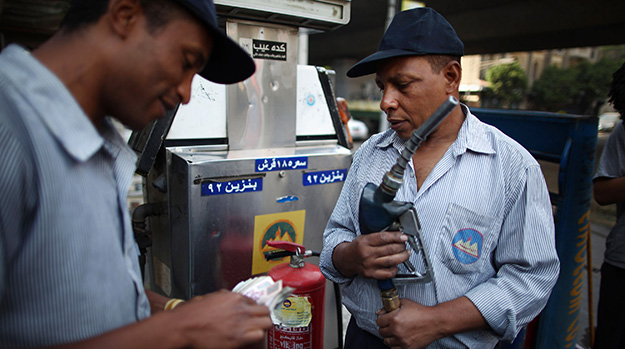
Coverage of Egypt over the past three years has focused on the dramatic political events, yet it was the dire economic situation that created the pressure for the multiple uprisings. And if economic decline is not reversed over the next few years, Egypt might fall over an economic precipice that risks rendering the country eventually ungovernable. Security and political reform are urgently necessary in their own right, and will have a positive effect on the economy if achieved, but bold structural economic reform is also necessary to reverse Egypt’s downward spiral.
South Korea’s Immature Professionalism in the Security Sector
It is widely accepted that South Korea has successfully consolidated democracy. For example, U.S. President Barack Obama cited South Korea as an exemplary case of economic growth and democracy in his famous speech at Cairo University on June 4, 2009. Two years later, when Egypt underwent a civil uprising that brought to an end the country’s decades-old Mubarak regime, he lauded South Korea’s democracy once again, suggesting that “Egypt could transform itself into a democracy on the model of Indonesia, Chile, or South Korea.” By 2013, however, alleged election fraud in South Korea had damaged the international reputation of its mature democracy. The Democratic Party—the country’s main opposition party—publicly called the 2012 presidential election unfair because the National Intelligence Service (NIS) had manipulated public opinion prior to the election, leaving disparaging comments about opposition party candidate Moon Jae-in on popular websites.
Libya on the Brink: Insecurity, Localism, and the State Not Back In
This essay is part of the Middle East-Asia Project (MAP) series on “’Civilianizing’ the State in the Middle East and Asia Pacific Regions.” The series explores the past and ongoing processes of Security Sector Reform (SSR) in Asia-Pacific countries and examines the steps already taken and still needed in the MENA region. See More