Reform of Middle Eastern Militaries: Lessons from Indonesia


Mahathir and his country’s reputation in the Middle East point to the wider global importance of Malaysia’s 13th general election and the potential for the diverse country to serve as a model for nations like Egypt, which have struggled after Arab Spring revolutions with key existential questions: determining the proper place of religion and women in public life, the role of the state in the economy, and national identity. Indeed, it remains unclear what the place of non-Muslims and secular-oriented populations will be in nations governed by parties that are committed to building states and societies defined principally in Islamic terms.
In The Guardian, May 8, 2013
“China welcomes Binyamin Netanyahu—Visits from Israeli prime minister and president prompt speculation about China’s possible role as a Middle East mediator.”
On China Radio International, May 8, 2013
“… China’s move to gain a foothold in Middle East diplomacy, might not be such a bad thing … But the consequences for China moving closer to U.S. and Israel on Middle East policy could also mean alienating its partners in Muslim societies in the region.” [May 10, 2013] Read this article …
“…Despite the inherent risks in dealing with complex and unstable markets such as Iraq, Chinese investors have been gaining a foothold in the country’s energy sector and in doing so have begun to face a unique set of challenges. In addition to having to navigate a tumultuous political and security environment, China is engaging a country that for a long period of time remained effectively under U.S. military occupation even as the central Iraqi government operated under a framework of limited sovereignty …
A PDF primer on accessing the Middle East Journal online
This article was originally published on Salon.com on May 10, 2013
Watching Syria is like looking through a kaleidoscope. The picture seems to change dramatically in response to the slightest jolt, but the components remain the same. The past week has seen lots of jolts, but no real change in the elements that make up the sad picture.
Post-occupation Iraq’s oil production ― buoyed by the existence of vast unexploited reserves ― is resurgent. Asian national oil companies (NOCs), which tend to be less risk averse than many of their Western counterparts, are increasingly making their presence felt.
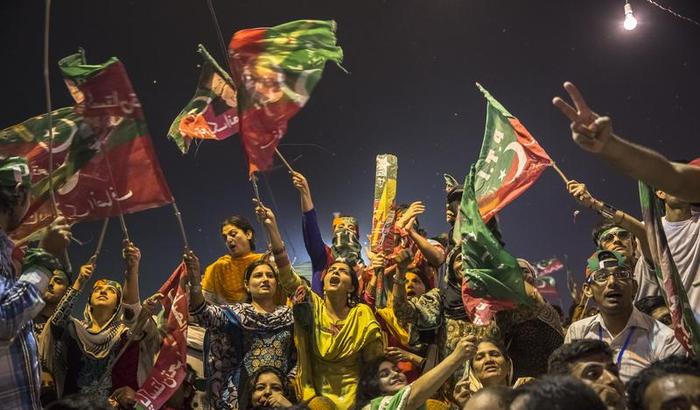
With elections set to take place on May 11, Pakistan stands at an important juncture of its history. The Election Commission of Pakistan, arguably the most independent and impartial that the country has had, is working diligently to ensure that the electoral process is free and fair. A democratically elected government could, for the first time in Pakistan’s history, relinquish power to another civilian government. Such a development, which marks a new phase in the Pakistan’s democratic struggle, indicates the need for a reassessment of U.S.
Tue, 5/7/2013 12:15 pm to 1:15 pmLocation: Carnegie Endowment – Root Room1779 Massachusetts Ave NWWashingtonDistrict of Columbia20036 The Middle East Institute is pleased to welcome Valerie Amos, the UN under-secretary-general for Humanitarian Affairs, for a discussion about the humanitarian crisis inside Syria. Now in its second year, the Syrian conflict has generated more than 1.3 million refugees and left 4.25 million internally displaced. According to the UN, some 6.8 million people are in desperate need of assistance.
This article was first published by Al-Monitor on April 28, 2013
Assertions and opinions in this publication are solely those of the above-mentioned author(s) and do not necessarily reflect the views of the Middle East Institute, which expressly does not take positions on Middle East policy.