This text has been translated by AI and may contain errors.
Skip to Content

Research & Commentary Results

Filter by
1244 Results
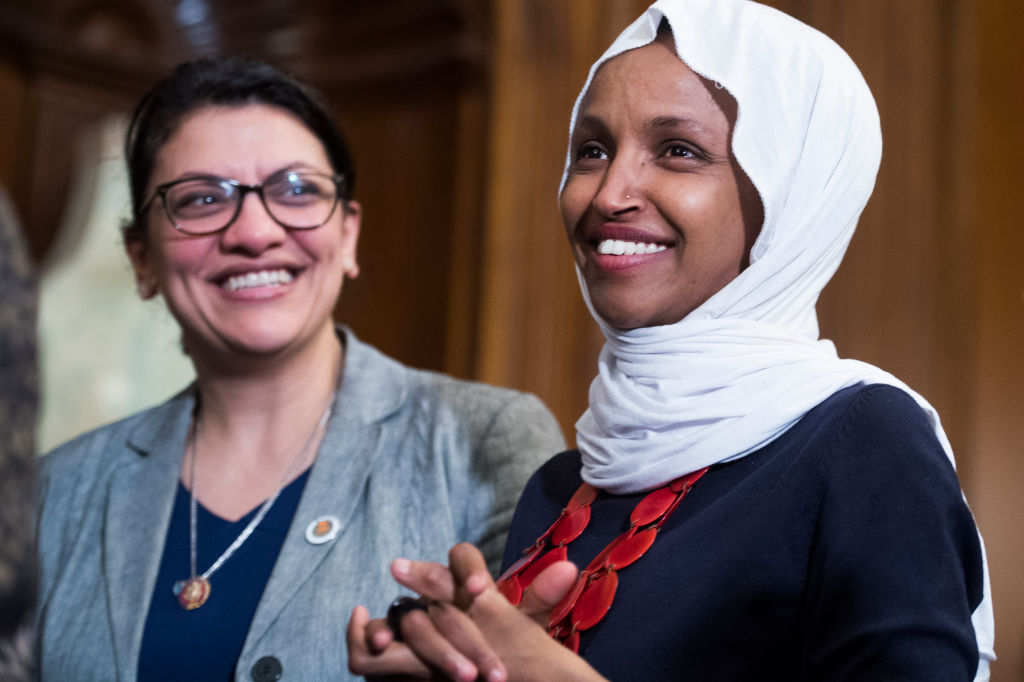
Tlaib/Omar: It’s only politics
Reps. Ilhan Omar, D-Minn., right, and Rashida Tlaib, D-Mich., attend a rally with Democrats in the Capitol to introduce the
  • Analysis
  • Tlaib/Omar: It’s only politics

    The current Rashida Tlaib/Ilhan Omar debacle has received more attention from every quarter than virtually anything other than a war. All the usual suspects have weighed in with (mostly) predictable comments, generally in the context of the long-running “special relationship” between Israel and the U.S. The two domestic political contexts are often mentioned only in passing. With all respect to those who have tried to take a longer or strategic view, I would suggest that it really boils down to the political calculations of just two men, President Donald Trump and Prime Minister Benjamin Netanyahu.

    August 19, 2019

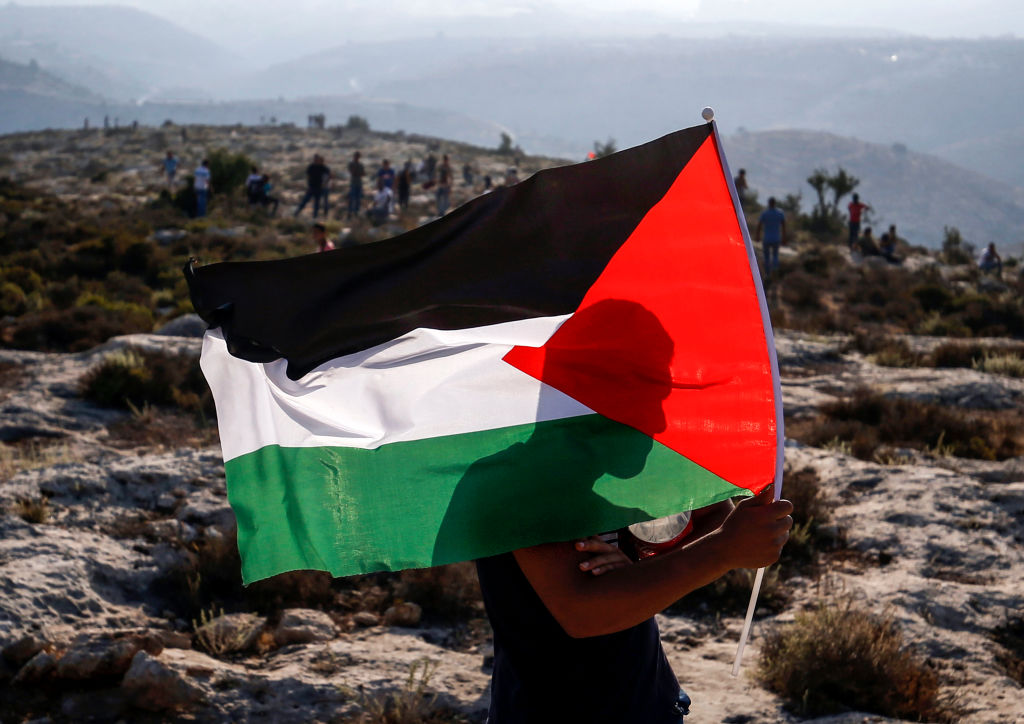
    Ambassador Friedman: Palestinians already have autonomy
    A Palestinian protester waves a Palestinian flag during a demonstration in the village of Ras Karkar west of Ramallah in the occupied West Bank on September 4, 2018.
  • Analysis
  • Ambassador Friedman: Palestinians already have autonomy

    Autonomy is normally given to a specific cultural or national group as part of a political agreement. For Palestinians, the idea that autonomy is the goal of talks is unhelpful because they already have autonomy.

    August 15, 2019

    Oman's new embassy in Palestine
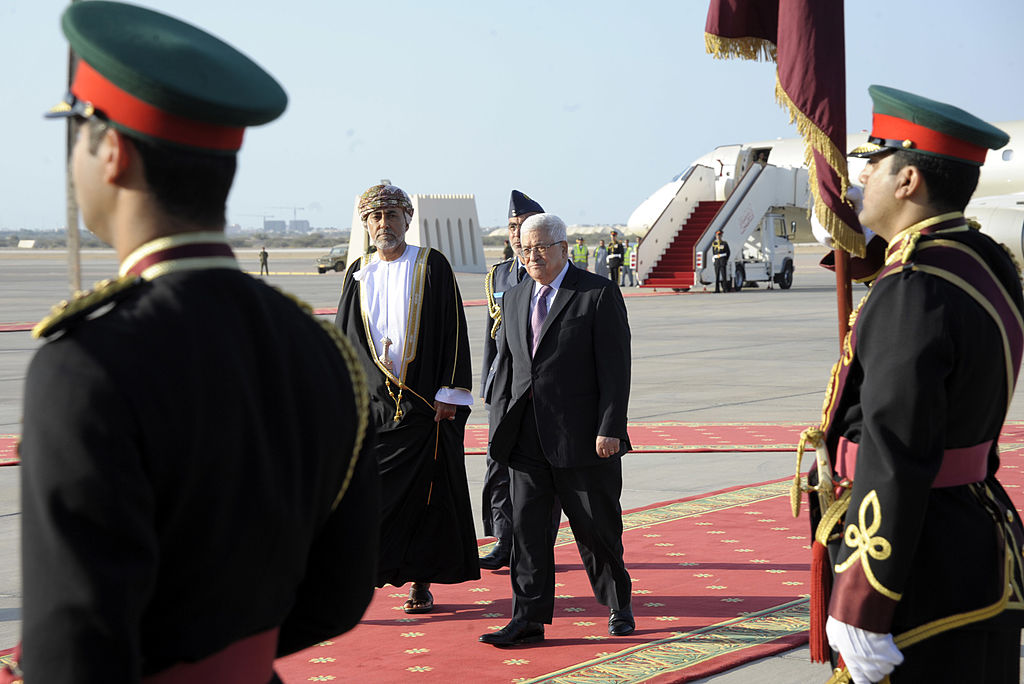
    In this handout from the Palestinian Press Office, Palestinan President Mahmoud Abbas (R) meets with Oman's Sultan Qaboos bin Said on January 14, 2010 in Muscat, Oman.
  • Analysis
  • Oman's new embassy in Palestine

    The news came eight months after Israeli Prime Minister Benjamin Netanyahu paid a visit to the Omani capital for surprise talks with Sultan Qaboos in October 2018, and four months after Minister Responsible for Foreign Affairs Yusuf bin Alawi bin Abdullah met with Netanyahu in Poland during the Trump administration’s “Peace and Security in the Middle East” summit.

    August 12, 2019

    Monday Briefing: Syria’s deadly status quo
  • Analysis
  • Monday Briefing: Syria’s deadly status quo

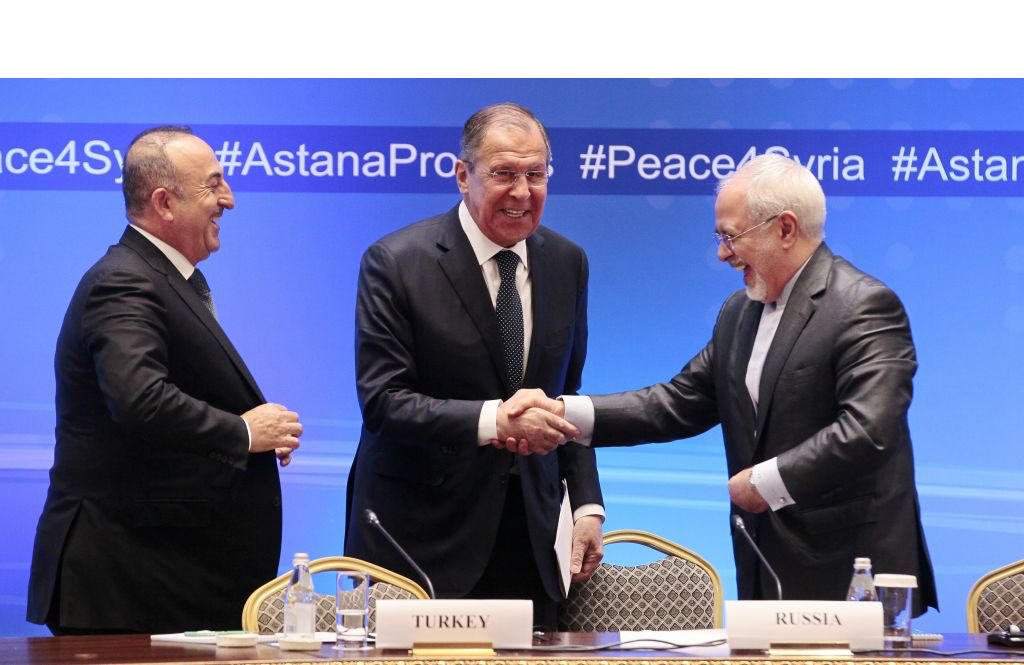
    This week’s briefing on recent news and upcoming events in the region including Kazakhstan’s upcoming “Astana talks” on Syria, Jared Kushner’s planned visit to the Middle East, the shift in US-Pakistan relations, and Abbas’ announcement that the Palestinian Authority will halt all signed agreements with Israel, featuring Charles Lister, Gerald Feierstein, Marvin G. Weinbaum, and Khaled Elgindy.

    The Gulf states, the “deal of the century,” and the Iranian threat
    Former British Prime Minister Tony Blair and Jared Kushner, U.S. President Donald Trumps senior White House adviser and son-in-law attend U.S.-led workshop in Manama, Bahrain on June 26, 2019.
  • Analysis
  • The Gulf states, the “deal of the century,” and the Iranian threat

    Many analysts have been dismissive of the plan’s prospects, but for Gulf states like Saudi Arabia, the UAE, and Bahrain, there’s at least one major reason to line up with Washington on the issue: Iran.

    July 25, 2019

    Divided over narratives: The new fault line in the Arab World
    a helicopter flying over flags at the Ithra center during the 29th Summit of the Arab League in Dhahran in Eastern Province, Saudi Arabia on April 15, 2018.
  • Analysis
  • Divided over narratives: The new fault line in the Arab World

    Many of the divisions in the Arab World today are ideological and revolve around narratives — carefully constructed ontological representations of both how the world works and how it is supposed to work conforming to clearly set out interests and values. While the old sectarian narratives might still play an underlying role, what divides Arabs from Morocco to Oman are different grand-strategic visions of the region’s future after the Arab Spring.

    July 24, 2019

    OPEC+ agrees to production-cut extension and new charter amid rising Middle East tensions
    Oil ministers attend the 176th meeting of the Organization of the Petroleum Exporting Countries (OPEC) conference and the 6th meeting of the OPEC and non-OPEC countries on July 1, 2019 in Vienna, Austria.
  • Analysis
  • OPEC+ agrees to production-cut extension and new charter amid rising Middle East tensions

    OPEC+ nations have ended speculation about whether they would continue oil production cuts by agreeing to a nine-month extension. Led by the global petroleum powers Saudi Arabia and Russia, the group agreed on July 2 to extend the current level of cuts until the second quarter of 2020.

    July 24, 2019

    The Israeli-Palestinian battle for Latin America
    Abbas leaves Palestino football club in Santiago, Chile
  • Analysis
  • The Israeli-Palestinian battle for Latin America

    With the increased influence of right-wing populism and evangelicalism, Mahmoud Abbas has seen the region’s historic commitment to the Palestinian cause wane. These internal changes, along with a pivot toward Washington, have, in turn, aided Israeli Prime Minister Benjamin Netanyahu in making further inroads on the South American continent.

    July 16, 2019

    Freshwater Resources in the MENA Region: Risks and Opportunities
    A young Palestinian draws water from a tank
  • Analysis
  • Freshwater Resources in the MENA Region: Risks and Opportunities

    A reliable supply of freshwater is a prerequisite for sustainable socioeconomic development, as well as for sociopolitical stability and human prosperity, especially in semi-arid and arid regions of the world. The Middle East and North Africa’s freshwater resources are under immense pressures and are facing significant risks to their sustainability due to overexploitation, climate change, and interstate competition over their use that extends beyond the region’s boundaries.

    July 10, 2019

    Interconnected: Trade, food security, and stability in the GCC and MENA
    An Emirati man reads the front of a package of Indian Basmati rice in a supermarket in Dubai on July 19, 2008. Faced with the scarcity of fertile land and water, and the surging world prices of food, the wealthy Gulf states are seeking to secure food supplies through agricultural investments abroad.
  • Analysis
  • Interconnected: Trade, food security, and stability in the GCC and MENA

    It is easy to overlook the fact that food security could be an issue of concern in the Gulf Cooperation Council. After all, its member states have some of the world’s highest per capita income levels. Food supplies in the Gulf are normally abundant and stable. Were they to be disrupted, however, it could lead to food security challenges and a chain of adverse consequences for human security throughout the region.

    July 9, 2019

    Russia's growing role in the Middle East
    Middle East Institute
  • Podcast
  • Russia's growing role in the Middle East

    Becca Wasser, policy analyst at the RAND Corporation, and NPR national security correspondent and MEI scholar Greg Myre join host Alistair Taylor to discuss Moscow’s growing political, economic, and military footprint in the region.

    July 3, 2019

    UNIFIL and the Lebanese Army, a worthwhile US investment
    A picture taken from Naqoura city of Lebanon shows UNIFIL bases as construction works those are being conducted by Israeli Army along the Israel-Lebanon border on April 20, 2017. Hezbollah militias hosted press members to let them observe the mined border line, known as
  • Analysis
  • UNIFIL and the Lebanese Army, a worthwhile US investment

    My colleagues and I at the American Task Force for Lebanon (ATFL) visited the LAF southern headquarters, the UNIFIL headquarters, and the Blue Line, established in 2000, separating Israel and Lebanon. We were encouraged by what we saw.

    July 2, 2019

    The Bahrain workshop and the dwindling prospects for Israeli-Palestinian peace under Trump
    US-led economic conference in Bahrain MANAMA, BAHREIN - JUNE 26: Former British Prime Minister Tony Blair (R) and Jared Kushner (L), U.S. President Donald Trumps senior White House adviser and son-in-law attend U.S.-led workshop in Manama, Bahrain on June 26, 2019. U.S.-led conference opened in Bahrain on Tuesday, during which U.S. officials are expected to unveil the economic portion of the American back-channel Middle East peace plan known as
  • Analysis
  • The Bahrain workshop and the dwindling prospects for Israeli-Palestinian peace under Trump

    The Trump administration’s economic workshop in Bahrain produced some noteworthy moments that reflected recent changes in Israeli-Gulf relations, but it fell well short of its original declared intent. Neither Israeli nor Palestinian officials attended, and it did not conclude with any tangible steps to advance the peace process.

    June 28, 2019

    Gas heats up the Eastern Mediterranean
    Worker at a gas refinery in the Western Desert, Egypt
  • Analysis
  • Gas heats up the Eastern Mediterranean

    Competition for security and energy is at the center of recent developments in the Eastern Mediterranean. Countries from Egypt to Turkey are moving to secure, exploit, and market their (not always fair) share of the game-changing offshore natural gas reserves. Russia, China, and Iran are securing port facilities, and in the case of Russia, drilling rights, in Lebanon and Syria. 

    June 25, 2019

    Monday Briefing: Bahrain workshop is little more than a kabuki show
  • Analysis
  • Monday Briefing: Bahrain workshop is little more than a kabuki show

    In this week’s Monday Briefing, MEI experts Gerald Feierstein, Guney Yildiz, Nathan Stock, Elizabeth Dent, and Eran Etzion provide analysis on recent and upcoming events including this week’s Bahrain “workshop” on Palestine’s economic development, an opposition victory in Istanbul’s rerun election, the release of a portion of the Trump administration’s Israel-Palestine peace plan, the fracturing of the Global Coalition to Defeat ISIS, and Tuesday’s trilateral meeting between the U.S., Israel, and Russia.

    June 24, 2019