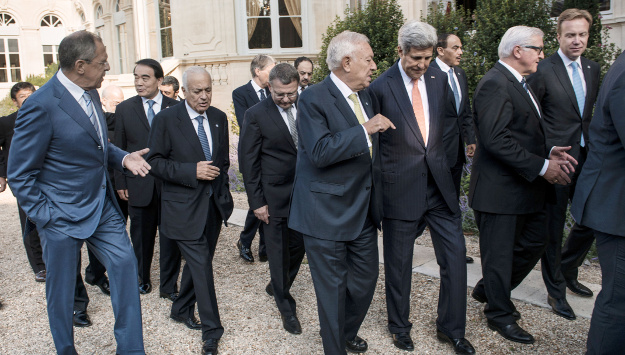
One way to grasp the immense difficulty facing President Obama as he tries to forge an effective international coalition to oppose the Islamic State is to examine the difference between this effort and the last time the United States led a diverse group of countries to take on a conflict in the Middle East: Operation Desert Storm, in 1991.
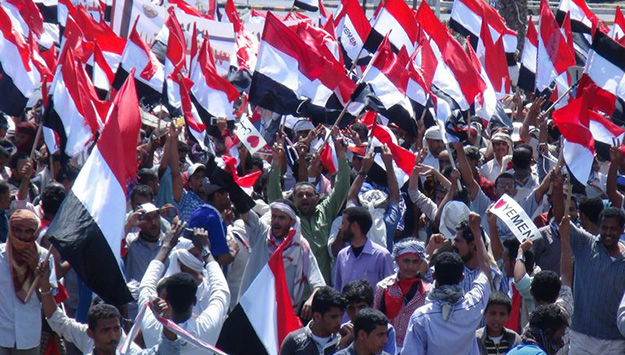
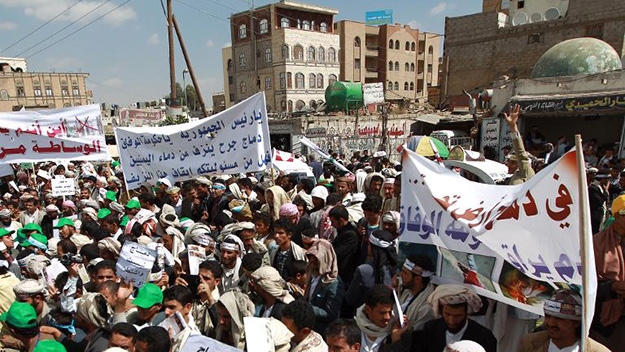
After capturing Amran in mid-summer, the emboldened Huthi movement (Ansar Allah) began a fall campaign against the national capital, surrounding Sana‘a with armed camps, organizing large demonstrations around government buildings inside the city, and demanding that the government repeal its recent decision to lift fuel subsidies before resigning. Tensions turned bloody on September 9 when gunfire broke out as Huthi demonstrators tried to force their way into the Prime Minister’s office in downtown Sana‘a.[1]
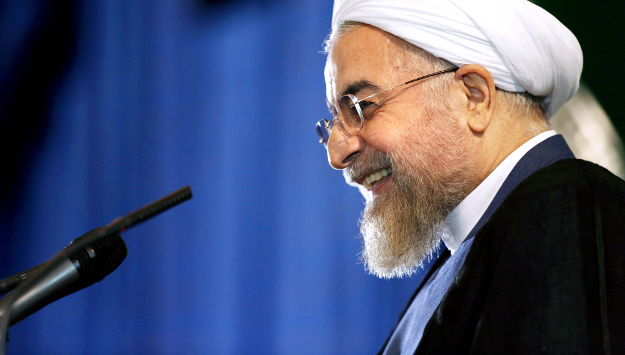
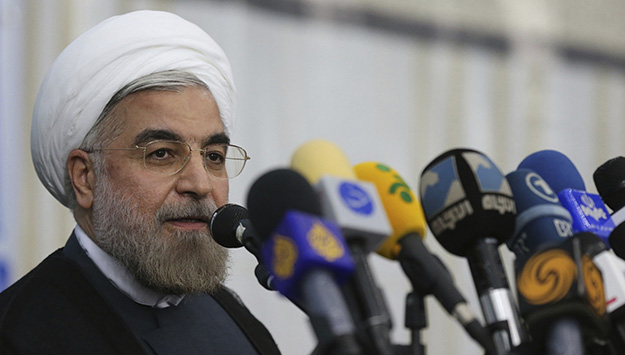
After a year of hesitation, Iranian president Hassan Rouhani is signaling his readiness to reach out to Tehran’s chief regional rival—Saudi Arabia. Last week, a top official was sent to Riyadh; he was the most senior Iranian visitor to the country since Rouhani’s election in June 2013.
The Fall of Amran and the Future of the Islah Party in Yemen
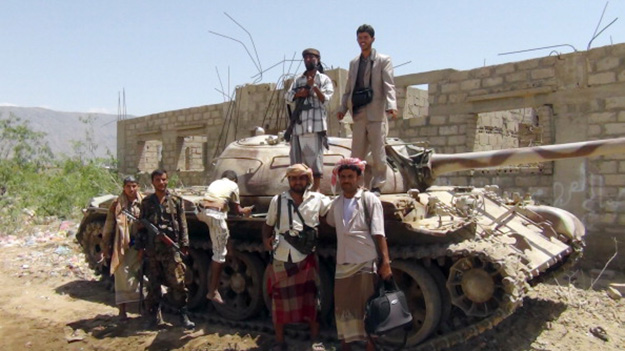
As the world’s attention was riveted on the lightening conquests of the Islamic State in Iraq, Yemen’s al-Huthi movement made an equally stunning but largely unnoticed military advance on Amran Governorate and captured the provincial capital, Amran, in July. The fall of Amran has extraordinary political significance: The al-Huthi advance dislodged the al-Ahmar family’s grip on the leadership of the Hashid tribal confederation, a central political pillar of the Yemeni Republic since 1962, and threatens the survival of the Islah Party itself.
This week’s visit to Tehran by the Kuwaiti emir, Sheik Sabah al-Ahmad al-Sabah, is about more than Iranian-Kuwaiti relations. It might even be a pivotal moment in the shaping of Iran’s ties with the Arab countries across the Gulf. Kuwait, which currently holds the rotating presidency of the Gulf Cooperation Council (GCC), is acting as a conduit for the collective unease that the GCC’s six member states, particularly Saudi Arabia, have about Iran’s regional policies.
Geography alone should make the Arab world Iran’s key foreign policy focus. Of Iran’s 13 immediate neighbors, seven are Arab countries.[1] But Tehran’s approach to the Arab world, with its 22 states extending from North Africa to the Arabian Peninsula, varies widely in intensity, and Iran’s objectives are equally varied depending on the country in question.
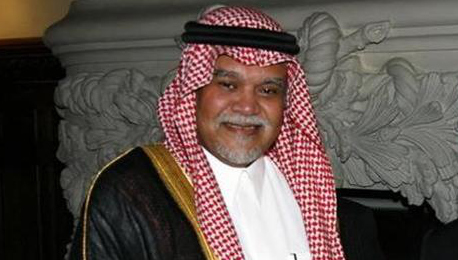
It might be a mistake to jump to conclusions about the removal of Prince Bandar bin Sultan from his post as chief of Saudi Arabian intelligence. When it comes to senior jobs held by the royals, the Kingdom’s decision-making process is entirely opaque and there is no way to know at this point whether the flamboyant former ambassador to the United States was pushed out or bailed out.
The Popular Committees of Abyan, Yemen: A Necessary Evil or an Opportunity for Security Reform?
In early 2011, Yemeni youths took to the street to demand the downfall of the regime and much-needed democratic reforms. This eventually led to the removal of former president Ali Abdullah Saleh from power later the same year. The political turmoil associated with the uprising has resulted in an alarming deterioration of the security situation throughout the country, most notably the seizure of two major cities in the southern governorate of Abyan by Ansar al-Shariah (AAS), an offshoot of al-Qa`ida. Backed by the Yemeni government, the Popular Committees (PCs), local armed resistance groups, pushed AAS out of major cities in Abyan.
Yemen’s Contentious Transitional Justice and Fragile Peace
Yemen was not immune to the wave of popular uprisings that swept some countries of the Middle East and North Africa region. However, because of the Yemeni state’s fragility, concurrent zones of conflict, and a power struggle that divided the core military and tribal elites, the international community was afraid that the youth uprising that started in January 2011 might lead to a collapse of the state. Given the consequences of such a collapse on the security of the Gulf states, oil production, and the international war on terror, the Gulf Cooperation Council brokered a deal in November 2011—the Gulf initiative—which laid the foundation for a transitional government. The main aim of the initiative was to secure a peace deal that halted Yemen’s slide into chaos. Peace was sought through the brokering of an inclusive National Dialogue Conference (NDC), but peace did not entail changing the regime or its pattern of politics. While transitional justice has been a part of this process of peaceful reconciliation, it raises questions about the sustainability of this peace and provides a showcase of the precarious state of Yemeni affairs.
Osama bin Laden may be dead, but his ghost was in Riyadh the other day, hovering over Saudi Arabia’s King Abdullah as he issued a decree making it a crime for any Saudi citizen to take part in a war outside the kingdom.
The obvious motivator was the civil war in Syria, where hundreds of young Saudis have been spotted in the ranks of the most radical jihadi groups battling both the government and other less extreme rebels. But the roots of the king’s action, and the problem it was designed to address, can be traced to the 1980s war against the Soviet occupation of Afghanistan.
The removal of Yemeni President Ali Abdullah Saleh in 2011 has created an existential crisis for Yemen’s Houthis. Like many other armed political groups in Yemen and elsewhere, the Houthis’ survival depends on the continued existence of an enemy. With Saleh gone, their raison d’être has become difficult to define and their armed opposition hard to defend.
Saudi Arabia & the Arab Gulf’s Disappointment with U.S. Policy
Whether Saudi Arabia takes a seat on the United Nations Security Council or not, the initial snub is aimed primarily at the United States. In particular, U.S.-Saudi relations are in for an exceptionally difficult period—perhaps a return to the policies of King Faisal bin Abdulaziz. It appears that Saudi Arabia and the Arab Gulf now share the view of Sir Charles Johnston, a British diplomat in the 1960s, who offered the following assessment of U.S.
The members of the Friends of Yemen, comprising over 30 governments and several international institutions, including the United Nations, World Bank, Arab League, and European Union, gathered for their sixth meeting September 25 in New York on the margins of the UN General Assembly. Chaired by the governments of Yemen, Saudi Arabia, and the United Kingdom, participants praised Yemen’s efforts to implement a political transition through inclusive and comprehensive dialogue and negotiation—a stark contrast to the course of events in better-known Syria and Egypt.