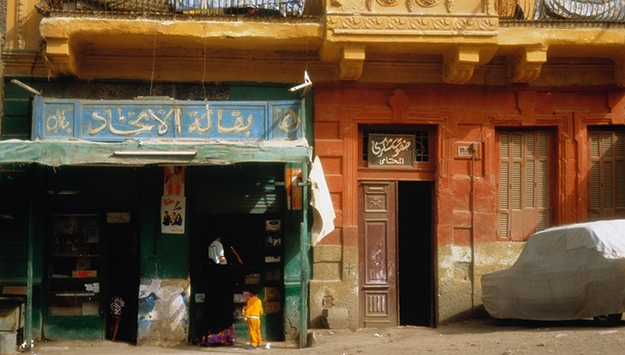
In mid-June, just before Ramadan, the pre-dawn calm of downtown Cairo was shattered by the sound of heavy machinery. The municipality had decided to repair the battered sidewalks, a fairly regular occurrence since shoddy concrete tiles are typically used for the job. Truckloads of sand were deposited at intervals along the main boulevards to be spread as a bed for the new tiles, while much of the rubble from the old ones was left piled by the curbs. To avoid the rough new terrain pedestrians took to the streets with the cars.
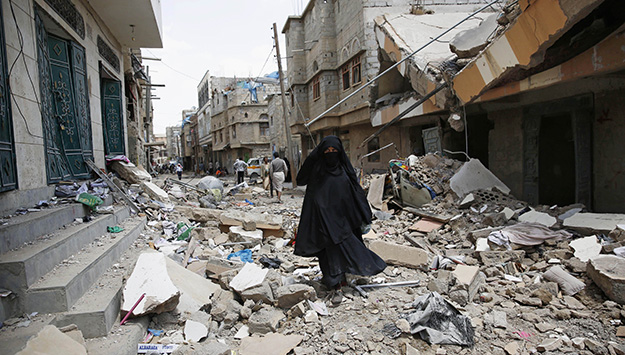
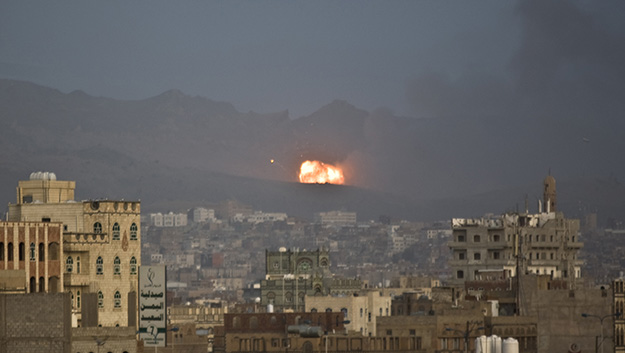
Hadi flip-flopped again. On Thursday, September 10, Yemeni President Abdu Rabbu Mansour Hadi announced that the government would meet with the Houthi rebels directly and without any conditions at the UN-sponsored negotiating table. As the military buildup for the assault on Sana reaches its final stages, Hadi’s announcement came with a sense of relief that Sana, having endured six months of bombardment from the Saudi Air Force, would be spared a ground assault. But two days later, Hadi reversed and
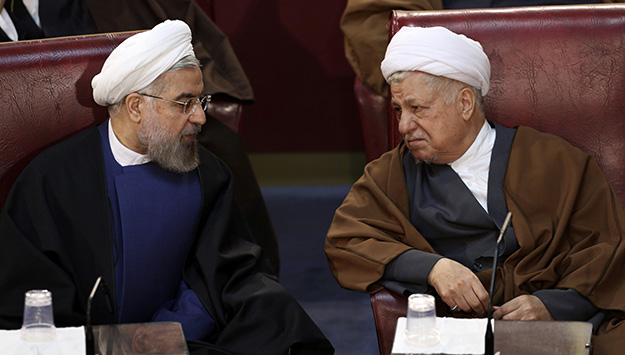
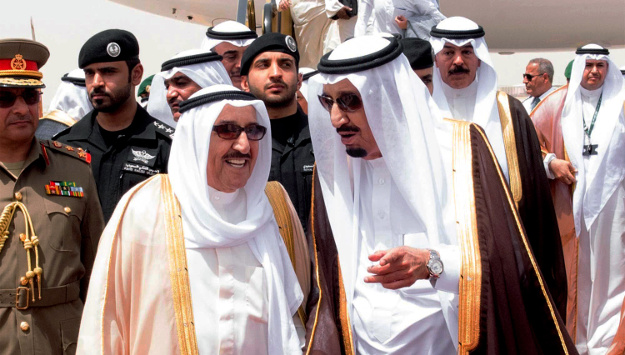
Looking to capitalize on the momentum from the July 14 nuclear deal, the moderate government of Iranian President Hassan Rouhani is now seeking ways to reduce tensions with its regional rivals, particularly Saudi Arabia. This is no small task. Not only must Rouhani convince his domestic critics that mending ties with their arch rival is in Iran’s interest, but he must also get a read on Riyadh’s new leader, King Salman, and the ruling elite.
Italian energy company Eni announced on August 30 that it had discovered a deep-water gas field 93 miles north of Egypt’s Mediterranean coast.[1] The field, named Zohr, holds an estimated 30 trillion cubic feet (cft)[2] of natural gas (NG) reserves, potentially making it the twentieth largest in the world and the largest in the Mediterranean.
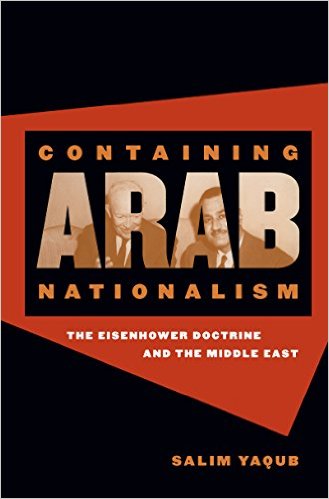
Collection Spotlight: Containing Arab nationalism: the Eisenhower doctrine and the Middle East
Under the threat of an increasingly influential Communist Soviet Union, in the mid-twentieth century the United States became more and more involved in Middle Eastern affairs. Struggling to reconcile its goals of containment, access to oil, and Israeli security, the U.S. government implemented a historic doctrine that pledged increased economic and military aid to the region in exchange for political allegiance.
The Multinational Force of Observers and the Sinai Storm
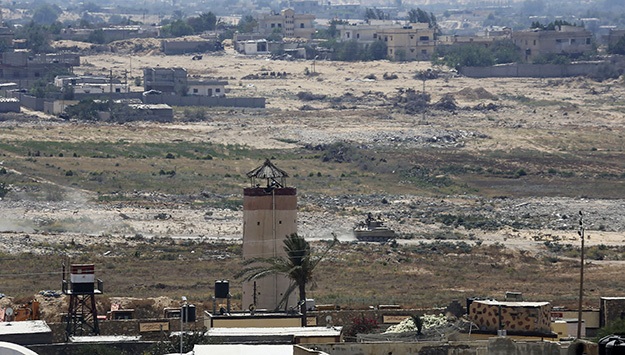
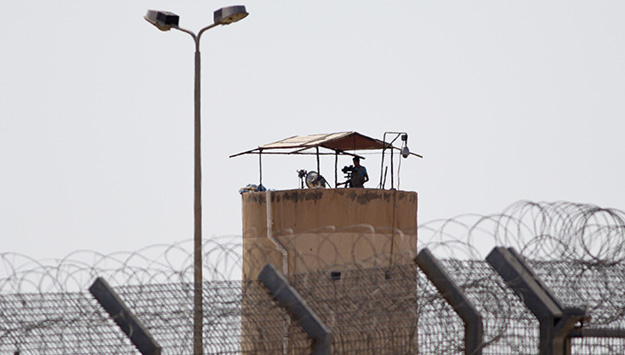
The 1,667-strong contingent of U.S. and international forces that make up the Multinational Force of Observers (MFO) in Egypt’s Sinai Peninsula is in a tough spot. The ongoing failure of the Egyptian government’s war against the ISIS-led rebellion there has shredded the MFO’s mandate to monitor Egyptian and Israeli adherence to their peace treaty. Sinai’s descent into anarchy also puts outnumbered and outgunned U.S. troops in the only location other than Iraq that confronts ISIS in an active theater of war.
Education: The Key to Women’s Empowerment in Saudi Arabia?
In recent news from Saudi Arabia: religious police filmed berating a fully veiled woman for not wearing gloves; a cleric’s fatwa against women watching football to prevent them from staring at men’s thighs; and a woman sentenced to 70 lashes for insulting her husband on WhatsApp.[1] At the same time, the Saudi education ministry released statistics showing that women constitute almost 52 percent of university graduates inside the kingdom, while more than 35,000 female Saudis studied abroad in 2014.
Improved Egypt-Israel Relations through Sinai Crisis: Will They Last?
Egyptian diplomats rarely have a good word to say about U.S. policies these days. In contrast, they are enthusiastic in their praise of the close relations between Cairo and Jerusalem—centered on counterterror security and intelligence cooperation in Sinai—and effusive in their acknowledgement of Israel’s response to the bloody insurgency there, led by Egypt’s ISIS affiliate in the “Sinai Province,” Ansar Beit al-Maqdis.
“Relations with Israel are great,” observed an Egyptian official recently.[1]
For Egypt’s low-income majority, weddings are the prime source of group entertainment, celebrated like block parties in cramped streets decorated with arabesque tapestries and drenched in colored lights and sound. You won’t hear romantic crooning at these gatherings; in Cairo’s densely-inhabited popular quarters, wedding parties are more akin to raves. The music is raw synthetic beat embroidered with syncopated tabla (Egyptian drum) samples and queasy electronic loops.
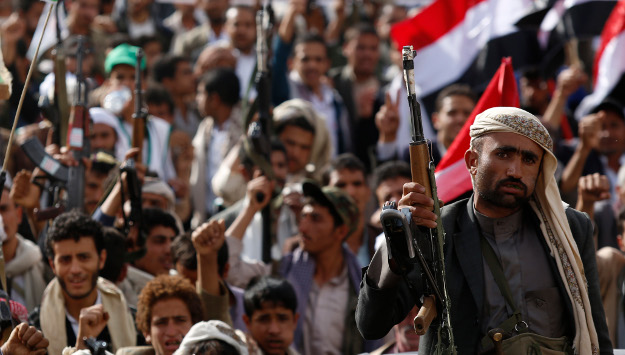
Three months after Saudi Arabia rounded up a few allies and began an intensive bombing campaign against the rebels known as Houthis across the border in Yemen, a conventional wisdom has developed. “It has not worked,” as The New York Times put it in a front-page article, and it probably can’t work because the strategic goals are too murky, the factions are too entrenched, the rivalries are too intense, and the conflict is too complicated to be resolved by a simplistic solution.
Saudi Arabia is a Sunni-majority state and home to a significant Shi‘i minority, most of whom live in the Eastern Province. The Shi‘a there are mainly of the Twelver sect, which is also the major Shi‘i sect in Iran, Iraq, Kuwait, and Bahrain. The Eastern Province Twelvers are not the only Shi‘a in Saudi Arabia—there are sizable communities of Twelvers in Medina and Isma‘ilis in Najran—but it is they who sit at the center of the Shi‘i political movement in the kingdom.
In the unending panorama of violence that is today’s Middle East, one hopeful note emerged earlier this month with a low-key announcement from Saudi Arabia that drew scant attention from the American news media.
King Salman appointed a military officer, Gen. Thamer al-Sabhan, to be the kingdom’s first resident ambassador in Baghdad since Iraq invaded Kuwait in 1990.
The terrorist group known as the Islamic State (ISIS) has its eyes set on Saudi Arabia. Months of threatening to conquer “The Land of the Two Holy Mosques” culminated in an audio message in mid-May delivered by the leader of the group, Abu Bakr al-Baghdadi, in which he referred to Saudi Arabia’s government as “apostate leaders.” Since then ISIS has begun carrying out terrorist attacks inside the Kingdom. Two weeks in a row, individuals affiliated with ISIS have conducted suicide attacks against mosques in the Eastern Province, where the majority of Saudi Shi’a live.
Deradicalization Programs in Saudi Arabia: A Case Study
This paper is part of a series, titled “Understanding Deradicalization: Pathway to Enhance Transatlantic Common Perception and Practices.” Click here to view the full series, or navigate using the table of contents to the right.
Negotiating Yemeni Peace: Deep Divisions and Hard Realities
After initially rejecting the UN call for talks, the Saudi-backed Abdu Rabbu Mansour Hadi faction reversed its position and agreed to meetings in Geneva on June 14.