This text has been translated by AI and may contain errors.
Skip to Content

Research & Commentary Results

Filter by
1369 Results
Oman plays it safe on Israel
  • Analysis
  • Oman plays it safe on Israel

    Since Aug. 13, speculation has been rife that the Sultanate of Oman will soon follow the United Arab Emirates’ (UAE) lead and formalize full-fledged ties with Israel. Yet, at least thus far, Muscat has refused to join the UAE, Bahrain, and now Sudan in normalizing relations with Tel Aviv. As a moderate Arab country, where tolerance is firmly embedded into the national ethos and the Ibadi sect of Islam, Oman appears to be maintaining a balanced position on the overall Arab trend toward normalizing relations with Israel. Muscat’s positive reaction to the Abraham Accords is not a major change in strategy and is more illustrative of Oman’s longstanding position on normalization.

    October 27, 2020

    The 2020 American election: A view from the Gulf
    President Donald Trump answers a question as Democratic presidential candidate former Vice President Joe Biden listens during the second and final presidential debate at Belmont University on October 22, 2020 in Nashville, Tennessee. This is the last debate between the two candidates before the election on November 3.
  • Analysis
  • The 2020 American election: A view from the Gulf

    The upcoming American presidential election is top of mind for the Arab Gulf states. This is no surprise as there is so much at stake for them. As the race enters its final critical week, all eyes are on who will occupy the White House for the next four years — and the Arab Gulf states have their preferences. America is still indispensable to Gulf security, but the Gulf is also becoming an indispensable regional partner for whoever wants to lead the world in the 21st century. Today both sides need each other more than ever before.

    October 23, 2020

    Regional transit trade isn’t enough to drive Pakistan’s Gwadar Port
    In this photograph taken on October 4, 2017, Pakistani labourers walk through Gwadar port. Remote and impoverished, Pakistan's Gwadar port at first glance seems an unlikely crown jewel in a multi-billion dollar development project with China aimed at constructing a 21st century Silk Road. Situated on a barren peninsula in the Arabian Sea, Gwadar, or the
  • Analysis
  • Regional transit trade isn’t enough to drive Pakistan’s Gwadar Port

    Landlocked Afghanistan has begun using the Chinese-operated Pakistani port of Gwadar for transit trade — a development Pakistani officials see as marking the start of Gwadar’s role as a gateway port through the China-Pakistan Economic Corridor. Pakistan’s hope to develop the Arabian Sea port into a gateway for Afghanistan, Central Asia, and China’s Xinjiang region has been a long-standing one — and it is misguided. Islamabad should instead focus on local drivers to build the port and use it as a vehicle to develop the impoverished, but resource-rich region of southern Balochistan.

    October 14, 2020

    Prospects for the intra-Afghan talks in Doha
    Middle East Institute
  • Podcast
  • Prospects for the intra-Afghan talks in Doha

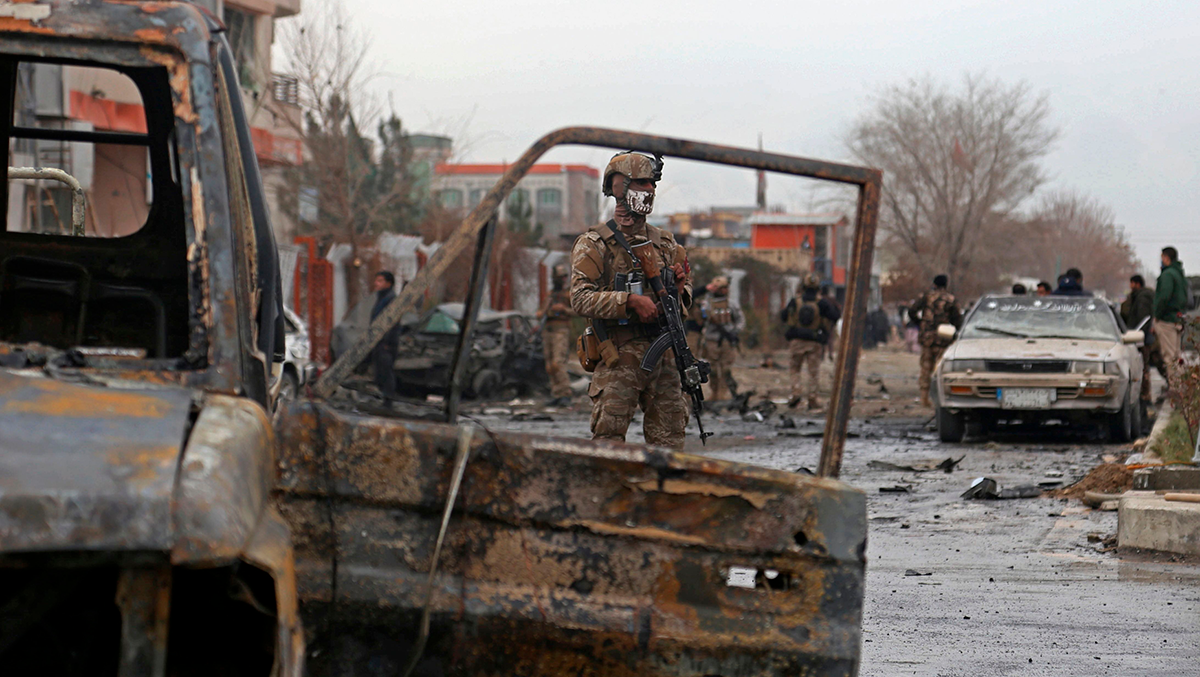
    Omar Samad and Marvin Weinbaum join host Alistair Taylor to discuss what to expect from the intra-Afghan talks underway in Doha, the ongoing violence on the ground in Afghanistan, and the challenges facing Afghan security forces as the US continues its troop drawdown.

    More episodes

    October 6, 2020

    Pakistan's Israel dilemma
  • Analysis
  • Pakistan's Israel dilemma

    On Sept. 13, Bahrain recognized Israel at a ceremony attended by US President Donald Trump at the White House. With the stroke of a pen, Bahrain became the fourth Arab state to have forged official ties with Israel, following in the footsteps of Egypt (1979), Jordan (1994), and most recently, the UAE (Aug. 13, 2020).

    October 6, 2020

    America in Afghanistan
    Photo by BRENDAN SMIALOWSKI/AFP via Getty Images
  • Analysis
  • America in Afghanistan

    In the recently released Showtime documentary “Kingdom of Silence” by Alex Gibney and Lawrence Wright, I made the statement that with hindsight the U.S. may have been better off never having occupied Afghanistan. That comment has brought some questions and responses, so let me be clear about what I mean and why.

    October 5, 2020

    What are the implications of the passing of Kuwait’s emir, Sheikh Sabah?
    Photo by BANDAR ALGALOUD/SAUDI ROYAL COUNCIL/HANDOUT/Anadolu Agency/Getty Images
  • Analysis
  • What are the implications of the passing of Kuwait’s emir, Sheikh Sabah?

    With the announcement that Kuwait’s long-time ruler, Sheikh Sabah al-Ahmad al-Sabah, had passed away, on Sept. 29, at the age of 91, the Gulf states lost their second senior statesman of 2020 following the death of Sultan Qaboos of Oman at the beginning of the year. Like Qaboos, Sheikh Sabah played an outsized role within the GCC as well as in regional and international affairs.

    October 1, 2020

    Monday Briefing: Will Russia and Turkey face off over Nagorno-Karabakh?
  • Commentary
  • Monday Briefing: Will Russia and Turkey face off over Nagorno-Karabakh?

    This week’s briefing on recent news and upcoming events in the region featuring Maxim A. Suchkov, Ibrahim Jalal, Eliza Campbell, Alex Vatanka, and Marvin G. Weinbaum.

    September 28, 2020

    Iran, the GCC, and the failure of HOPE
    Photo by Drew Angerer/Getty Images
  • Analysis
  • Iran, the GCC, and the failure of HOPE

    Last September, at the 74th session of the U.N. General Assembly, Iranian President Hassan Rouhani proposed the optimistically named “Hormuz Peace Endeavor” (HOPE). Over the past year, however, Iran’s plan has failed to gain any traction with the GCC states, even as the region’s security environment has fundamentally changed in ways that are detrimental to the Islamic Republic.

    September 24, 2020

    China and the Abraham Accords Peace Agreement
    (Photo by SAUL LOEB / AFP) (Photo by SAUL LOEB/AFP via Getty Images)
  • Analysis
  • China and the Abraham Accords Peace Agreement

    On September 15, President Trump presided over a ceremony on the South Lawn of the White House where Prime Minister Benjamin Netanyahu of Israel and the foreign ministers of the United Arab Emirates (UAE) and Bahrain, Abdullah bin Zayed Al Nahyan and Abdullatif Al Zayani, respectively, signed a general declaration of principles, called “The Abraham Accords.” Numerous analysts have focused on the regional impact of the normalization of relations between Israel and these two Gulf Arab countries. However, this development has worldwide geopolitical implications — including for China.

    September 22, 2020

    The Taliban holds the upper hand in intra-Afghan talks
    Photo by US Department of State/Handout/Anadolu Agency via Getty Images
  • Commentary
  • The Taliban holds the upper hand in intra-Afghan talks

    The ongoing intra-Afghan talks confirm, without a doubt, that the Taliban is negotiating from a position of remarkable strength. After being overthrown by the military of the world’s sole superpower two decades ago, the Taliban’s resurgence is a perfect example of what happens when a counterinsurgency campaign fails to eliminate its target’s safe havens. The Doha negotiations have also underlined the ugly reality of the Afghan conflict — that firepower alone cannot crush an insurgency when its narrative has some resonance with the local people.

    September 21, 2020

    The benefits and challenges of UAE-Israel normalization
    Photo by JACK GUEZ/AFP via Getty Images
  • Analysis
  • The benefits and challenges of UAE-Israel normalization

    Israel and the United Arab Emirates (UAE) have initiated a process that, if it comes to fruition, will bring about the normalization of relations between the two countries. The broader geostrategic challenges that the agreement could pose for Israel and the UAE have not been part of the public discourse, however, and any balanced treatment requires a discussion of those aspects as well.

    Is the Israel-UAE agreement a game changer for Israel?
    Photo by Alex Wong/Getty Images
  • Analysis
  • Is the Israel-UAE agreement a game changer for Israel?

    In an Aug. 13 tweet, U.S. President Donald Trump celebrated the Israeli-Emirati accord to normalize relations as a “HUGE breakthrough.” Israel’s integration into the region has been a goal of U.S. and Israeli foreign policy for decades, and the mid-August announcement was the first major official step in that direction in over 25 years. But is this really a game changer for Israel’s strategy in the Middle East?