The thirteen students in the class at the American University of Cairo were mid-career professionals working on graduate degrees in education. We had spent two hours discussing my book of case studies in education assistance when one student raised her hand: “Look, we intend to reform Egypt’s education system. Can you please just give us the steps we need to follow?”
Egypt and the Dynamics of Transition and Revolution
Today, more than a year after the Tahrir Square protests toppled the Mubarak regime, tension remains between the old guard and the new. As the Muslim Brotherhood works to assert political authority, the military elite, as represented by the Supreme Council of the Armed Forces, seeks to retain some vestige of power in government. Dr. Ghabra posits that the ongoing attempts on the part of the SCAF to retain control over Egypt's political future will not succeed, given the new political awareness and involvement of Egyptian citizens.
Dr. George Gavrilis of the Hollings Center for International Dialogue will serve as the discussant. The talk will focus on Younis's recent publication in the Turkish Policy Quarterly on the role of Turkey in a changing MENA region and the potential influence it can have on the process of democratization in Egypt. Younis will also share some insights from Gallup's polling in other Arab Spring countries on the public's perceptions of the challenges facing their nations following the uprisings of 2011.
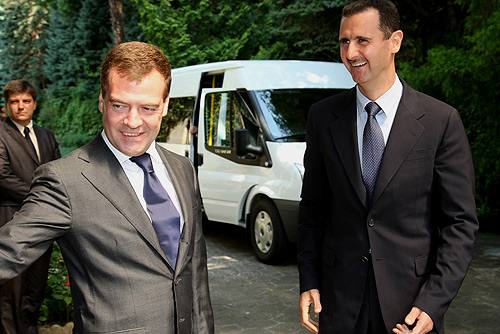
The Russian government, like its counterparts in the West, the Middle East, and elsewhere, was caught off guard by the outburst of Arab uprisings beginning in January 2011 that swept away long-ruling authoritarian regimes in Tunisia, Egypt, Libya, and (it appears) Yemen, and have threatened to topple those in Bahrain and Syria. The response of the Russian government to these events has, like that of Western governments, often been confused and inconsistent. Just as Western governments have done, Moscow has sought to protect its interests in the region.