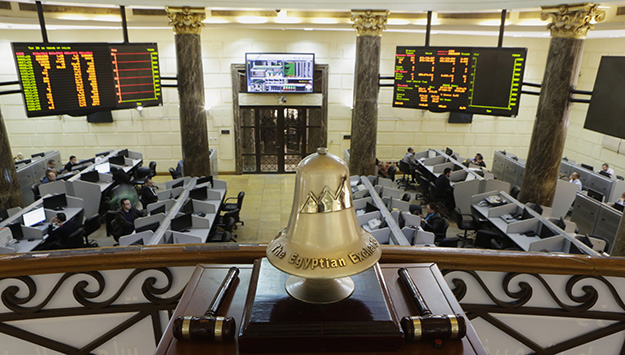
On March 13, Egyptian President Abdel Fattah el-Sisi will inaugurate the Egypt Economic Development Conference in the resort city of Sharm el-Sheikh. The main objective of the conference is to put Egypt back on the world investment map. Sisi’s government is aiming to achieve a target of $60 billion of foreign investment in the coming five years. This ambitious amount would close Egypt’s resource gap and would generate sufficient growth to absorb growing unemployment.
As 2014 drew to a close, the Egyptian economy was making international headlines. The Financial Times called Egypt the world’s best destination for stock market investment.[1] Meanwhile, the Egyptian press documented a flurry of visits by delegations of businessmen from various economic superpowers.
Mohammed Dahlan is making a comeback, and not for the first time since his ignominious ouster from Gaza almost eight years ago, when the Palestinian Authority (PA) forces he was leading as the PA’s security chief were routed by Hamas. These days, the 53-year-old, who grew up in the poorest of Gaza’s refugee camps, is seeking to do well for himself by doing good for Gaza.
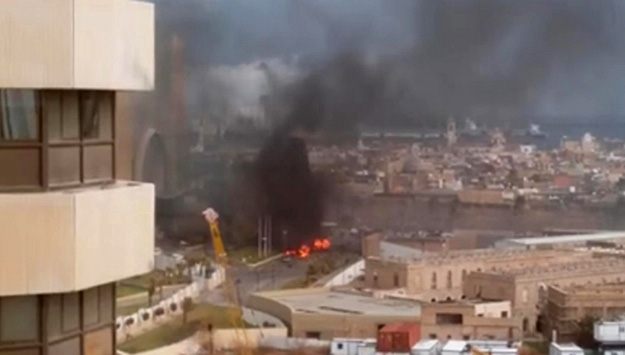
“Crises left to fester sometimes find their own way to the front burner.” Written on January 5, 2015, this sentence reflected my fear that starving Libya of high-profile international attention was increasingly risky. The beheading of 21 Egyptian Coptic Christians in Libya by Islamic State (ISIS) extremists this week appears to have placed the situation in Libya front and center.
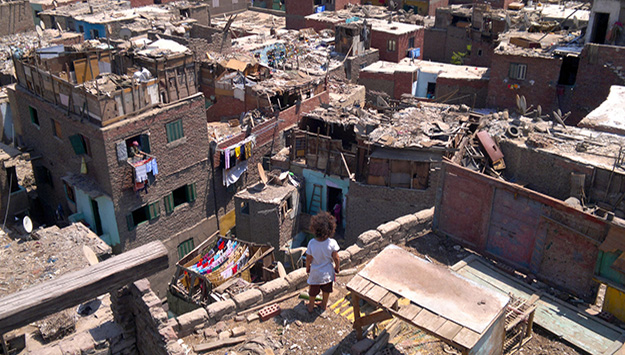
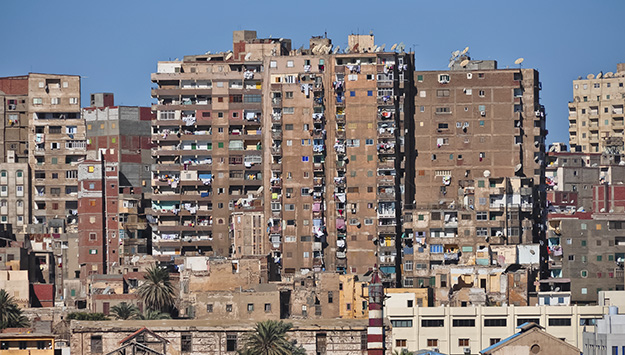
The government of former Egyptian President Hosni Mubarak had a vision for Cairo’s future. In 2007, it put forth a plan dubbed “Cairo 2050,” and among its objectives was to create wide avenues, green spaces, and new or revamped tourist sites, such as near the Pyramids.
Egypt's Security Challenge: ISIS, Sinai, and the Libyan Border
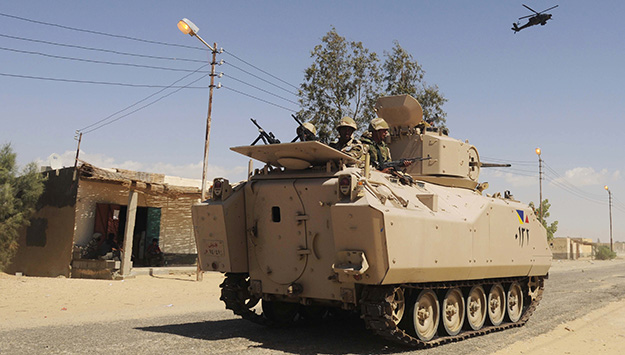
On January 28, 2015, jihadis in Sinai launched multiple, simultaneous attacks against Egyptian security forces in the vicinity of El Arish and the nearby towns of Sheikh Zuweid and Rafah. These attacks occurred only hours after President Abdul-Fattah el-Sisi said that he would die defending the region from terror. “We will never leave Sinai,” Sisi said. “Sinai is ours.
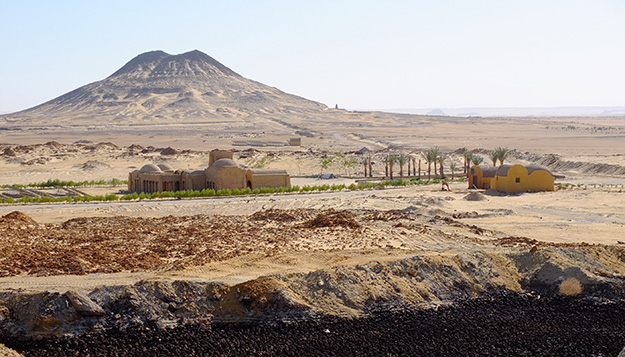
At the Bahariya Oasis 235 miles southwest of Cairo, the mountains of the Western Desert are interrupted by vast circular patterns of greenery. On one of these large farms, in striking contrast to the ancient, wind-shaped sandstone in the background, solar panels stand in neat rows. Here at the center of the largest hyper-arid region on earth, KarmSolar, a three-year-old Egyptian solar energy start-up company, has built its headquarters.
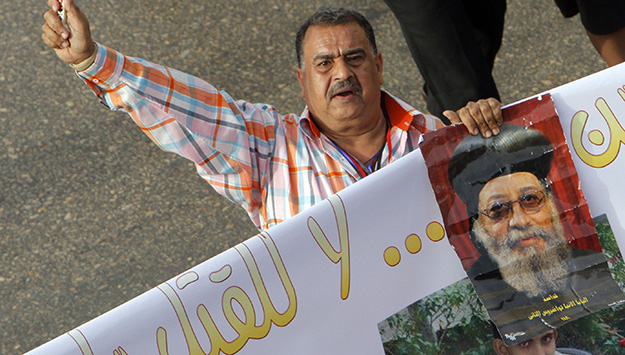
During and immediately following the 2011 Egyptian uprising, Coptic activism reached new heights. Copts organized and came together to call for protection for their communities and rights more generally. However, particularly since the fall of the Muslim Brotherhood and the election of President Abdul-Fattah el-Sisi, such activism has declined. Today, the number of active, effective Coptic movements can be counted on one hand. This leaves the church carrying the mantle of Coptic identity, allowing the pope to decide whether or not to engage in politics.
The Syrian Opposition Meeting in Cairo: One Small Step
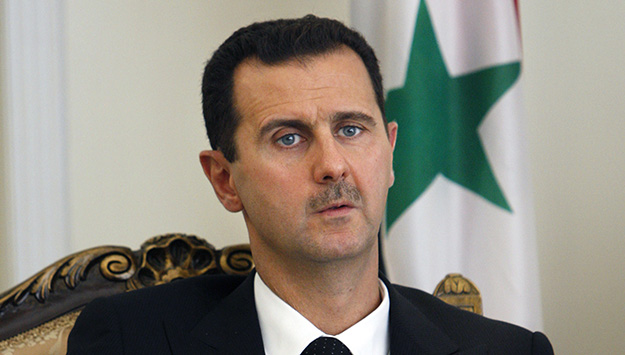
Around 100 Syrian opposition figures recently concluded a conference in Cairo. The meeting was noteworthy for two reasons. It signaled Cairo’s cautious but unmistakable entry into the Syrian minefield, and it marks the still-fragmented opposition’s first careful steps in the direction of a compromise with the Assad regime.
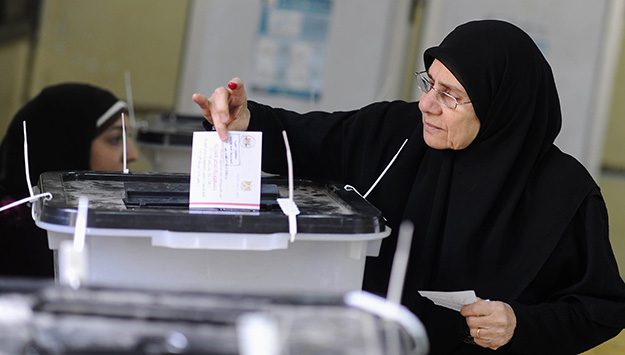
Long-awaited elections for Egypt’s parliament, which has been dissolved since 2012 as the result of a court order, have been scheduled in a two-phase process beginning this March. What will the process involve? Why are these elections important? Ahmed Morsy answers essential questions.
In March 2014, before resigning as Egypt’s minister of defense and pursuing his campaign for the presidency, General Abdul-Fattah el-Sisi announced an agreement with the UAE construction firm Arabtec to build a million affordable homes for “Egyptian youth.” The Egyptian Army facilitated the deal by pledging to donate 160 million square meters of land in 18 locations nationwide. Although Arabtec had never handled a project of this scale or value ($40 billion), one of its largest stakeholders (22 percent) is the Abu Dhabi state fund Aabar.
The New Suez Canal Project and Egypt’s Economic Future
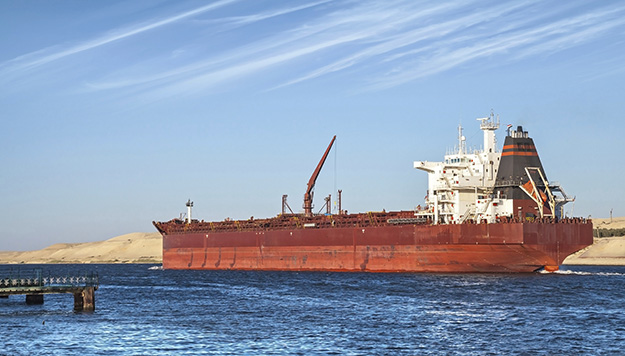
During a televised speech on August 5, 2014, President Abdul-Fattah el-Sisi announced a “surprise” he’d planned for the Egyptian people: the launch of the New Suez Canal mega-project, involving an expansion of the existing canal and the development of its environs into a global trade hub. The project is making waves in Egypt and worldwide, mobilizing equipment, contracts, and finance. But the plan to widen and deepen the existing canal to permit passage to the world’s largest container ships and to dig a parallel waterway to allow for two-way traffic was not new.
Egyptian President Abdul-Fattah el-Sisi is no Zionist, as senior Israeli interlocutors like to point out, but his vision of state sovereignty and Egyptian national security often closely aligns with the interests of Israel. When Sinai’s Ansar Beit al-Maqdis, Egypt’s most lethal jihadi group, recently pledged allegiance to the Islamic State in Syria and Iraq, perhaps the most interesting response was the non-response by the governments of Egypt and Israel. From the view of both, the origins and ideologies of Islamist groups are all the same.