This text has been translated by AI and may contain errors.
Skip to Content

Research & Commentary Results

Filter by
2633 Results
40 years on from the moment that forever changed US-Iranian relations
 People gather in front of the former US Embassy building to stage a protest against United States due to the 40th anniversary of the occupation of former US Embassy building in Tehran, Iran on November 04, 2019.
  • Commentary
  • 40 years on from the moment that forever changed US-Iranian relations

    Taking the American diplomats hostage for 444 days consolidated the Iranian revolution around the Khomeinists, but very few people in Tehran today will deny that it came at the great expense of isolating Iran internationally for the past 40 years.

    Securing the 2020 election from disinformation is going to get complicated
    The fourth Democratic primary debate of the 2020 presidential campaign season co-hosted by The New York Times and CNN at Otterbein University in Westerville, Ohio on October 15, 2019.
  • Commentary
  • Securing the 2020 election from disinformation is going to get complicated

    The increasing involvement of Iran in disinformation and attempted email hacking, in tandem with the revelation of Turla hijacking Iranian hacking infrastructure, risks muddying the waters even further with regard to attributing and countering election interference in 2020.

    October 28, 2019

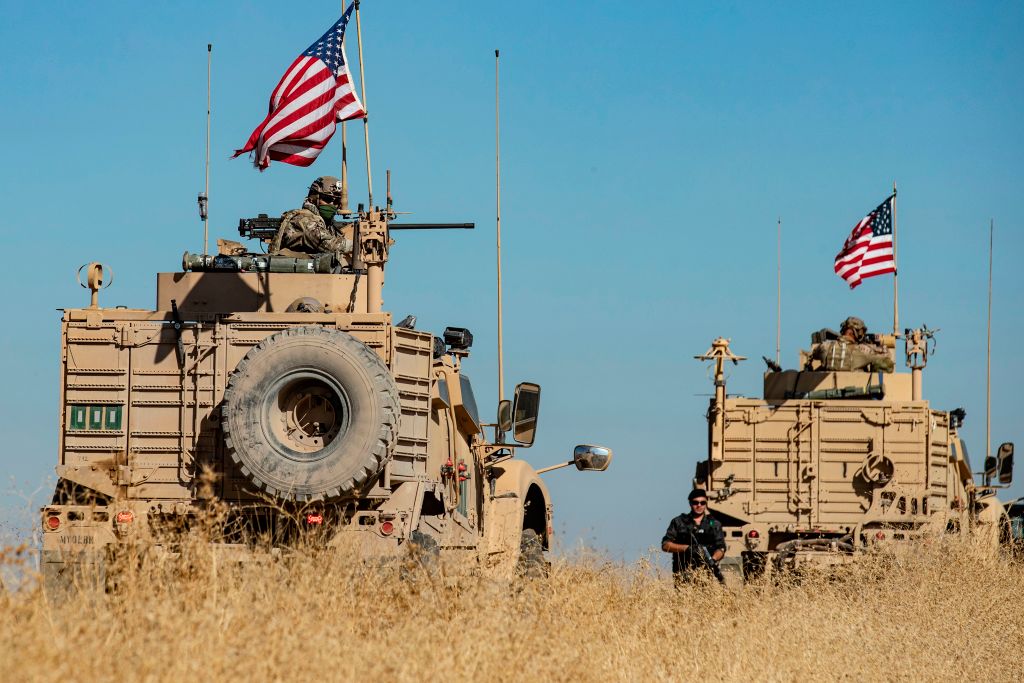
    Iran may not like it, but it can live with a Turkey-Russia deal on Syria
    A convoy of Russian military vehicles drives toward the northeastern Syrian city of Kobane on October 23, 2019.
  • Commentary
  • Iran may not like it, but it can live with a Turkey-Russia deal on Syria

    While the Iranians would have preferred it if the Turks had not invaded Syria, it does not change their most immediate policy objective, which is the survival of the Assad regime. As long as the Russians keep the Turks away from Assad’s forces, Tehran will, at least in the short term, be able to manage the consequences of Ankara’s actions.

    The US eyes the exit as Afghan election results are once again delayed
    Independent Election Commission (IEC) workers sit at a computer terminal while election information from all over the country is gathered at the Data Centre in Kabul on October 2, 2019. - Voter participation in last weekend's Afghan presidential election will be much less than a third, the country's Independent Election Commission said on October 1, marking a record-low turnout. (Photo by WAKIL KOHSAR / AFP) (Photo by WAKIL KOHSAR/AFP via Getty Images)
  • Analysis
  • The US eyes the exit as Afghan election results are once again delayed

    In a move that surprised no one, on Oct. 19 the Afghan election commission said it was unable to announce the preliminary results of the Sept. 28 presidential election as planned, due to delays in processing biometric data. Held amid political uncertainty, terrorist violence, and general skepticism, the September election was the fourth presidential contest in Afghanistan since 2001, when the brutal Taliban regime was toppled in the wake of the Sept. 11 terror attacks on the United States.

    October 24, 2019

    Divide and Conquer: The Growing Hezbollah Threat to the Druze
    Cover photo: Druze men in the Israeli-annexed Golan Heights look out across the southwestern Syrian province of Quneitra, visible across the border on July 7, 2018. (Photo by JALAA MAREY/AFP/Getty Images)
  • Analysis
  • Divide and Conquer: The Growing Hezbollah Threat to the Druze

    Deep political, familial, and religious ties have allowed Druze communities across the Levant to remain largely unified against external threats, but eight years of violence in Syria and a coordinated campaign by the regime and its allies now threaten to destabilize regional Druze politics and erode the sect’s political and military power. An Iranian-backed campaign by Hezbollah to incite inter-Druze violence in Lebanon has curtailed this unity, laying the groundwork for Hezbollah to expand into Syria’s Suwayda province with impunity.

    October 21, 2019

    Balochistan: From the periphery to the center of attention
    LONDON, ENGLAND - JANUARY 22: People campaign for the United Nations to intervene regarding Baloch missing persons in Balochistan, Pakistan close to Downing Street on January 22, 2019 in London, England. (Photo by John Keeble/Getty Images)
  • Analysis
  • Balochistan: From the periphery to the center of attention

    With an estimated $1 trillion in natural resources and sitting astride an international crossroads of increasingly critical importance, Balochistan is becoming a stage on which the world’s powers are playing out their ambitions. China, the U.S., and India have all formulated Balochistan policies in the past few years, hoping to utilize the region to achieve wider international goals — and the three countries across which Balochistan is divided, Pakistan, Afghanistan, and Iran, have been eager to use it as a bargaining chip for their own purposes.

    October 21, 2019

    Can Russian-Iranian alignment in Syria last?
    Iran's President Hassan Rouhani (L) and Russia's President Vladimir Putin shake hands as they meet on the sidelines of a meeting of the Shanghai Cooperation Organisation (SCO) Council of Heads of State.
  • Analysis
  • Can Russian-Iranian alignment in Syria last?

    While the Turkish military offensive against the Kurdish-led Syrian Democratic Forces (SDF) in northern Syria might, once again, bring Moscow and Tehran together tactically in support of Assad’s rule and Syrian sovereignty, the two powers have fundamentally different visions for the war-ravaged country’s future.

    October 16, 2019

    Choosing the “least-bad” option on Syria
    Photo by BULENT KILIC/AFP via Getty Images
  • Commentary
  • Choosing the “least-bad” option on Syria

    Washington has a hard long-term choice when it comes to Syria. The best chance for an optimal solution through a negotiated political deal was lost years ago. The U.S. now must choose a policy which will yield only a “least-bad” result.

    Russia’s efforts to expand the Astana process in Syria
     President of Turkey Recep Tayyip Erdogan (C), President of Russia Vladimir Putin (L) and President of Iran Hassan Rouhani (R) pose for a photo after the joint press conference held within the Turkey-Russia-Iran trilateral summit at Cankaya Mansion in Ankara, Turkey on September 16, 2019.
  • Analysis
  • Russia’s efforts to expand the Astana process in Syria

    On Sept. 16, the presidents of Russia, Iran, and Turkey met in Ankara to discuss the resolution of the Syrian civil war. In all three countries, the Ankara summit was hailed as a major success, as negotiations on the formation of a Syrian constitutional committee concluded and progress was made toward resolving other outstanding challenges, such as the future of northeastern Syria and the ongoing struggle for Idlib.

    October 7, 2019

    Iran appears poised to interfere in 2020 presidential election
    US President Donald Trump looks on during a rally at the Amway Center in Orlando, Florida to officially launch his 2020 campaign on June 18, 2019.
  • Commentary
  • Iran appears poised to interfere in 2020 presidential election

    Lately, Iran has begun leveraging LinkedIn to hack espionage targets and has developed sophisticated disinformation campaigns to exacerbate distrust of its adversary governments.

    October 7, 2019

    Qassem Soleimani and the Iranian regime’s quest for legitimacy
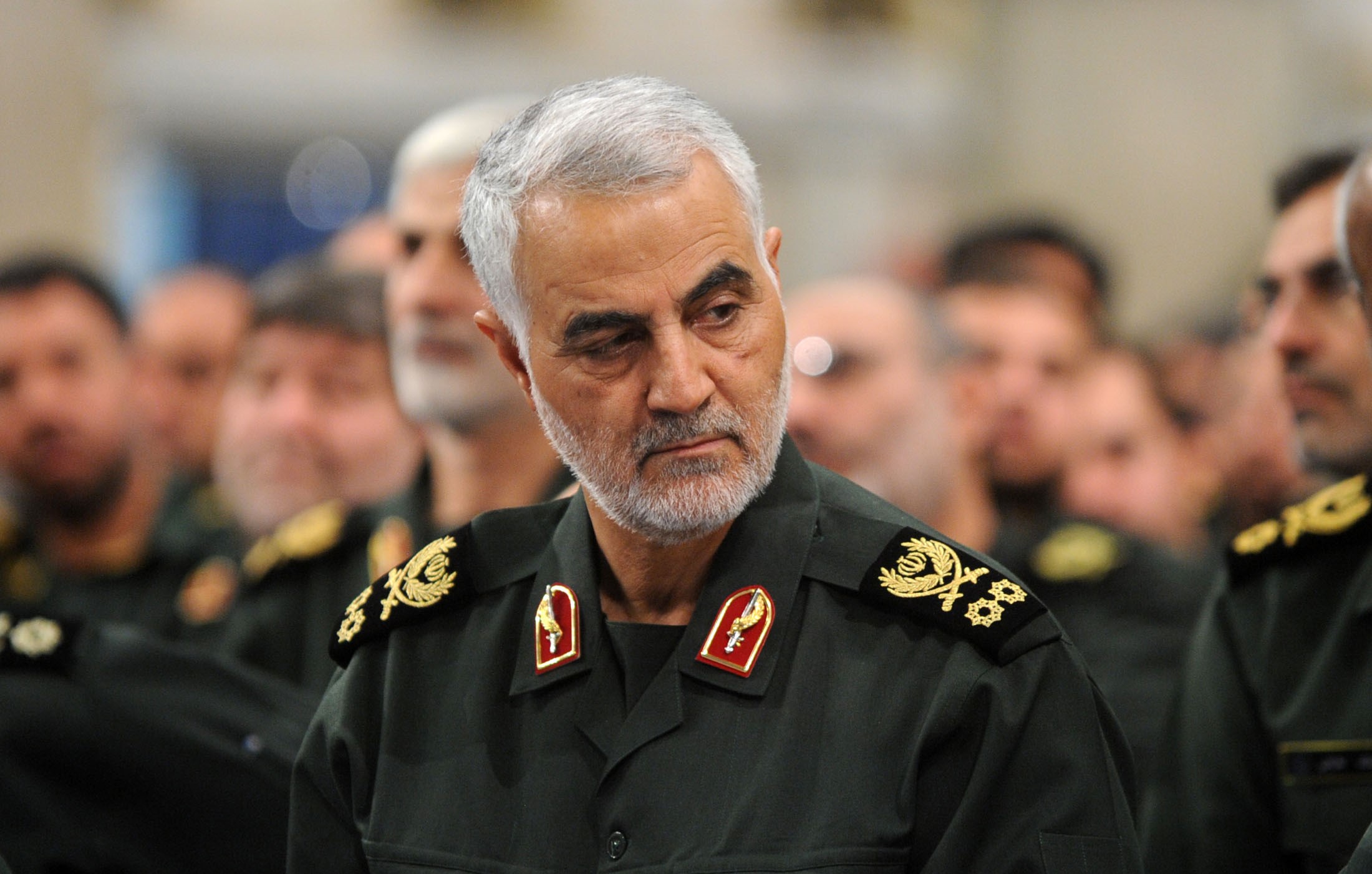
    Iranian Quds Force commander Qassem Soleimani (C) attends Iranian supreme leader Ayatollah Ali Khamenei's (not seen) meeting with the Islamic Revolution Guards Corps (IRGC) in Tehran, Iran on September 18, 2016.
  • Commentary
  • Qassem Soleimani and the Iranian regime’s quest for legitimacy

    If there is one Iranian military figure that can be considered an international celebrity of sorts, it is General Qassem Soleimani. He is the head of the Quds Force, the arm of the Islamic Revolutionary Guard Corps that operates outside of Iran’s borders. This week, he gave his first ever lengthy public interview, focusing on Iran’s role in the 2006 war between Lebanese Hezbollah and Israel.

    Iran’s attack on Saudi Arabia was ill-timed and premature
    A destroyed installation in Saudi Arabia's Abqaiq oil processing plant is pictured on September 20, 2019.
  • Analysis
  • Iran’s attack on Saudi Arabia was ill-timed and premature

    On Sept. 14, the news that Saudi Arabia’s oil facilities had been attacked and damaged came as a shock. And yet, in the not too distant future, this attack will likely be regarded as a tactical mistake. Tehran has miscalculated the timing of such a spectacular attack and it’s unclear whether Iran will get another opportunity to strike such a surprise blow again.

    October 1, 2019

    After Aramco: Will halting Houthi attacks on Saudi Arabia end Yemen’s war?
    Yemeni men stand with Kalashikov assault rifles during a tribal meeting in the Huthi rebel-held capital Sanaa on September 21, 2019, as tribesmen donate rations and funds to fighters loyal to the Houthis along the fronts.
  • Analysis
  • After Aramco: Will halting Houthi attacks on Saudi Arabia end Yemen’s war?

    After five years of indecisive war, there is a clear desire on the part of the international community to bring the conflict in Yemen to an end, and the recent UN-endorsed Houthi initiative seems predicated on the assumption that ending the fighting between Riyadh and the Houthis would achieve this. A closer look at the situation, however, suggests this assumption is flawed.

    October 1, 2019