This text has been translated by AI and may contain errors.
Skip to Content

Research & Commentary Results

Filter by
881 Results
Popular Revolt in Yemen: Implications for Democracy and US Foreign Policy
Middle East Institute
  • Video
  • Popular Revolt in Yemen: Implications for Democracy and US Foreign Policy

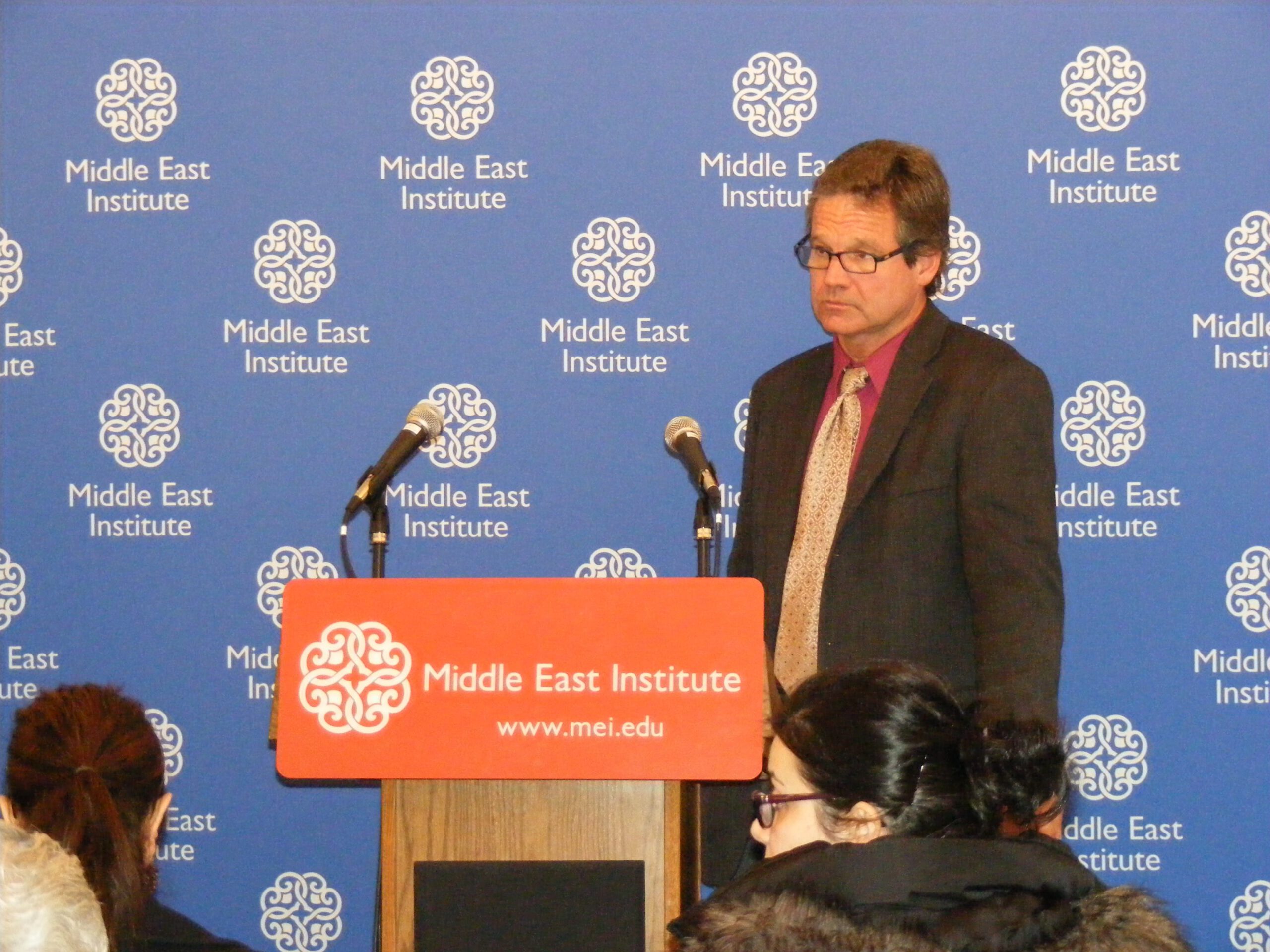
    The Middle East Institute is proud to host Janet Sanderson, Christopher Boucek and Charles Schmitz for a discussion about the challenges facing Yemeni President Abullah Ali Saleh as he confronts a third month of anti-government protests and growing calls for secession from southern separatists. Sanderson will examine US policy toward the Saleh government in the face of demands for reform, while Schmitz will examine the respective players in Yemen's protest movement and the government's response to their demands.

    March 10, 2011

    Introduction to The State of the Arts in the Middle East: Volume VI: Creative Arab Women
  • Analysis
  • Introduction to The State of the Arts in the Middle East: Volume VI: Creative Arab Women

    Creative Arab Women is the sixth edition of the MEI Viewpoints series on the State of the Arts in the Middle East. The 14 essays in this collection offer a glimpse into the rich and varied cultural output of Arab women in the region and the diaspora. Partly reminiscences and partly calls to action, they are essays of survival and empowerment that add a deeply personal dimension to the subject of the role of Arab women as cultural producers. MEI is grateful to Dr.

    July 1, 2010

    Yemeni Football and Identity Politics
    Middle East Institute
  • Analysis
  • Yemeni Football and Identity Politics

    The Republic of Yemen occupies the southwest corner of the Arabian Peninsula. Unlike its oil-rich neighbors, Yemen is the poorest country in the Arab world. Like other countries football (soccer) is Yemen’s most popular sport. Football has been played in parts of Yemen since before the turn of the 20th century, and since the 1970s, the game’s popularity has increased significantly.

    May 2, 2010

    Labor Migration to the GCC States: Patterns, Scale, and Policies
    Middle East Institute
  • Analysis
  • Labor Migration to the GCC States: Patterns, Scale, and Policies

    “In some areas of the Gulf, you can’t tell whether you are in an Arab Muslim country or in an Asian district.”

    — Majeed al-Alawi, Bahrain Minister of Labor (October 2007)

    February 2, 2010

    Humanitarian Relief for Yemen in Jeopardy
    Middle East Institute
  • Analysis
  • Humanitarian Relief for Yemen in Jeopardy

    The convergence of multiple crises in an already vulnerable environment has left Yemen and aid agencies at a crossroads. The context has become an extremely complex and challenging one within which to reduce hunger, malnutrition, and fragility. Yet it is precisely because of these challenges that humanitarian intervention is vital to keep struggling populations from tipping into utter disaster.

    February 2, 2010

    Addressing the Crisis in Yemen: Strategies and Solutions
    Middle East Institute
  • Video
  • Addressing the Crisis in Yemen: Strategies and Solutions

    The Middle East Institute is proud to host two former Ambassadors to Yemen, Thomas Krajeski and David Newton, for a discussion about Yemen and the role of US foreign policy in a country some political analysts characterize as a failed state. As Yemen grapples with multiple crises, including the growing influence of Al Qaeda, a Houthi Rebellion in the north, a secessionist movement in the south and severe economic woes, what should the US do to help stabilize and secure one of the Arab world’s poorest countries?

    January 21, 2010

    Liberal Enclaves: A Royal Attempt to Bypass Clerical Power
    Middle East Institute
  • Analysis
  • Liberal Enclaves: A Royal Attempt to Bypass Clerical Power

    Within the first months of ‘Abdullah’s term as King, the Saudi government pursued a number of policies to improve the Kingdom’s economic profile. Saudi Arabia became a member of the World Trade Organization (WTO) and the limits were raised on foreign stakes in sectors such as banking, telecommunications services, wholesale, retail, and franchising. These reforms were intended to answer the economic priorities of diversifying from dependence on oil revenues, finding jobs for young Saudis, and opening up foreign investment.

    October 1, 2009

    The Rise of a Media Kingdom
    Middle East Institute
  • Analysis
  • The Rise of a Media Kingdom

    Even Saudi film production has revived recently, following the move of Saudi Television empires such as Rotana and ART to cinematic production. This comes after more than two decades of suppression by conservative Islamist groups who prohibited film screenings to Saudi citizens. In 2005, the Kingdom saw the opening of the first movie theatre in Riyadh, followed by the release of a couple of Saudi films with Saudi actors. The first Saudi production was Zelal Assamt (2006), followed by the film Keif al Hal.

    October 1, 2009

    Obstacles to Equality for Saudi Women
    Middle East Institute
  • Analysis
  • Obstacles to Equality for Saudi Women

    It was in the summer of 1979 that Islam in Saudi Arabia became all about women. At the urging of ‘Abd al-‘Aziz bin Baz, then chair of the Department of Religious Guidance, Legal Rulings, and Propagation of the Faith, Interior Minister Prince Nayf sent a letter to government offices asking for cooperation in curbing practices offensive to Islamic principles. At the top of the list of condemnable behaviors were unsuitably dressed foreign women shopping or eating out in public.

    October 1, 2009

    Saudi-Shi'ite Political Relations in the Kingdom
    Middle East Institute
  • Analysis
  • Saudi-Shi'ite Political Relations in the Kingdom

    Saudi Arabia always has been a tough neighborhood for religious minorities. This has been especially true for the Kingdom’s Shi‘ites, the country’s largest minority, with almost two million of them living in the oil-rich Eastern Province. From early in the 20th century, Shi‘ites have been the targets of scorn and opprobrium, much of it with the official blessing of the Saudi rulers. The origins of anti-Shi‘ite enmity are hardly a mystery.

    October 1, 2009

    Reforming the Judiciary in Saudi Arabia
    Middle East Institute
  • Analysis
  • Reforming the Judiciary in Saudi Arabia

    Though the Saudi royal family still rules the realm, they have initiated a number of reforms over the past 30 years. Some of these reforms have been bolder and more successful than others. Some have been doomed from the very start — a few, perhaps, were intended to be stillborn. Judicial reform is one of the most recent and potentially one of the most important reform initiatives undertaken in the Kingdom.

    October 1, 2009