Access to the University and Women’s Participation in Higher Education in Egypt
Originally posted October 2010
The government formation stalemate in Iraq—well into its seventh month and counting—may at last be nearing an end. The next few weeks could seal a deal between rival electoral blocs that will produce the next national government.
Two scenarios with very different outcomes appear to be jockeying for rail position in the race to produce the next Prime Minister.
This Commentary first appeared as an op-ed in the New York Daily News on September 10, 2010
This piece first appeared as a op-ed in The National on August 30, 2010
The last American combat troops rolled across the Kuwaiti border from Iraq on August 19, nearly two weeks ahead of schedule. The Obama administration has spoken of this milestone as a promise fulfilled and the first major step toward bringing a “responsible” end to the war in Iraq, setting the stage for the final withdrawal of American troops at the end of next year.
The Middle East Institute is proud to host Rochelle Davis, professor of Anthropology at the Center for Contemporary Arab Studies in the School of Foreign Service at Georgetown University, to discuss US military conceptions of culture and the war in Iraq.
This Commentary first appeared as an op-ed in The National, July 25, 2010.
After the March 2003 invasion of Iraq by United States and coalition forces, a short but sharp war, and the declaration of “Mission Accomplished” aboard an American aircraft carrier, Iran felt isolated and encircled on all sides by US might. Not so today.
Tehran has closely observed US travails in Iraq over the years, and watched with satisfaction as the US began withdrawing its forces in anticipation of a full withdrawal by the end of 2011.
This Commentary first appeared as an op-ed in McClatchy News, July 6, 2010.
The misuse and abuse of language is yet another obstacle to obtaining peace in the Middle East. In recent weeks the media, government officials and commentators have so garbled the use of the words “blockade” and “embargo” to describe events in Gaza that understanding what is occurring, the legal implications, and developing a reasonable policy are almost impossible.
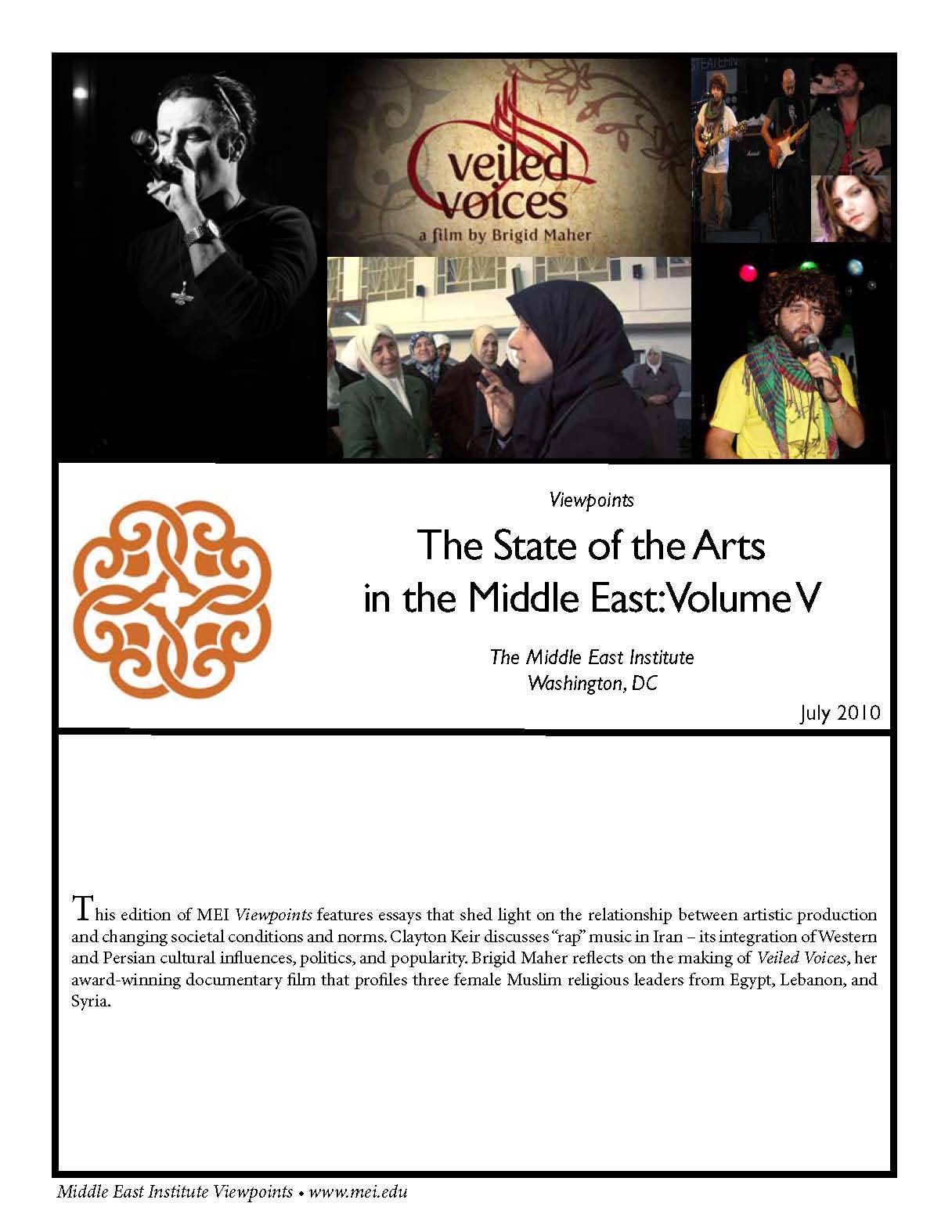
This edition of MEI Viewpoints features essays that shed light on the relationship between artistic production and changing societal conditions and norms. Clayton Keir discusses “rap” music in Iran – its integration of Western and Persian cultural influences, politics, and popularity. Brigid Maher reflects on the making of Veiled Voices, her award-winning documentary film that profiles three female Muslim religious leaders from Egypt, Lebanon, and Syria.
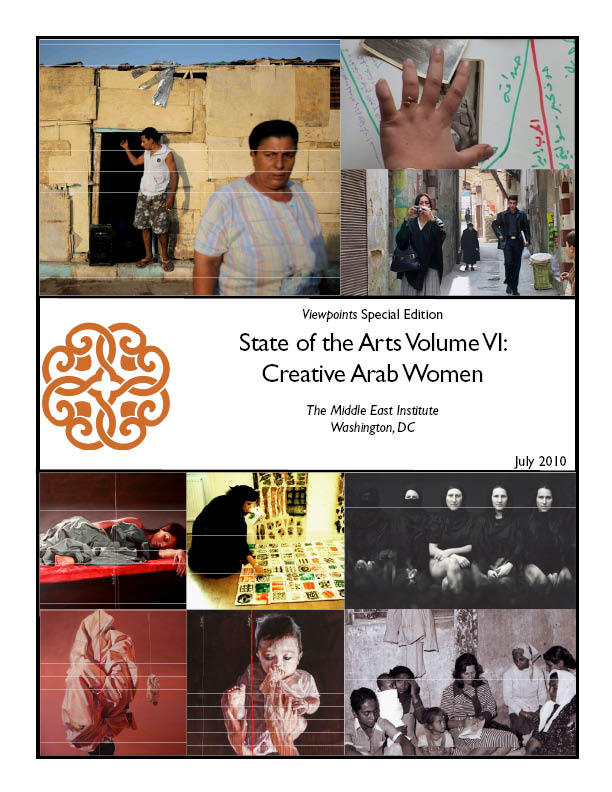
Creative Arab Women is the sixth edition of the MEI Viewpoints series on the State of the Arts in the Middle East. The 14 essays in this collection offer a glimpse into the rich and varied cultural output of Arab women in the region and the diaspora. Partly reminiscences and partly calls to action, they are essays of survival and empowerment that add a deeply personal dimension to the subject of the role of Arab women as cultural producers. MEI is grateful to Dr.
The Middle East Institute is proud to host distinguished academic and author Dr. Akbar Ahmed for a discussion of his latest book, Journey into America: the Challenge of Islam, a comprehensive study of the American-Muslim community. Dr. Ahmed will discuss the results of the research conducted by his team as they traveled to over 75 cities and 100 mosques across the United States to discover what Muslims are thinking, what they are reading, and how they are living every day in America. Among the questions his team asked include, "Can we expect an increase in homegrown terrorism?
This Commentary was originally published as an op-ed in The National May 31, 2010.
‘What does the US want from Iraq?” This was the question of a university educator during a large gathering of Iraqi politicians, students, journalists and activists we met during a 10-day trip to Baghdad and Kurdistan sponsored by Washington’s Stimson Center earlier this month.
Originally posted May 2010
Iraq has the world’s third-largest oil reserves. However, the development of Iraq’s petroleum sector has been severely hampered by decades of war, sanctions, underinvestment, the exodus of scores of technocrats, and sabotage. Repairing Iraq’s oil infrastructure and expanding exploration, development, and production is of paramount importance to the country’s future. In June 2009, the Iraqi Oil Ministry embarked on an effort to help meet this challenge by offering service contracts to international oil companies (IOCs) in two rounds of tenders.
Originally posted March 2010