This text has been translated by AI and may contain errors.
Skip to Content

Research & Commentary Results

Filter by
1318 Results
The Necessity of Karez Water Systems in Balochistan
Middle East Institute
  • Analysis
  • The Necessity of Karez Water Systems in Balochistan

    Land is infinite in Balochistan. It is the one place in South Asia where if you ask someone how much land they have, they will generally have no idea. Instead, it is water that matters. In Balochistan, social station is not determined by landholdings but by the size of one’s share of water in a karez. These manmade underground channels passively tap groundwater and provide the lifeblood of villages at the valley floor.

    January 17, 2014

    Whither Political Islam?
  • Analysis
  • Whither Political Islam?

    This article was first published on Al Jazeera on December 24, 2013.

    The downfall of Egypt’s Muslim Brotherhood (MB) has put political Islam at a crossroads. Not only has it shown that ideology per se is not a guarantor of political success, but also that Islamists need to rethink their strategy and tactics in order to deal with the new environment following the Arab Spring.

    January 7, 2014

    Egypt’s Informal Economy
  • Analysis
  • Egypt’s Informal Economy

    Samy M. has been providing currency exchange services on the black market in Cairo’s hectic neighborhood of Nasr City for nearly a decade. He does this from the crammed office of his other, formal business, which offers real estate services.

    “Money exchange has always been lucrative, but it was even busier last year,” he says. With the Egyptian pound weak, hovering at around 6.9 pounds to the dollar on the official market for the past few months, people are drawn to black market rates, which are sometimes as high as 7.20 pounds to the dollar. 

    January 6, 2014

    Luxor’s Chance for Smart Development
  • Analysis
  • Luxor’s Chance for Smart Development

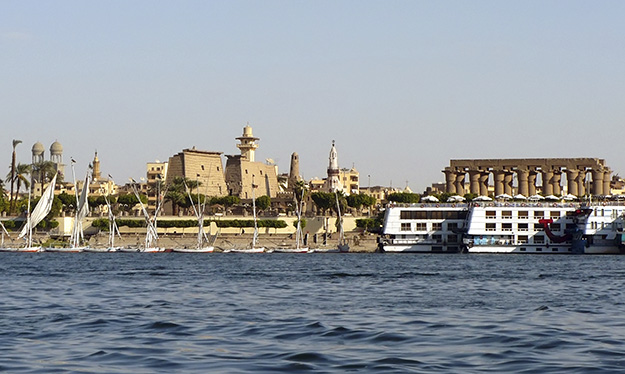
    In the eyes of the world, Egypt is Cairo, where political unrest leads the news. With around a quarter of the nation’s 90 million inhabitants concentrated around the capital, in addition to the bulk of wealth and industry, it’s easy to forget the rest of the country, which is what state officialdom has done for decades.  For administrative purposes, Egypt is divided into 29 governorates, each with a capital city.

    December 19, 2013

    Unrequited Desire: Egyptians' Passion for Justice and Accountability
  • Analysis
  • Unrequited Desire: Egyptians' Passion for Justice and Accountability

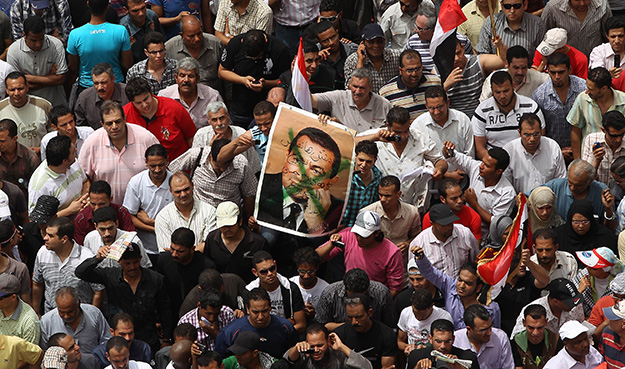
    Egyptians who believed that the removal of President Hosni Mubarak in February 2011 would lead to the establishment of a democratic government have faced many setbacks. Youthful revolutionary activists unsuccessfully challenged the power of the Supreme Council of the Armed Forces (SCAF) transitional government and the autonomy of the military. The electoral triumph of Islamist parties and candidates in parliamentary and presidential elections in 2011 and 2012 eclipsed weak and inexperienced secular parties and brought to power leaders who failed to ensure adequate representation of political opponents, women, and Copts in key aspects of governing, or to protect Copts from rising attacks. Continuing divisions among opposition forces, along with the roundup of Islamists and other opponents by the military, which engineered the July 2013 removal of President Mohamed Morsi, suggest that the struggle to achieve justice and create an accountable government will be prolonged.

    December 17, 2013

    Cairo and Moscow: Limits of Alliance
  • Analysis
  • Cairo and Moscow: Limits of Alliance

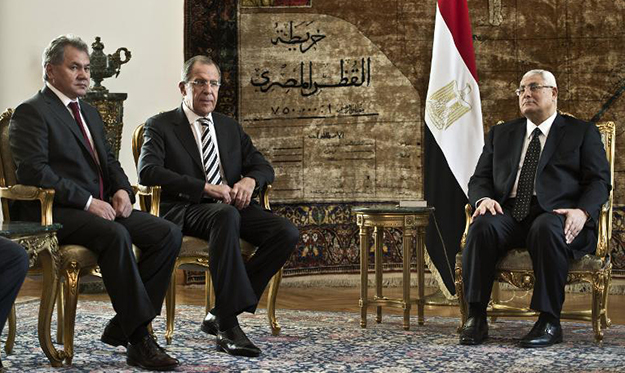
    Egyptian-Russian relations have recently been marked by a substantial increase in diplomatic activity amid a media frenzy over a potential arms deal. These developments have given rise to suggestions that Egypt’s foreign policy is shifting away from the United States and toward Russia—a major realignment given Egypt’s extensive political and military ties with the United States since the 1970s.   

    December 16, 2013

    Salafyo Costa: Egyptian Inclusivity
  • Analysis
  • Salafyo Costa: Egyptian Inclusivity

    Salafyo Costa were once the darlings of the media. Featured both in Egyptian outlets[1] and foreign publications such as CNN, the Los Angeles Times, and the Huffington Post,[2] the groundbreaking youth movement founded in April 2011 brought together ultraconservative Salafis, Muslim Brotherhood supporters, political liberals and leftists, and Coptic Christians.

    December 9, 2013

    A Q&A on Egypt's New Draft Constitution
  • Analysis
  • A Q&A on Egypt's New Draft Constitution

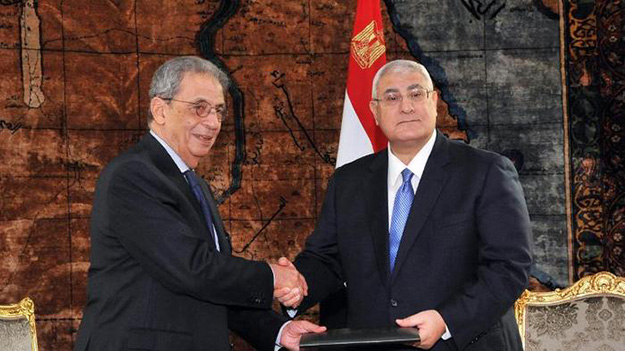
    On December 1, a 50-member panel given the task of amending Egypt’s constitution approved a draft of the document. It now goes to Interim President Adly Mansour for his approval and will then go to the public in a referendum. MEI spoke with its Senior Fellow, Khalil al-Anani, about the draft, how it differs from the 2012 constitution passed under Mohamed Morsi, and how the Muslim Brotherhood has reacted to it.

    In general, what has changed in this new draft?

    December 4, 2013

    Turkey-Pakistan Security Relations since the 1950s
    Middle East Institute
  • Analysis
  • Turkey-Pakistan Security Relations since the 1950s

    The initial impulse for Pakistan and Turkey to pursue security cooperation stemmed from their common opposition to Communism in the 1950s. Over the past decade, Pakistan and Turkey have once again sought to cooperate in the security sphere, this time in countering terrorism and ensuring stability in Afghanistan.

    November 25, 2013

    The Tortuous Route of the U.S.-Afghan Security Pact
  • Analysis
  • The Tortuous Route of the U.S.-Afghan Security Pact

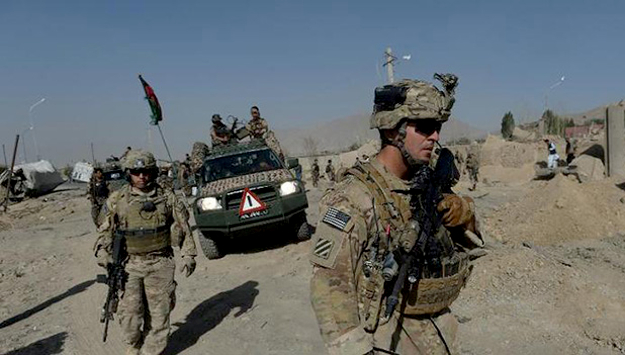
    Yesterday, the United States and Afghanistan completed a bilateral security pact ensuring that U.S. troops will remain in the country. It now goes to a council of elders—the loya jirga—for authorization. MEI spoke with Scholar-in-Residence Marvin Weinbaum about the pact’s sticking points, next steps for its approval, and what each country gains from the agreement.

    What does the U.S.-Afghan security pact stipulate?

    MEI 67th Annual Conference – Assessing the Transitions: Egypt and Tunisia
    Middle East Institute
  • Podcast
  • MEI 67th Annual Conference – Assessing the Transitions: Egypt and Tunisia

    Panel 1:  Assessing the Transitions: Egypt and Tunisia

    Moderator: Paul Salem, The Middle East InstituteKhalil al Anani, The Middle East InstituteLarry Diamond, Stanford UniversityNoureddine Jebnoun, Georgetown UniversityRabab El Mahdi, American University of Cairo  

    November 20, 2013

    Tawfik Okasha: Egypt's Glenn Beck
  • Analysis
  • Tawfik Okasha: Egypt's Glenn Beck

    The Egyptian media landscape both before and after Hosni Mubarak’s ouster has been one in which the polemical television personality Tawfik Okasha has thrived. But Okasha, known for his conspiracy theories and strident rhetoric, particularly against the Muslim Brotherhood, has perhaps risen to greater fame and influence recently. With a convergence between anti-Brotherhood positions and Egyptian government policy and public opinion occurring since the mass protests that culminated in Mohamed Morsi’s removal by the military on July 3, Okasha’s views have become more mainstream.

    November 14, 2013

    Egypt’s Economic Challenges
  • Analysis
  • Egypt’s Economic Challenges

    Reporting on Egypt since the July 3 ouster of former president Mohamed Morsi has focused on political dimensions and unrest. However, it is the new government’s success—or lack thereof—in meeting the country’s economic challenges that will largely determine whether Egypt returns to stability, just as surely as it was Egypt’s economic woes that underpinned the country’s repudiation of Morsi.

    November 8, 2013