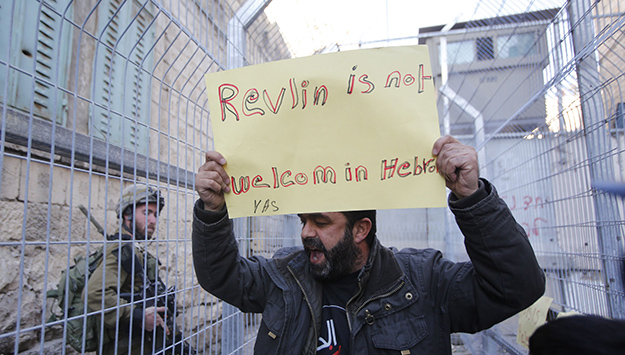
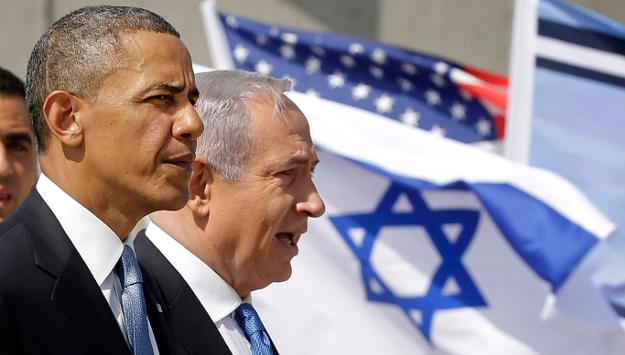
Israeli President Reuven “Ruby” Rivlin was recently asked about the prospects for a two-state solution to Israel’s long conflict with the Palestinians. He described this concept for building a future between Israel and its neighbor as “irrelevant.” Indeed, he claims to have said as much to President Barack Obama when they last met.
What does “irrelevant” mean in this context? The dictionary lists as its synonyms “immaterial” or “beside the point.”
Monday Briefing: ISIS to Lose Fallujah; Pakistan to Join S.C.O.
In this week’s Monday Briefing, MEI experts Robert S. Ford, Paul Scham, and Marvin G. Weinbaum provide analysis on recent events including the battle against ISIS for Fallujah, Israel’s upcoming address to the EU Parliament, and Pakistan’s upcoming accession to the Shanghai Cooperation Organization.
Egypt, which enjoys friendly relations with both the Palestinian Authority and Israel, understands that it must normalize relations with Hamas to be able to act as a mediator between the three parties. The Egyptian government, which has yet to achieve convincing results in the fight against terrorist groups in Sinai, is also in need of Hamas’ cooperation in this area.
Monday Briefing: Responding to Orlando, ISIS in Libya, and Hamas-Fatah Meeting
In this week’s Monday Briefing, MEI chairman Richard A. Clarke responds to the mass shooting in Orlando, and Charles Lister and Antoun Issa provide analysis on events including the pushing back of ISIS in Libya and the upcoming meeting of Hamas and Fatah.
For several years, Israeli-Saudi collaboration over regional geostrategy to check Iranian influence has been the worst kept secret in the Middle East since the advent of Israel’s robust nuclear arsenal. Still, public coordination has been taboo, and while indirect, and even direct, coordination may be taking place behind closed doors, no official relationships can develop. This, of course, is due to the history between the state of Israel and the Arab world.
These days even the hint of a renewal of diplomacy on Palestine is enough to set tongues wagging. In recent months, France has led what remains an inchoate effort to fill the diplomatic vacuum created by the Obama administration’s decision two years ago to close its book on Palestine.
Netanyahu’s Risky Politics and the French Initiative
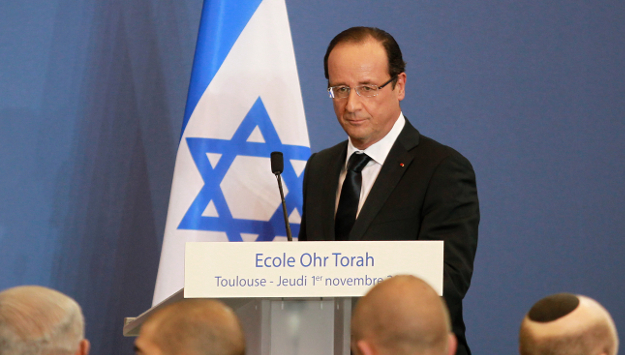
The so-called ‘French initiative’—a boost-plan for the moribund ‘Middle East Peace Process’ designed to bring Israel and the P.L.O. back to the negotiating table under an international umbrella through a series of multilateral summits—was born in classic French diplomatic opulence. Not nearly half-baked, the initiative was presented ceremoniously in a grandiose manner by a foreign minister who was replaced shortly after, prompting knee-jerk reactions from all parties.
Monday Briefing: Manbij Offensive, Yemen Talks, Turkey-Israel, Tunisia Unity Government
In this week’s Monday Briefing, MEI experts Robert S. Ford, Charles Schmitz, Gonul Tol, and Mabrouka M’Barek provide analysis on recent events including Manbij offensive, Yemen talks, Israel-Turkey rapprochement, and Tunisia national unity government.
Presidential Race Shifts Discourse on Israel-Palestine
The 2016 presidential primaries have upended a wide variety of assumptions about the rules of American politics, and what the traffic will bear. One of these areas is the Israeli-Palestinian conflict.
New Gaza War Inevitable without International Action
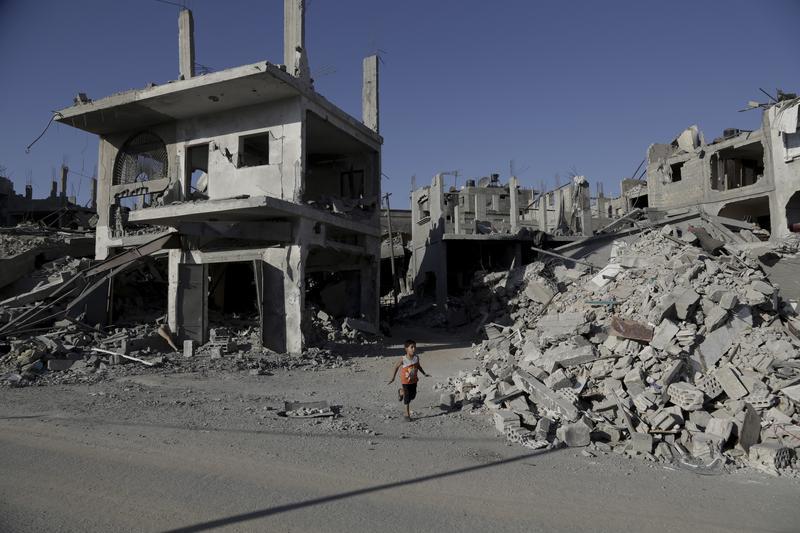
With the exception of the extremely slow reconstruction process of what was destroyed during the last Israel-Gaza war in the summer of 2014, the conditions that preceded that war remain in place. The Palestinian reconciliation process remains cosmetic, negotiations for a truce between Israel and Hamas that were supposed to resume under Egyptian auspices have stalled, and humanitarian conditions in Gaza are becoming increasingly dire. Without improvement on any of these issues, the risks for a new round of fighting remain high.
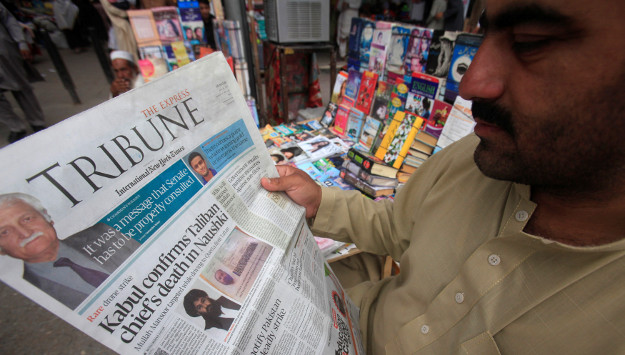
In this week’s Monday Briefing, MEI experts Marvin G. Weinbaum, Charles Lister, Hassan Mneimneh, and Paul Scham provide analysis on recent events including the killing of Afghan Taliban leader Mullah Akhtar Mansour, deadly blasts targeting regime-held territory in Syria, Iraq’s intra-Shiite feud, and Avigdor Lieberman’s appointment as Israel’s Defense Minister.
Monday Briefing: Lebanon's Elections, Gaza Unrest, Syria Talks, and Saudi's New Oil Minister
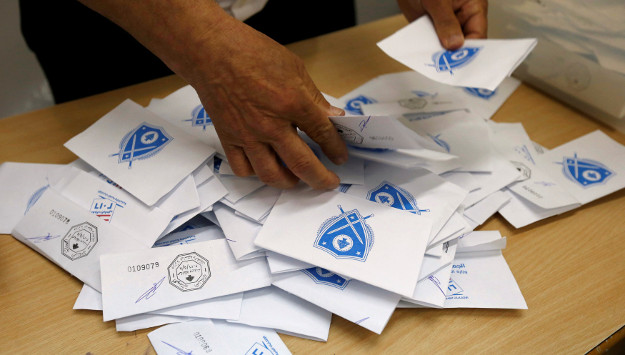
In this week’s Monday Briefing, MEI experts Paul Salem, Paul Scham, Charles Lister, and Jean-François Seznec provide analysis on recent events including Lebanon’s elections, unrest in Gaza, the ongoing Syria talks, and Saudi Arabia’s new oil minister.
U.S. Should Allow International Input in Israel-Palestine
For the first time in almost half a century, the United States has acknowledged that it is “out of ideas” about how to address Israel’s occupation and fulfill a declared American interest in establishing a Palestinian state at peace with Israel.