This text has been translated by AI and may contain errors.
Skip to Content

Research & Commentary Results

Filter by
1074 Results
Turkey faces potential Russian blowback on Syria — and tomatoes are only the beginning
 A Turkish military convoy of tanks and armoured vehicles passes through the city of Idlib, in northwestern Syria, near the Syria-Turkey border, late on February 7, 2020.
  • Analysis
  • Turkey faces potential Russian blowback on Syria — and tomatoes are only the beginning

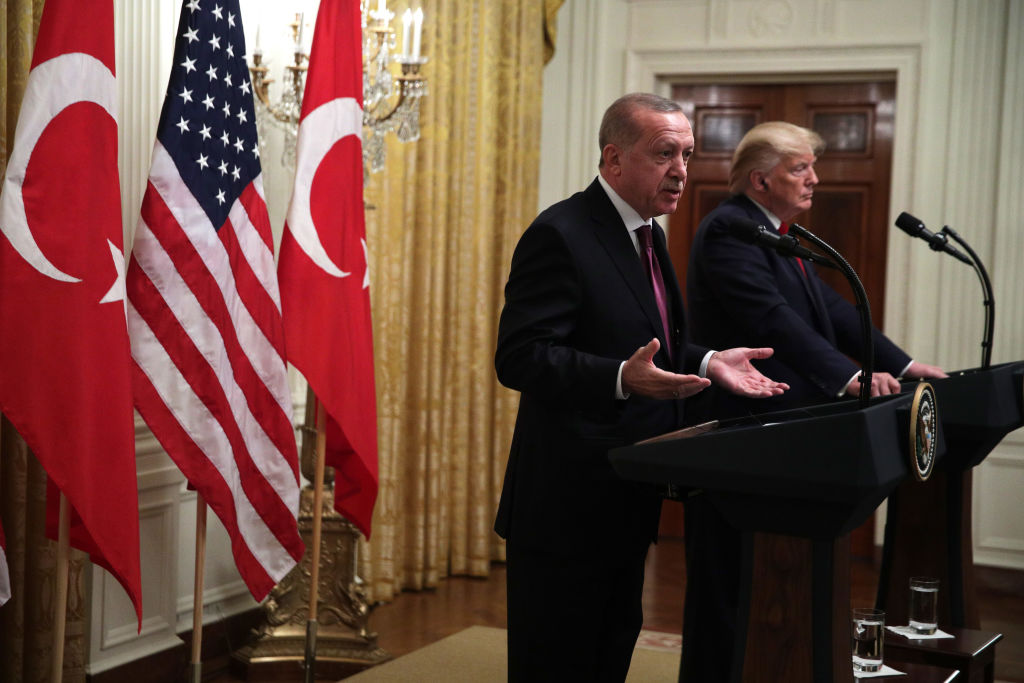
    Turkish President Recep Tayyip Erdogan finds himself in a tough spot with Russia as tensions in Syria have escalated dramatically. In a rare direct military confrontation between Turkish and Syrian regime forces, 14 Turkish soldiers and over 100 regime troops were killed in two separate clashes in Idlib over the past 10 days.

    China plays the long game on Syria
    BEIJING, Nov. 22, 2019 -- Chinese Vice President Wang Qishan meets with a delegation of Syria's Arab Socialist Ba'ath Party, led by Helal Helal, deputy general secretary of the ruling party, in Beijing, capital of China, Nov. 22, 2019.
  • Analysis
  • China plays the long game on Syria

    Since the beginning of the Syrian civil war in 2011, many analysts have examined the role played by a handful of key outside actors, such as Russia, Iran, Turkey, and the member states of the Gulf Cooperation Council (GCC). Yet China has received comparatively little attention in most discussions about the Syrian crisis. A deeper look at Sino-Syrian relations and Beijing’s policies vis-à-vis Syria is long overdue as this bilateral relationship is set to become increasingly important to both China’s ambitious foreign policy as well as the Syrian government’s vision for reconstruction and redevelopment.

    February 10, 2020

    A moment of truth in Idlib
    Photo by Ibrahim Dervis/Anadolu Agency via Getty Images
  • Commentary
  • A moment of truth in Idlib

    Relentless airstrikes and shelling have killed over 5,000 and displaced more than half a million people.

    February 10, 2020

    The Black Sea should be a US and NATO priority
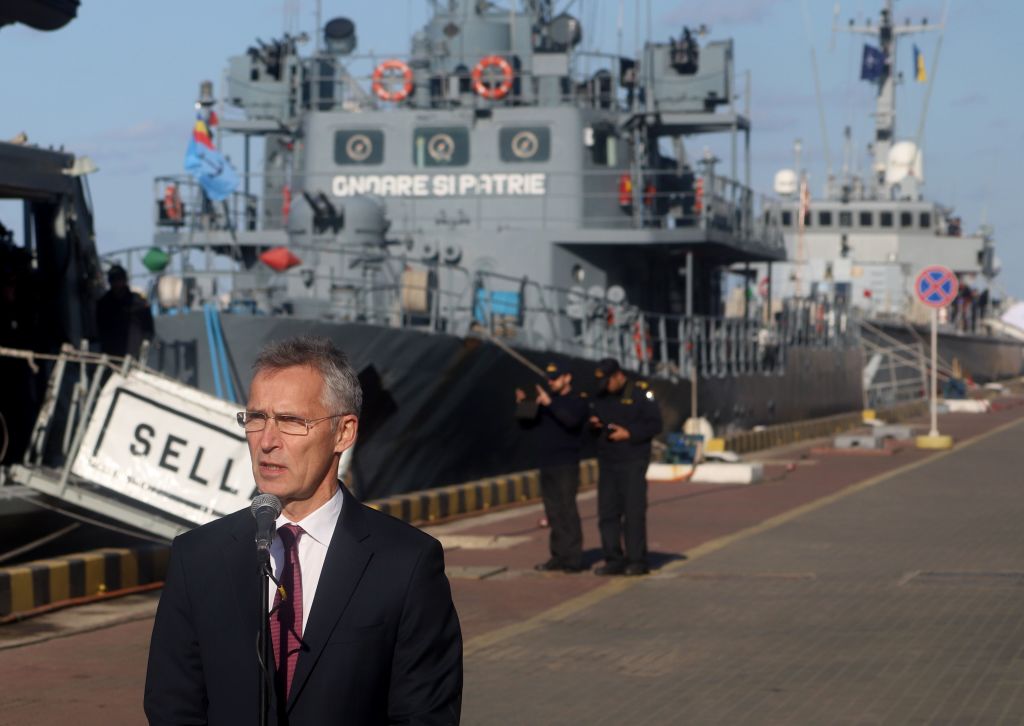
    Bulgarian and NATO navi ships take part during Bulgarian-NATO military navy exercise in the Black sea, east of the Bulgarian capital Sofia, Friday, July, 10, 2015.
  • Analysis
  • The Black Sea should be a US and NATO priority

    The Black Sea is a very important region for NATO, and has not received the attention it deserves; a separate focused NATO strategy and support for countries in the Black Sea would send a message that the Alliance takes the region seriously.

    February 6, 2020

    Trump’s Curious Multilateralism
  • Analysis
  • Trump’s Curious Multilateralism

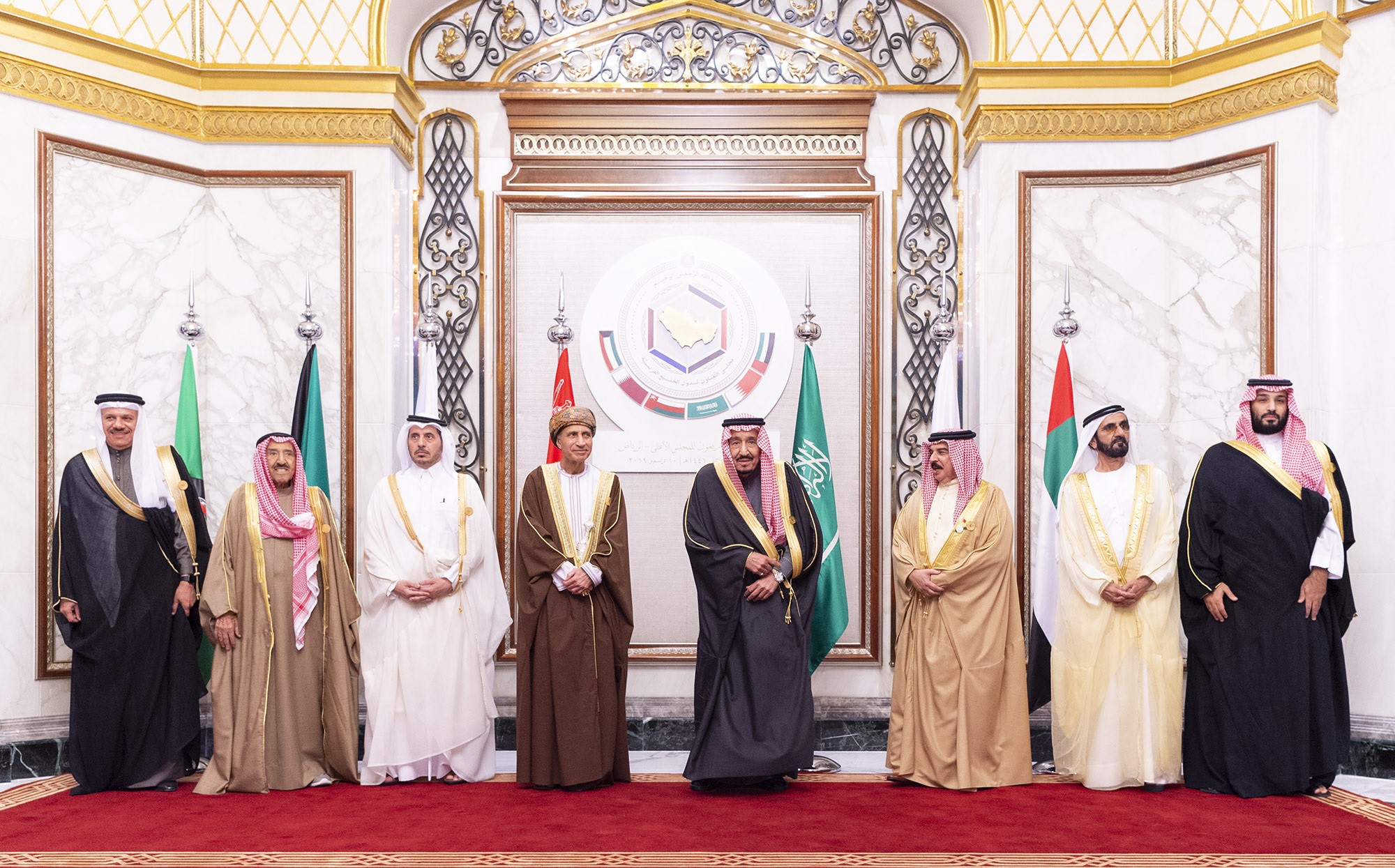
    His administration may end up besting its predecessors’ records in bringing partners together in the Persian Gulf.

    February 4, 2020

    As Turkey-Russia ties warm, will Georgia be left out in the cold?
    Foreign Minister of Turkey Mevlut Cavusoglu (L) meets Foreign Minister of Georgia David Zalkaliani (R) in Tbilisi, Georgia on December 23, 2019.
  • Analysis
  • As Turkey-Russia ties warm, will Georgia be left out in the cold?

    Turkey’s blossoming relationship with Russia has not only raised eyebrows in Washington and Western European capitals, it has also caused a great deal of discomfort in countries like Georgia that have borne the brunt of Russian aggression. A few recent scattered signals from Ankara, however, might comfort Turkey’s northeastern neighbor.

    Idlib tests Turkey-Russia ties
    A Turkish military convoy of tanks and armoured vehicles passes through the Syrian town of Dana, east of the Turkish-Syrian border in the northwestern Syrian Idlib province, on February 2, 2020.
  • Commentary
  • Idlib tests Turkey-Russia ties

    The escalating tensions between Turkey and Russia over Idlib did not come as a surprise to many outside the Turkish capital.

    In Syria, we’re getting counter-terrorism all wrong
    Syrian families, who have been forced to displace due to the ongoing attacks carried out by Assad regime and Russia, are seen on their way to safer zones with their belongings, at Atme camps in Idlib, Syria on January 19, 2020.
  • Analysis
  • In Syria, we’re getting counter-terrorism all wrong

    While proclamations of ISIS’s defeat were certainly premature, international policy and attention on countering terrorism in Syria has since declined — as if to suggest that the job is done. In fact, as 2020 sets in, the world seems to be getting counter-terrorism all wrong in Syria, in three interlinked ways.

    The Houthis are consolidating power
    Houthi followers hold their guns during a tribal gathering against the continued war and blockade on October 03, 2019 in Sana'a, Yemen
  • Analysis
  • The Houthis are consolidating power

    Absent international pressure, the Iran-backed Houthis have no reason to stop expanding

    January 30, 2020

    A tale of two partners: Comparing two approaches for partner force operations
    Fighters of the US-backed Kurdish-led Syrian Democratic Forces (SDF) take part in a parade to celebrate near the Omar oil field in the eastern Syrian Deir Ezzor province on March 23, 2019, after announcing the total elimination of the Islamic State (IS) group's last bastion in eastern Syria.
  • Analysis
  • A tale of two partners: Comparing two approaches for partner force operations

    The 2018 National Defense Strategy shapes the way the U.S. military competes with state and non-state adversaries. It specifically calls for improvements in partner force operations (PFO) — especially counter-terrorism (CT) — so that regional partners can keep up CT pressure while America’s special operators shift focus to help the nation gain and maintain an advantage over the near-peer competitors of Russia and China.

    US-Iran escalation and its implications for the South Caucasus
     Iranian President Hassan Rouhani (L) meets President of Azerbaijan Ilham Aliyev (R) during his official visit in Baku, Azerbaijan on March 28, 2018.
  • Analysis
  • US-Iran escalation and its implications for the South Caucasus

    Over the past several weeks geopolitical experts have been talking a lot about what the surprise U.S. drone attack on Iranian Gen. Qassem Soleimani, head of the IRGC – Quds Force, on Jan. 3 means for the Middle East and relations between the major powers. What has received considerably less attention, however, is what Soleimani’s killing means for the South Caucasus, a region whose small size belies its strategic importance.

    January 28, 2020

    The ties that bind: The South Caucasus and the Middle East
    Turkish Foreign Affairs Minister Mevlut Cavusoglu (C), Minister of Foreign Affairs of Iran, Javad Zarif (R) and Azerbaijani Minister of Foreign Affairs, Elmar Mammadyarov (L) pose for a photo prior the tripartite meeting of foreign ministers of Turkey, Azerbaijan and Iran in Istanbul, Turkey on October 30, 2018.
  • Analysis
  • The ties that bind: The South Caucasus and the Middle East

    As neighboring regions, the South Caucasus and the Middle East are inextricably intertwined — so much so that the former is sometimes even considered part of the Greater Middle East. While geographical proximity is the strongest driver of interconnectivity between the two regions, geopolitics, business ties, and energy interests also link countries from the South Caucasus and the Middle East and form the basis for important bilateral and regional relationships.

    January 24, 2020