This article was first published on Al Jazeera on December 24, 2013.
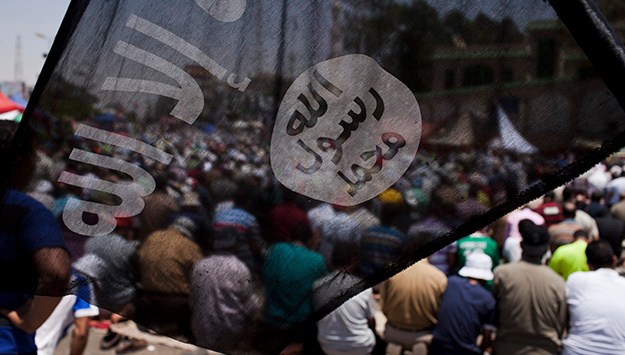
The downfall of Egypt’s Muslim Brotherhood (MB) has put political Islam at a crossroads. Not only has it shown that ideology per se is not a guarantor of political success, but also that Islamists need to rethink their strategy and tactics in order to deal with the new environment following the Arab Spring.
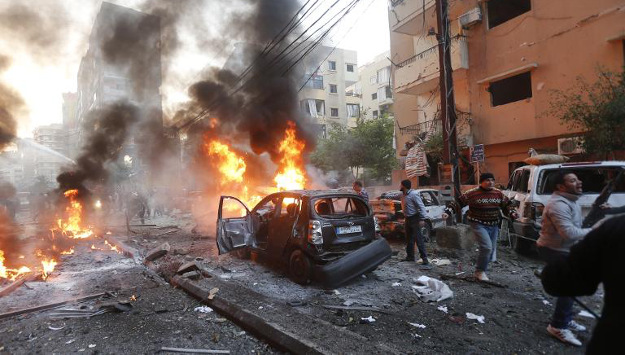
On January 2, only days after a car bomb in Beirut took the life of former Finance Minister Mohamad Chatah and several bystanders on December 27, another bomb struck the capital’s southern suburbs. With initial reports of four dead and 40 wounded, this latest, and possibly retaliatory, attack fits into an ominous pattern as Syria’s conflict spills into Lebanon.
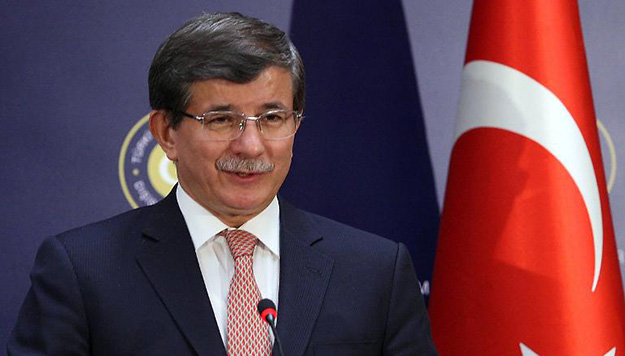
Turkish Foreign Minister Ahmet Davutoglu’s visit to Washington, D.C. last week came on the heels of a year of soul searching for Turkish foreign policy. After the Arab uprisings shook Turkey’s guiding principle of “zero problems with neighbors,” the country now seems intent on resuming the leadership role it enjoyed in the pre-Arab Spring Middle East.
Turkey-Pakistan Security Relations since the 1950s
The initial impulse for Pakistan and Turkey to pursue security cooperation stemmed from their common opposition to Communism in the 1950s. Over the past decade, Pakistan and Turkey have once again sought to cooperate in the security sphere, this time in countering terrorism and ensuring stability in Afghanistan.
MEI 67th Annual Conference – Sectarianism and the Balkanization of the Levant
Moderator: Kim Ghattas, BBCF. Gregory Gause, University of Vermont & Brookings DohaMohsen Milani, University of South FloridaPaul Salem, The Middle East InstituteMona Yacoubian, Stimson Center
Earlier today, double explosions near the Iranian embassy in Beirut killed at least 23, including an Iranian diplomat. The Abdullah Azzam Brigades, an Islamist group with links to al-Qa`ida, took responsibility for the attack. MEI sat down with its Vice President for Policy and Research, Paul Salem, to discuss the significance of the bombings in Lebanon as well as their regional and global implications.
Tell us about the bombing and the group that claimed responsibility for it.
Malaysia and Turkey lie nearly 5,000 miles and seven time zones apart. They have different historical experiences and state structures. The role that religion plays in their public life also differs markedly. Yet Malaysia and Turkey have more in common than is widely acknowledged. Both are newly industrialized, middle-income, predominantly Muslim countries and mid-sized powers in their respective regions. Both are also expected to assume a greater regional and global role in the coming years.
The Philippines and Turkey have not fully capitalized on their human resources and strategic assets in order to expand commercial ties and boost cultural exchanges. However, thanks largely to the efforts of a critical mass of Turkish nationals who have formed the backbone of a “constituency” for advancing Philippine-Turkey relations, the tide may be turning. Three recent developments indicate that the groundwork is being laid to pursue a more robust bilateral relationship: 1) the opening of Turkish-owned schools operating both in Manila and in Zamboanga City (southern Philippines); 2) the creation of the Pacific Dialogue Foundation in the Philippines; and 3) the establishment of the Turkish Chamber of Commerce in the Philippines.
Comparative Middle Power Diplomacies: Turkey and Japan
Middle power is an opaque term that involves multiple concepts. Through different conceptualizations of the term, Turkey and Japan are both middle powers. Indeed, widely read textbooks about Turkish foreign policy published around 2000 regard Turkey as a middle power. In the Japanese context, several scholars, including Yonosuke Nagai, Yoshikazu Sakamoto, Nobuya Banba, and Mitsuru Yamamoto, have evaluated the foreign policy of their own country as middle power diplomacy since the late 1970s. Recently, Yoshihide Soeya comprehensively summed up Japanese middle power diplomacy after the 1970s.
Turkey-Singapore Relations: A Manifestation of Turkey’s Growing Interest in SE Asia
The content and scope of Turkish foreign policy has dramatically altered since the Justice and Development Party (AKP) came to power in 2002. The Asia-Pacific region, which was previously a low priority in Turkey’s foreign policy calculations, is gaining increased space within Turkey’s general strategy and long-term planning, and is seen as vital to the growth of its small to medium sized firms, upon which the wealth of Turkey’s growing middle class is based.
Turkey and Indonesia: Historical Roots, Contemporary Business Links
Though sympathy between Turkey and Indonesia has a long tradition, in part based on their shared experience of being Muslim-majority countries that successfully executed anti-imperialist struggles, for years this sympathy has failed to translate into a closer relationship. This is now changing. New economic linkages and the relative absence of thorny political issues are bringing them closer together. As President Abdullah Gül stated during a meeting in Jakarta in 2011, “A new era is beginning with Indonesia.” Economic agents such as businessmen and entrepreneurs are the pioneers of this era.
The latest round of peace talks with the Kurdistan Workers’ Party (PKK) remains the Turkish government’s best bet not just to solve the country’s 29-year old “Kurdish problem” but also to feed its energy-hungry population and wean it off costly and politically risky Russian and Iranian energy imports.
Maliki in Washington: Arms Deals, Politics, and Proxy Wars
Iraqi Prime Minister Nouri al-Maliki is in Washington this week for meetings with Vice President Joe Biden, Defense Secretary Chuck Hagel, and President Barack Obama. We sat down with MEI’s Vice President for Policy and Research, Paul Salem, to discuss the topics on the table, what each side hopes to accomplish, and how the United States should approach Iraq.